Morocco: Mount Toubkal, the Sahara and the Surf Coast
Two nights in Marrakech, a climb of Jebel Toubkal and a night in the Sahara dunes, then four nights on the Atlantic coast near Taghazout to surf and rest.
This trip takes in the High Atlas, the Sahara and the Atlantic coast in two weeks. It starts with two nights at Riad Kheirredine in Marrakech. Then you head up to Imlil and climb Jebel Toubkal, the highest mountain in North Africa, with a night at the refuge below the summit. From there you cross the mountains to the Dades Valley and carry on to Merzouga for a night at a tented camp in the Erg Chebbi dunes. A long drive west brings you to Taroudant, and the next day you reach the coast at Paradis Plage for four nights of surfing, yoga and time on the beach. The last night is at La Sultana in Marrakech.
Toubkal is 4,167 metres high. It isn't a technical climb, but summit day starts before dawn and takes 9 to 10 hours, so you need to be fit. The coast suits any level of surfer. Beginners have gentle beach breaks near the resort, and experienced surfers have some of Morocco's best-known point breaks a short drive away.
By Next Mile Travel · Updated
The Route
Itinerary
Day by Day
Day 1
Arrive in Marrakech
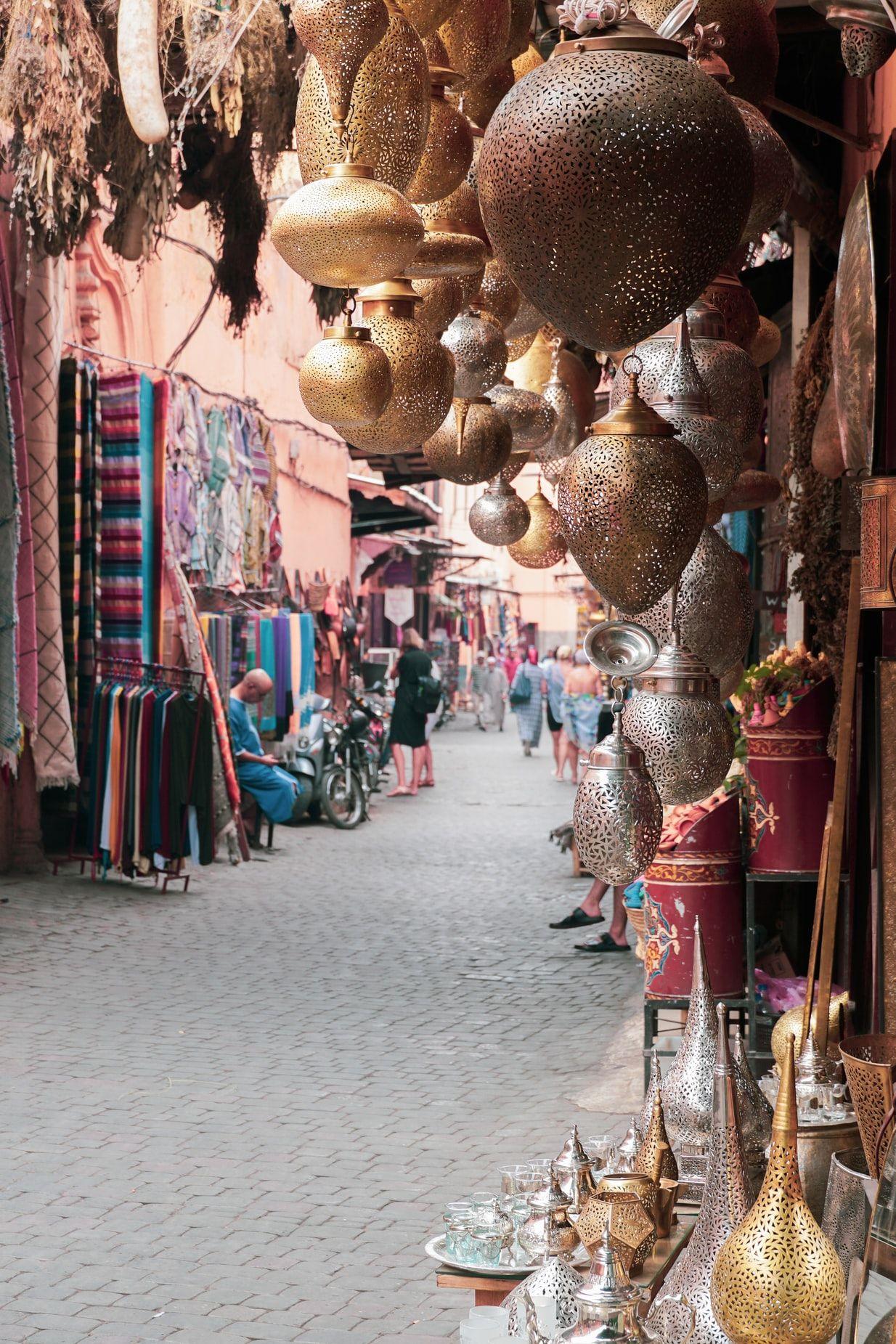
We meet you at Marrakech airport (RAK) and take you to Riad Kheirredine in the medina, a short walk from Jemaa el Fna square. Once you've settled in there's time for a first walk through the medina, and in the evening there's a welcome dinner.
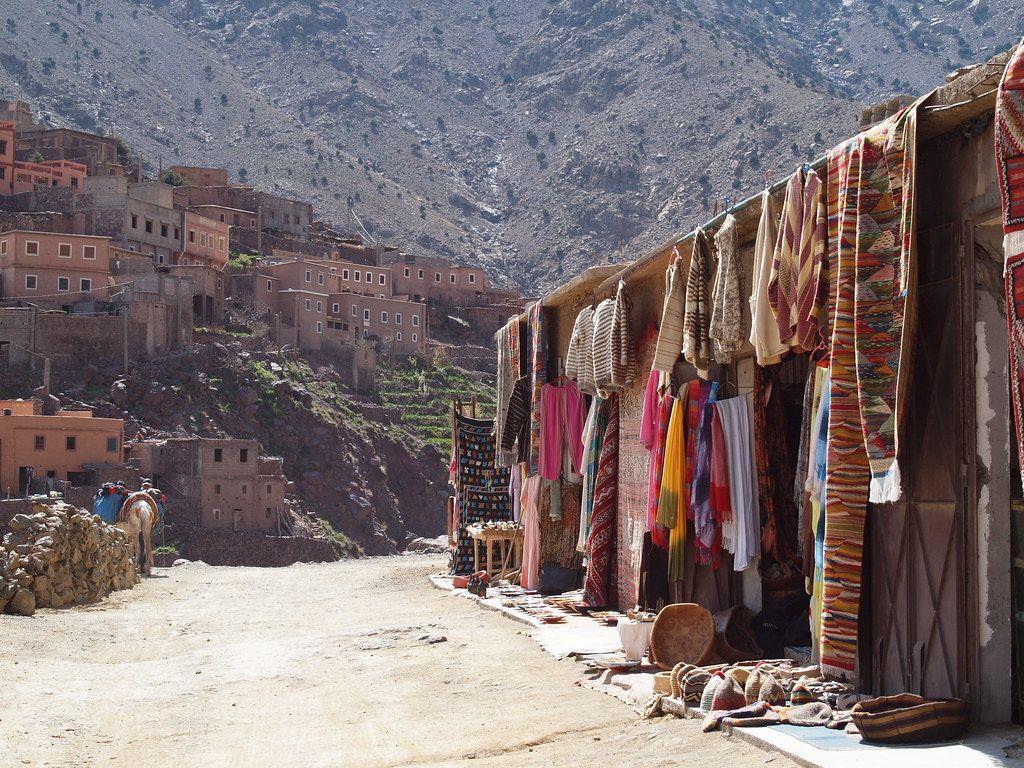
You leave the city after breakfast and drive up into the High Atlas to the village of Imlil, at about 1,740 metres. Riad Ouassaggou is a guesthouse of five rooms with views of the mountains.
In the afternoon a short walk in the valley helps you get used to the altitude before the climb.
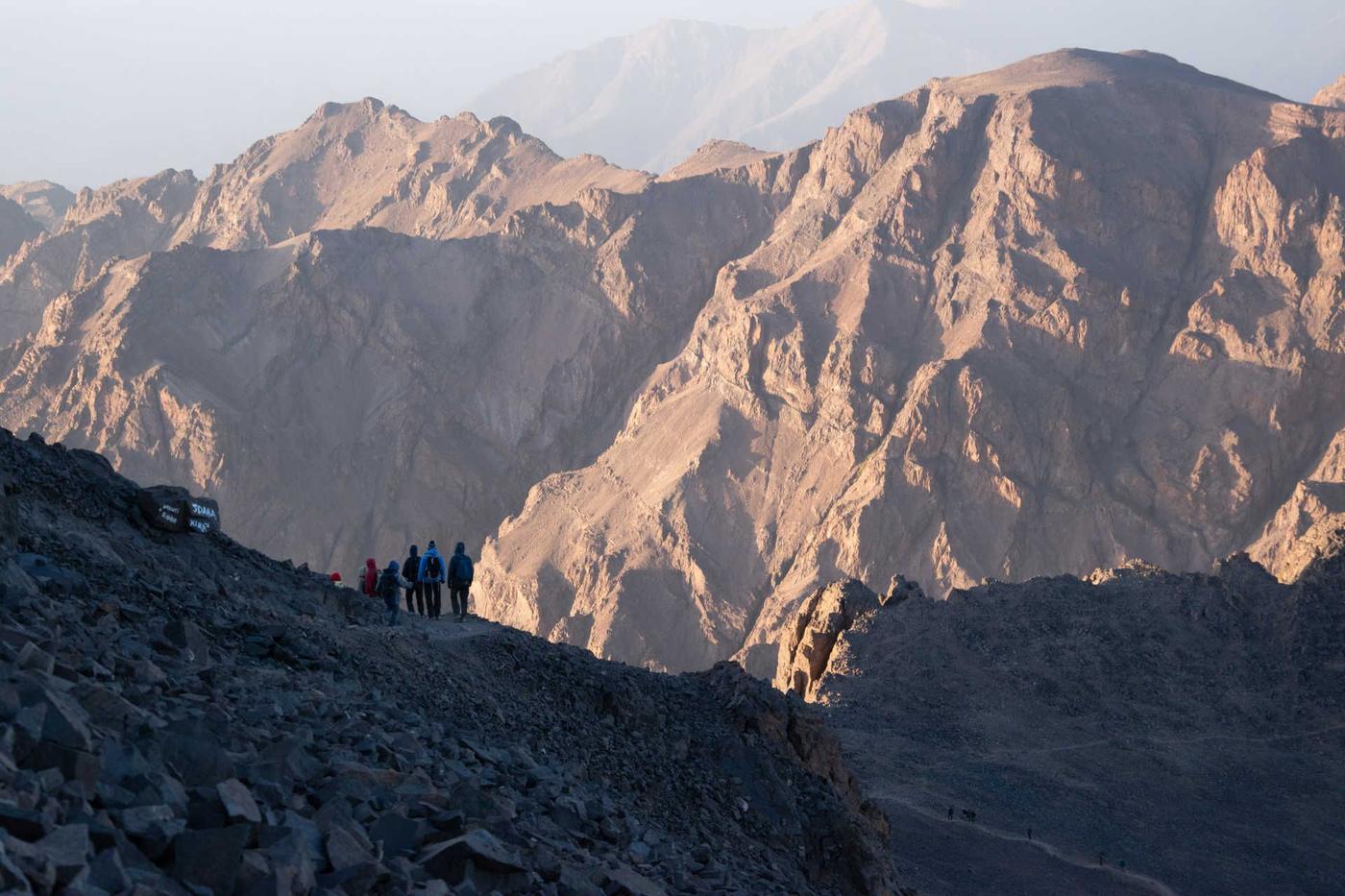
The trek starts in Imlil and follows mule paths up the valley, through the village of Aremd (1,900 metres) and past the shrine of Sidi Chamharouch (2,310 metres). Above 2,500 metres the path climbs steadily over rocky moraine to the refuge at 3,206 metres. It's about 11 kilometres and 5 to 6 hours of walking, with 1,460 metres of climbing.
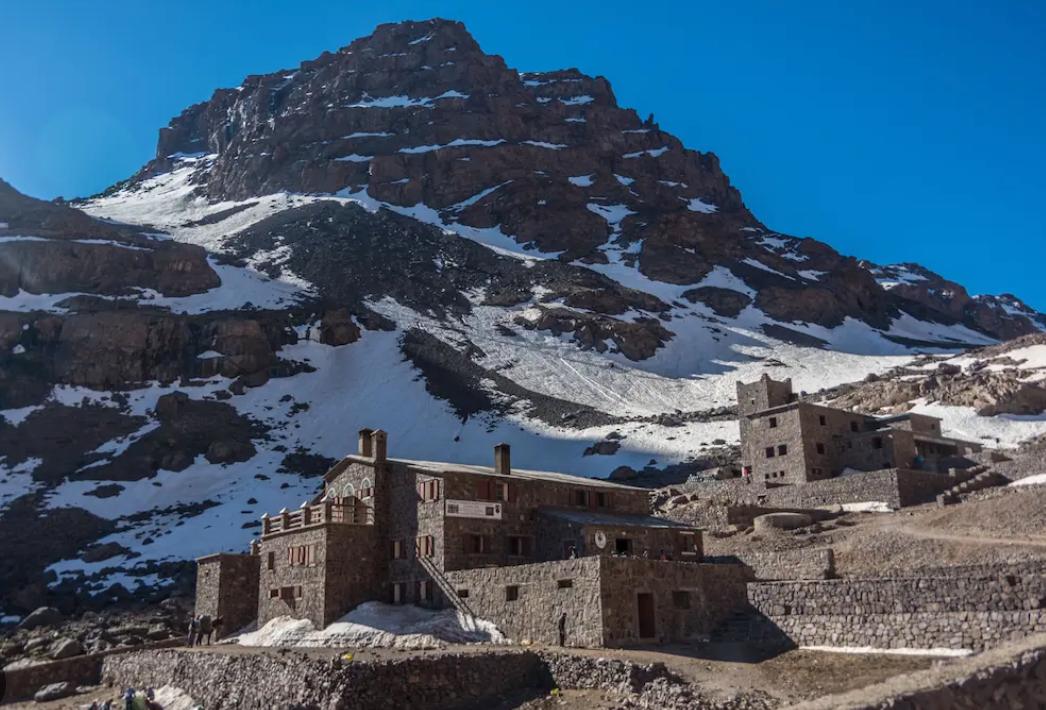
There are two refuges side by side at the foot of Toubkal, and your guide picks whichever is quieter or in better shape that night. They're simple mountain refuges, and you'll want an early night before the summit.
Day 5
Summit day
You set off in the dark and climb through the South Cirque to the top of Jebel Toubkal at 4,167 metres. On a clear morning you can see across the Atlas and the Anti-Atlas to the Sahara and the plain around Marrakech.
Then you come back down the same way to the refuge and on down the valley to Imlil for a second night at Riad Ouassaggou. It's a long day of 9 to 10 hours and about 16 kilometres, with 960 metres up and 2,420 metres down.
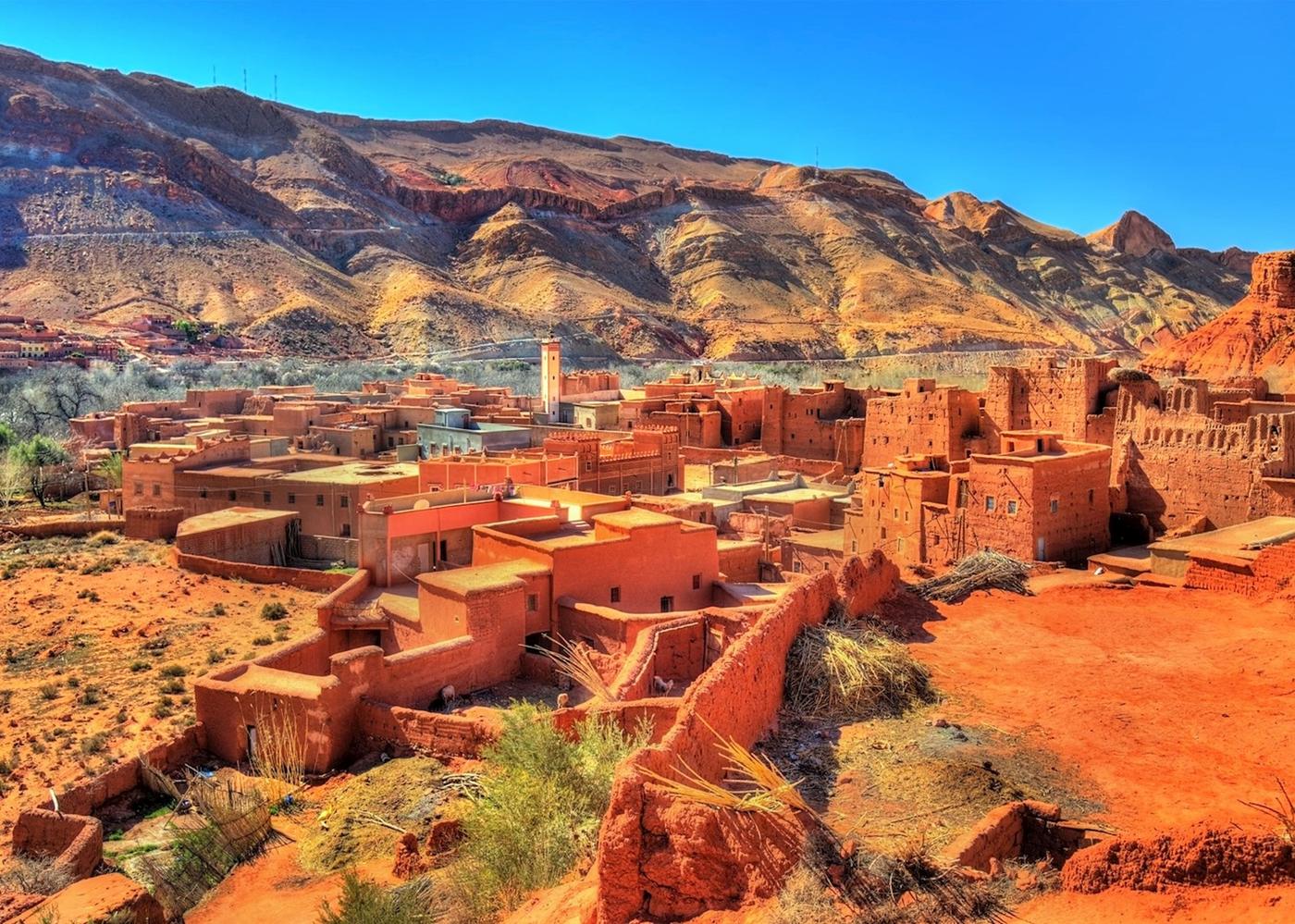
You cross the High Atlas over the Tizi n'Tichka pass and drive on into the south to the Dades Valley, known for its gorges and red rock. If you'd like to stretch your legs after the drive, there's a short hike at sunset.
Eden Boutique Hotel looks out over the valley and the rocks called the Monkey's Fingers. It has a pool and a hammam.
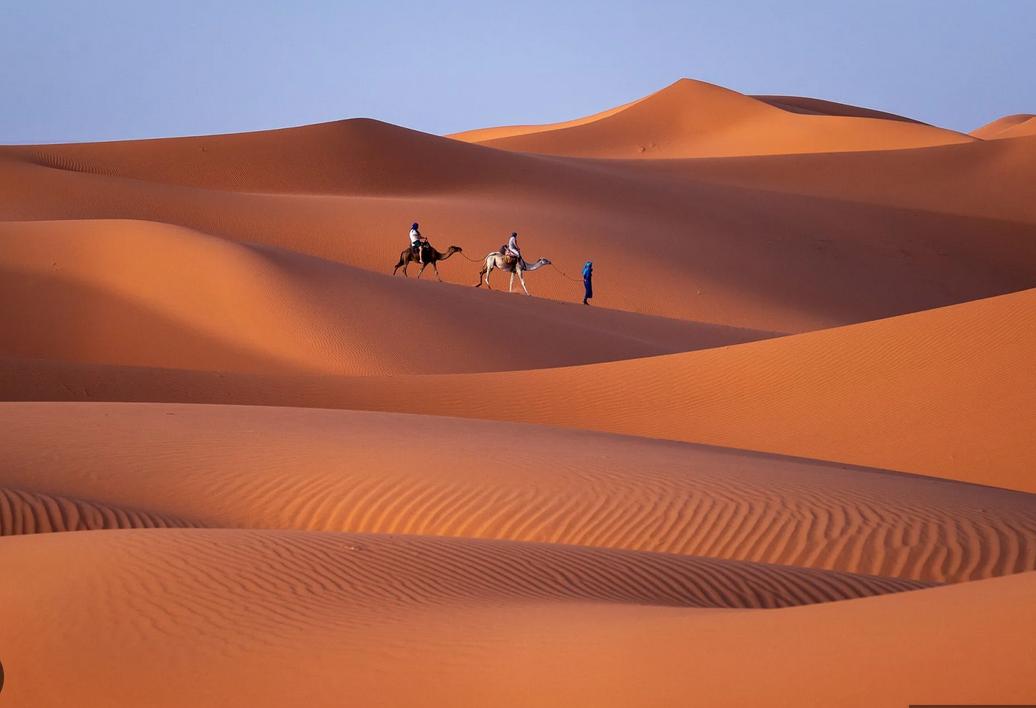
The road runs east through desert country to Merzouga, at the edge of the Sahara. You get there in time to ride a camel out into the Erg Chebbi dunes to the camp.
Dinner is Moroccan food with music, under the stars.
Get up early for a camel ride over the dunes at sunrise, then head back to Merzouga to start the drive west. It's a long day on the road, about 565 kilometres across the high plateaus of the south.
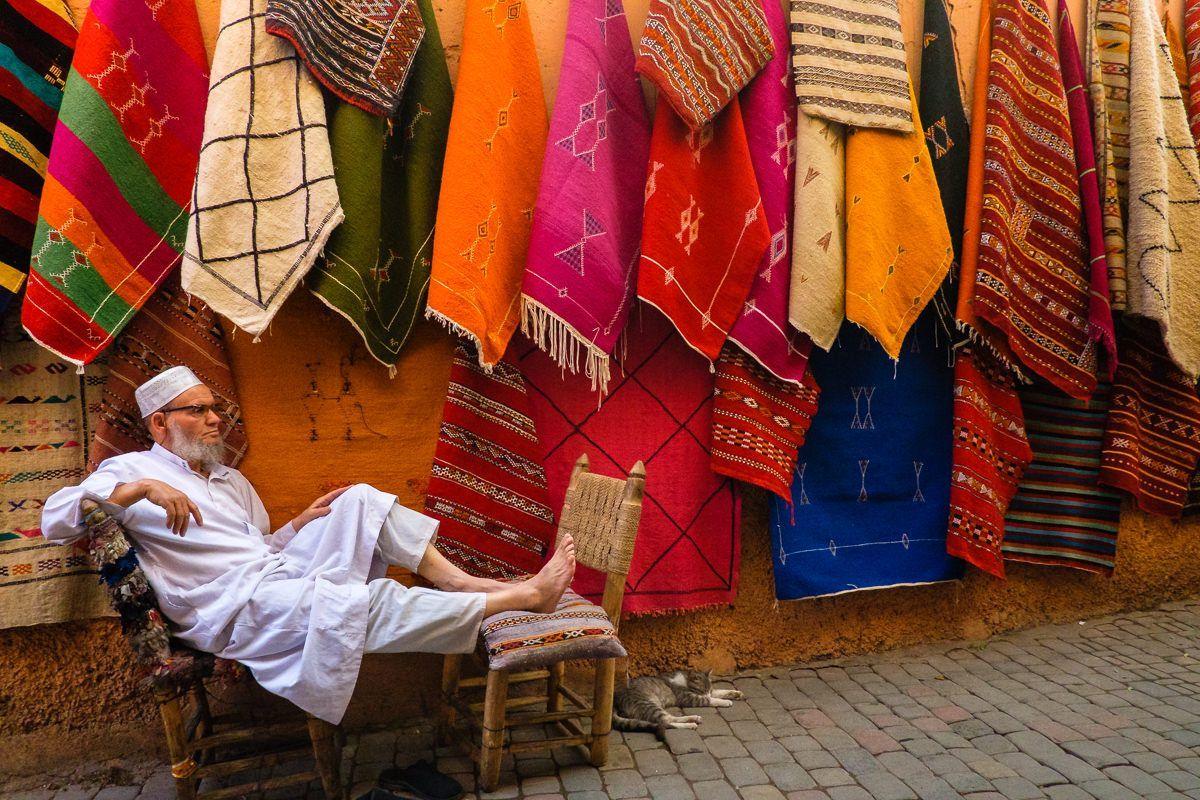
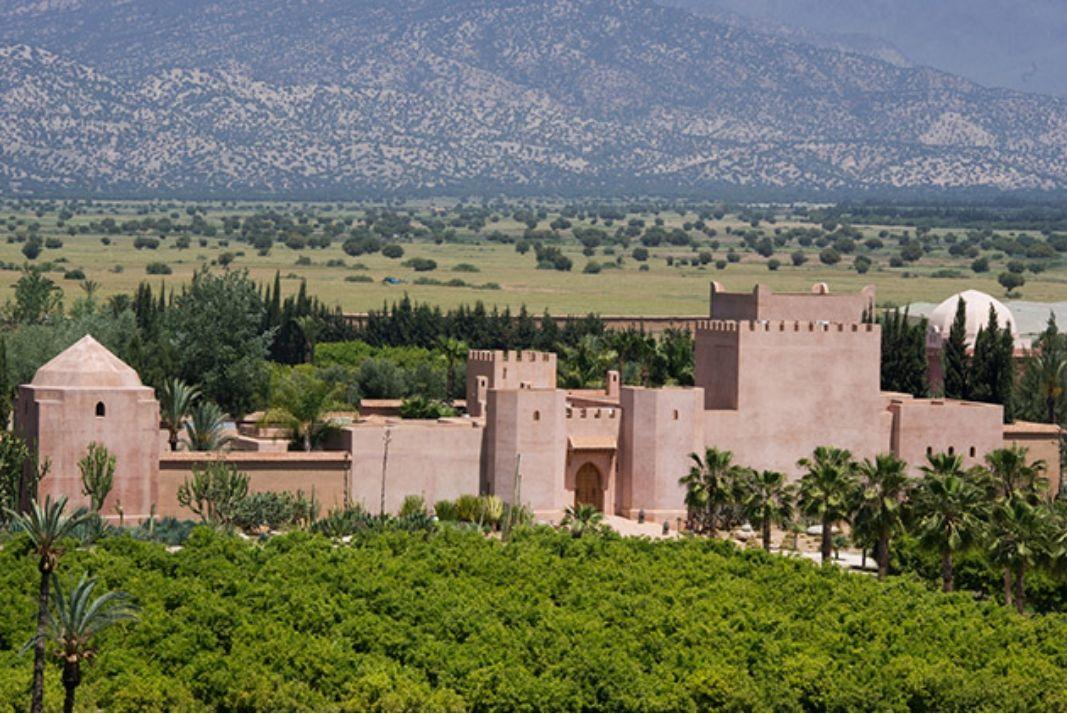
On the way you stop in Taznakht, a town known for its Berber carpets. Lunch is a tagine in Taliouine, where Morocco's saffron is grown. Lower down, the land turns green in the Souss Valley and the hillsides fill with argan trees, and you may see goats climbing in them. By late afternoon you reach the red mud-brick walls of Taroudant and Dar Al Hossoun, in gardens just outside the medina.
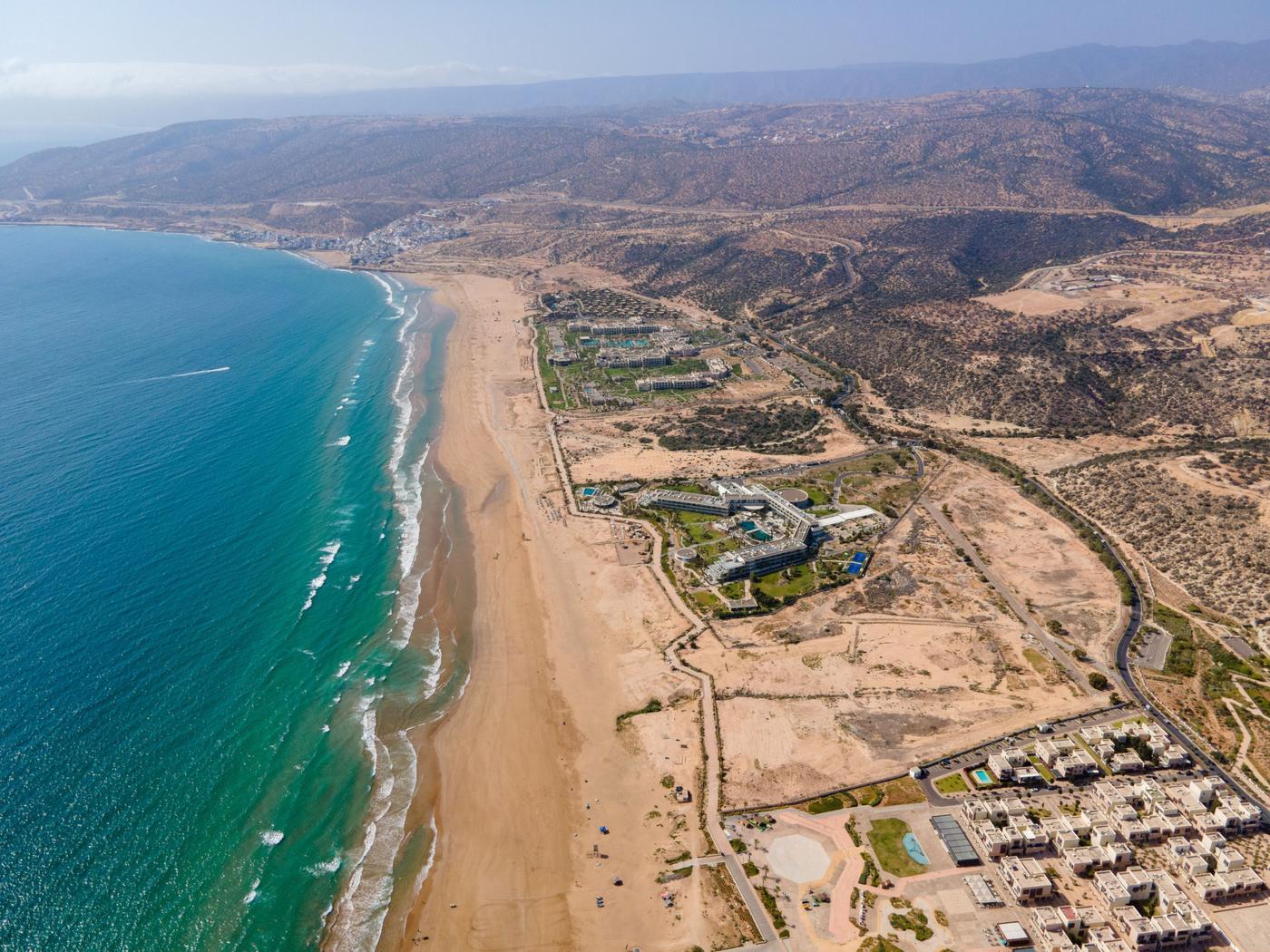
After breakfast you drive west through the Souss Valley and around Agadir to the Atlantic. The coast road runs north past the surf breaks at Anchor Point and Taghazout to the village of Imi Ouaddar, and you check in at Paradis Plage by midday.
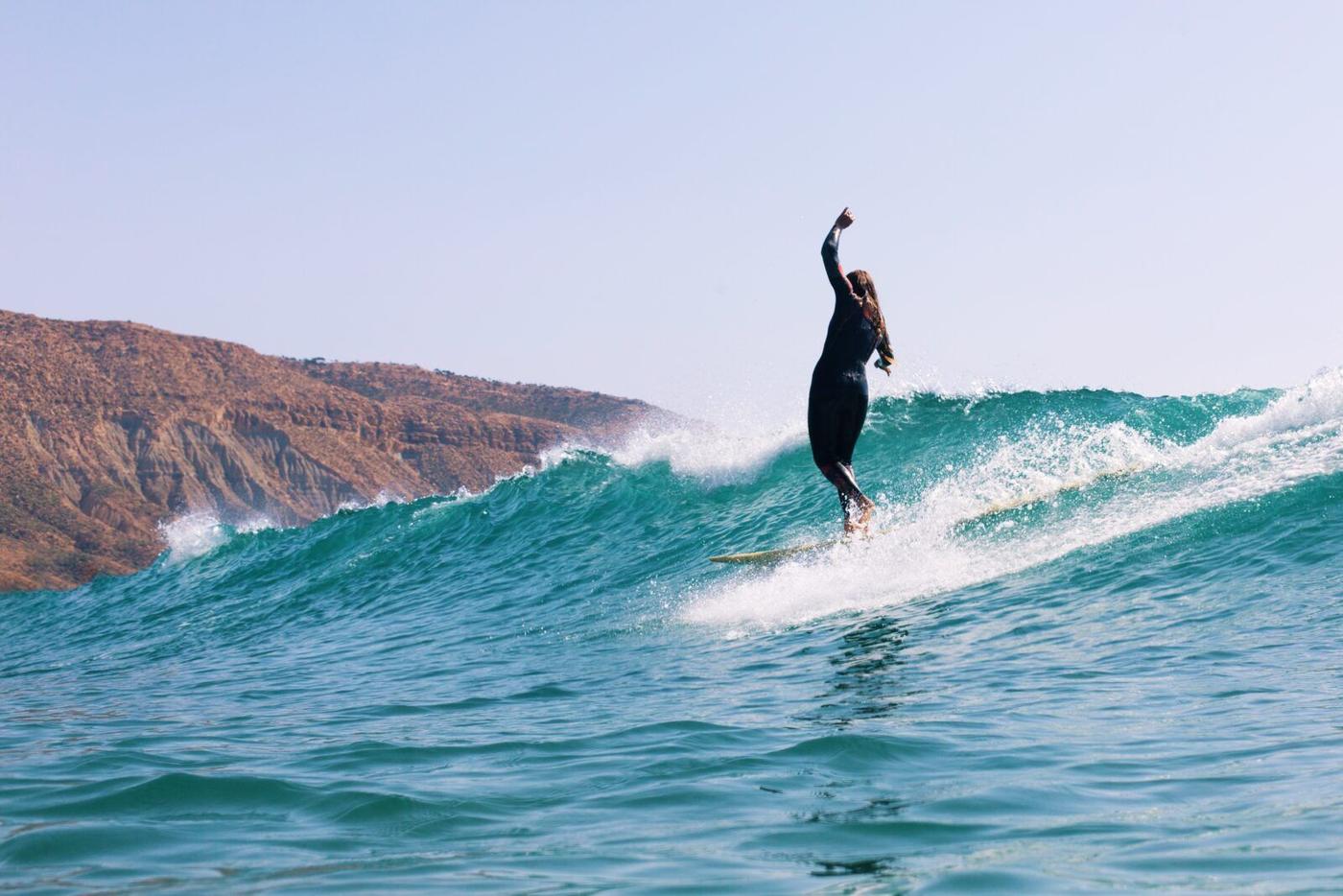
There are more than 18 surf spots a short drive away, so there are waves for every level. Beginners start on the gentle beach breaks at Crocro and K14, and Km 12 is an easy left-hander for longboards. Banana Point is popular with intermediate surfers. Anchor Point is the best-known break on the coast and hosts professional competitions. Like Killer Point and Dracula, it's for experienced surfers only.
The resort's surf house runs lessons. If you want a break from the water, there's yoga every day in the beach pavilion and a spa with Moroccan treatments.
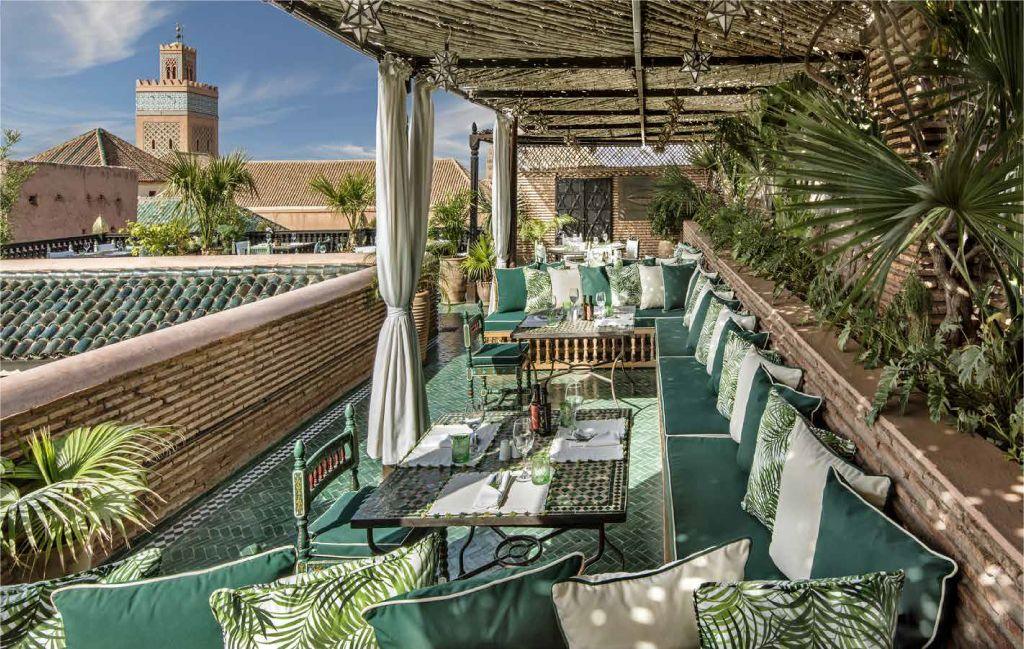
You drive back to Marrakech for your last night, at La Sultana in the Kasbah quarter. The hotel was once the grain store of the Royal Palace and has a heated pool and a big roof terrace. In the evening there's a farewell dinner.
Seasons, rules and schedules can change, and we rely on our partners on the ground for the latest. Ask us before you plan around any of these answers and we'll double-check them.
Why do goats climb trees in Morocco?
They climb argan trees to eat the fruit, which looks like a large olive. Argan trees grow wild almost only in south-western Morocco. The oil is pressed from the kernels inside the fruit's hard nut, and the argan country around the Souss Valley has been a UNESCO biosphere reserve since 1998.
When is the saffron harvest in Taliouine?
It runs for a few weeks between mid-October and mid-November. Pickers start at dawn and gather the flowers by hand. Each flower has just three red threads, so it takes nearly a kilogram of flowers to make 12 grams of saffron. Taliouine and a neighbouring town grow about nine-tenths of Morocco's saffron.
Should we stay in Agadir or Taghazout for surfing?
Stay up the coast near Taghazout. Agadir is a big resort city with a wide sandy beach, rebuilt from scratch after an earthquake destroyed it in 1960. Taghazout is a fishing village about 18 kilometres to the north. It's now Morocco's main surf town, with a cluster of right-hand breaks just north of the village.
Is Taroudant worth visiting?
Yes, and a second night there gives you a full day to see it. Taroudant is a market town for the farms of the Souss Valley, and its walls run about 7 kilometres around the old town. Dar Al Hossoun can arrange a carriage ride, or a visit to the souks and the tannery in town.
How It Works
We Arrange All of It
Each trip idea is a starting point. We adjust the length, the pace and the hotels to suit you, then book and manage every part of it.
Flights. Booked with your points where they're worth the most, and with cash where they aren't.
Every transfer. Private drivers, boats and domestic flights between each stop, timed to your arrival.
Guides and tours. Booked for the days that suit you, private or shared.
The hotels. Booked directly with the properties we work with, with rooms matched to your group.
Support while you're away. If a flight cancels or plans change, you contact us and we sort it out.
Plan This Trip
If the climb isn't for you, we can plan day hikes from Imlil instead. We can also add a night in the Dades Valley or Taroudant to break up the long drives, or a few more nights on the coast. In Marrakech, La Sultana can arrange a hot-air balloon flight over the plains or a sidecar ride into the countryside.
Every trip is priced for your dates. Send us rough dates and who's travelling, and we'll come back with the full plan.