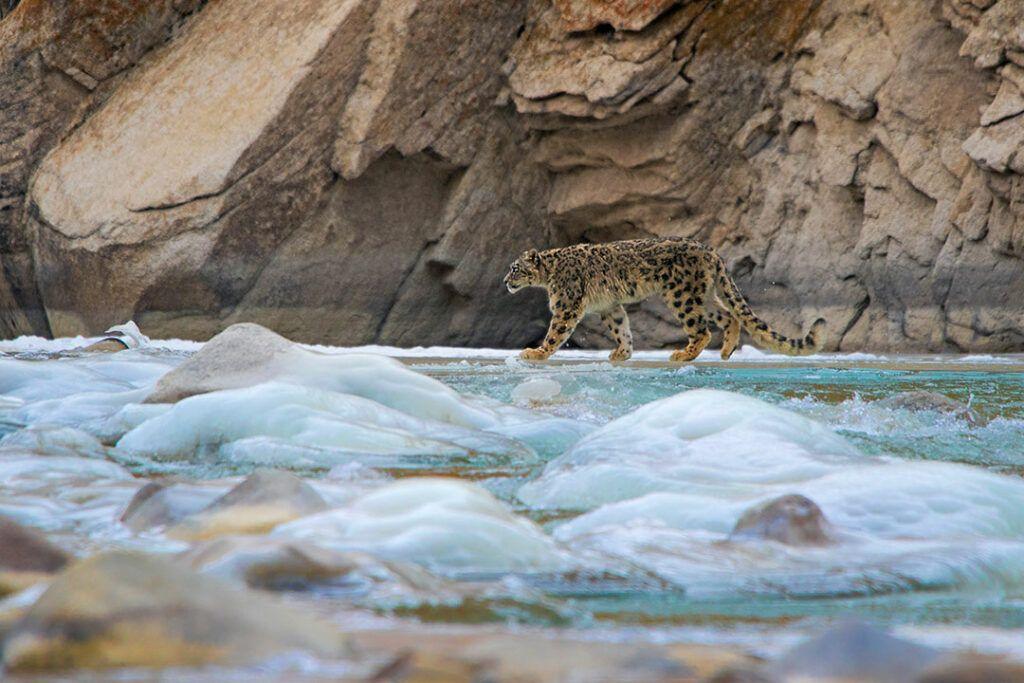
Six nights at the Snow Leopard Lodge in Mangyu, tracking snow leopards with local spotters in Ladakh's winter, with nights in Leh before and after to get used to the altitude.
This is a winter wildlife trip to Ladakh, high in the Indian Himalaya, to look for snow leopards. After a night near Delhi's airport you fly up to Leh and spend two nights getting used to the altitude. Then we drive you two to three hours west to the Snow Leopard Lodge in the village of Mangyu for six nights. Every morning the lodge's spotters search the valleys around the village, and you head out with a guide to wherever a cat has been found. You finish with a night back in Leh before flying home through Delhi.
The season runs from November to April, and it's cold and high. Leh is at about 3,500 metres and the valleys around the lodge reach about 4,000. At night and around dawn it can drop to minus 20°C, though sunny days can feel warm. Snow leopards are hard to find and nobody can promise a sighting, but six days at the lodge gives you a real chance. Ibex, blue sheep, wolves and foxes live in the same valleys. It suits patient wildlife lovers and photographers with a basic level of fitness.
By Next Mile Travel · Updated
The Route
Itinerary
Day by Day
Day 1
Arrive in Delhi
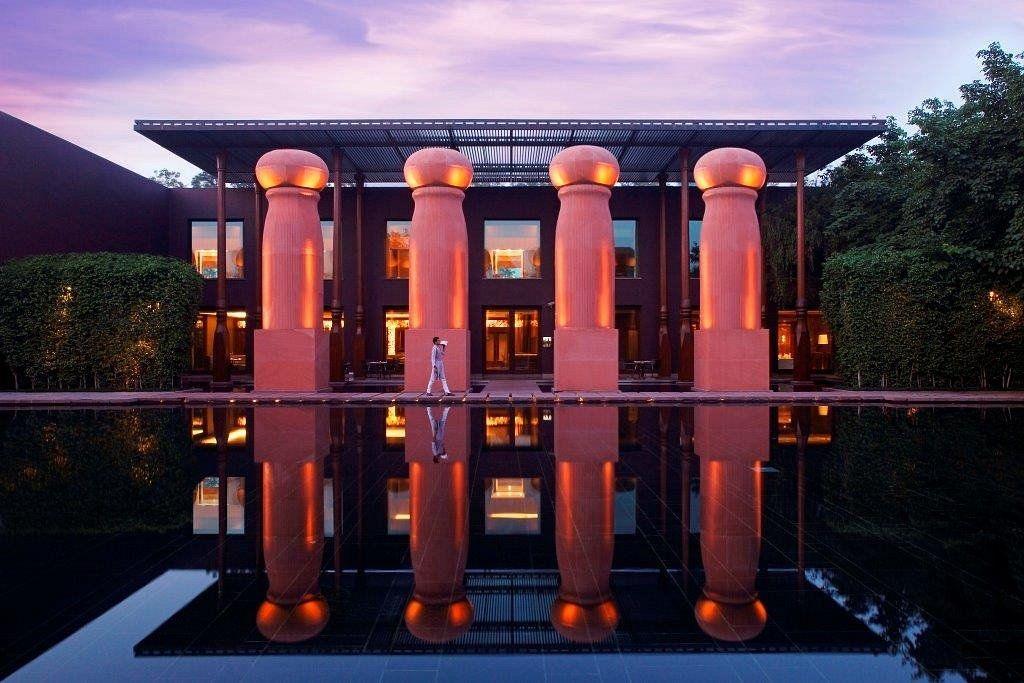
We meet you at Delhi's international airport (DEL) and drive you a few minutes to The Roseate, a hotel in eight acres of gardens. The evening is yours to rest, since you fly on to Leh early the next morning.
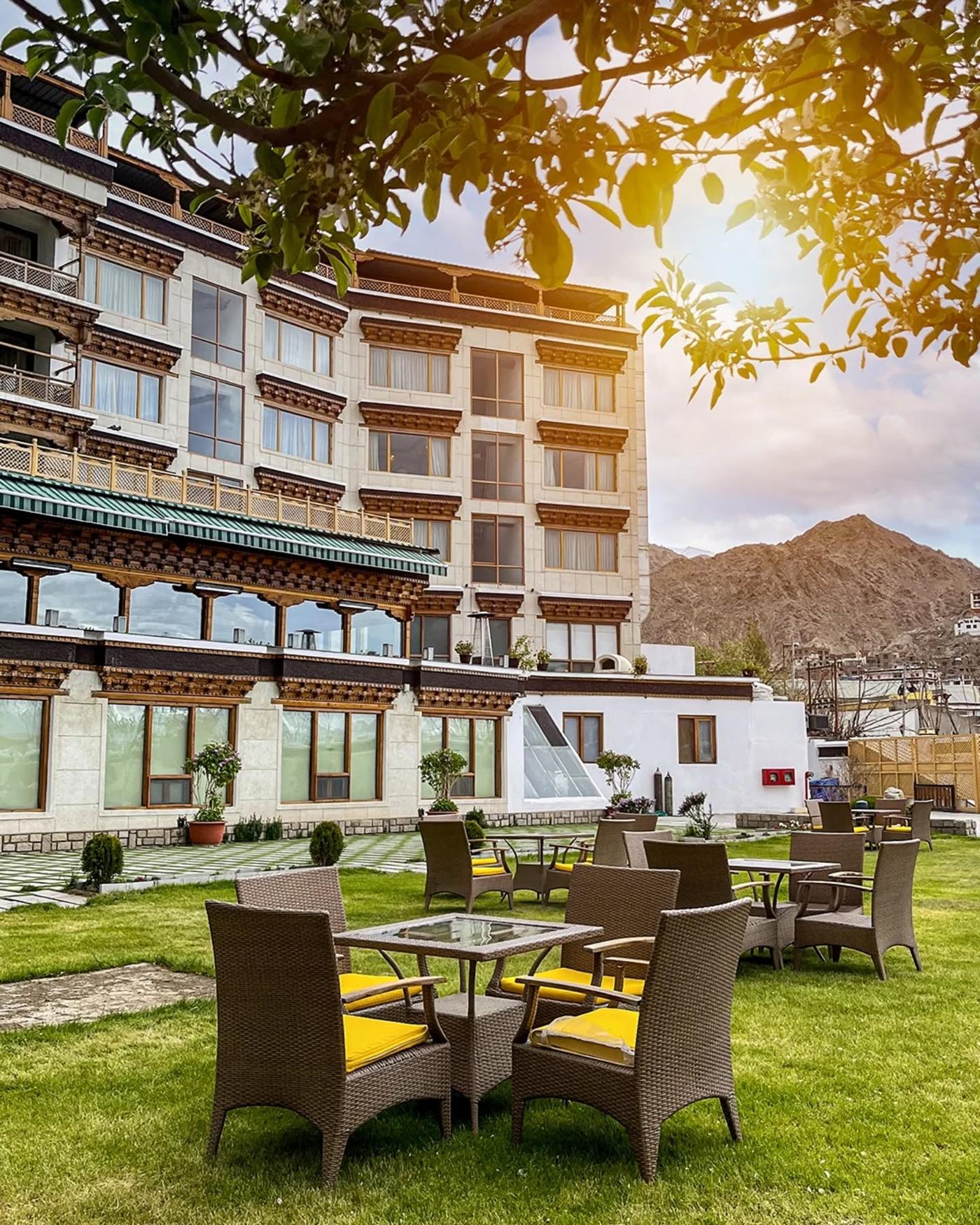
We take you back to the airport for a short scheduled flight up to Leh (IXL). Morning flights are best, because wind over the mountains can delay flights later in the day. Leh is at about 3,500 metres, so the rest of the day is for resting at The Grand Dragon.
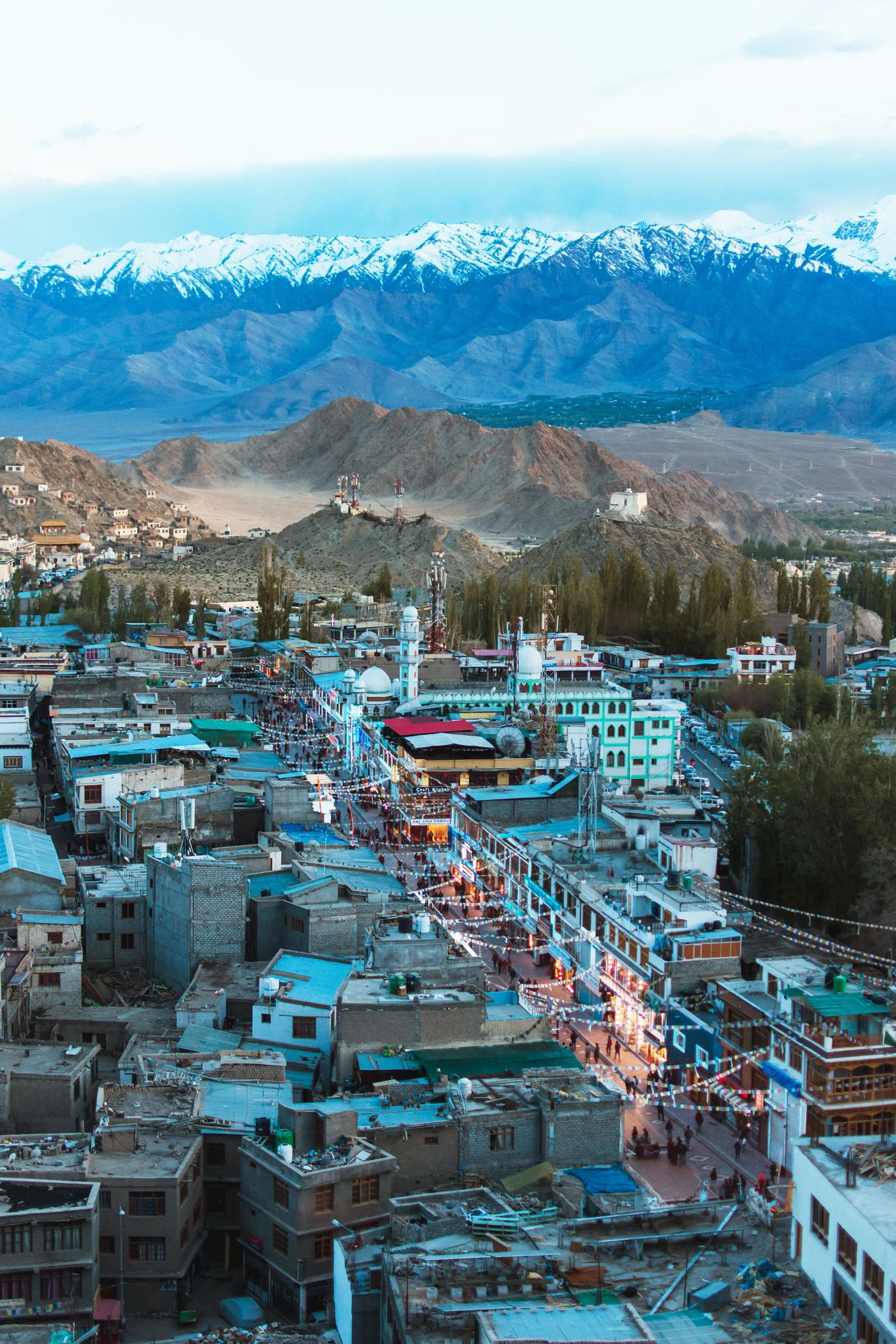
Today is about letting your body adjust to the altitude. Take it slowly and drink plenty of water or tea. We keep the walking short, with visits to Sankar Gompa and the Shanti Stupa. Before sunset you go up to Leh Palace, which looks across the town to the stupa and is a good spot for photographs.
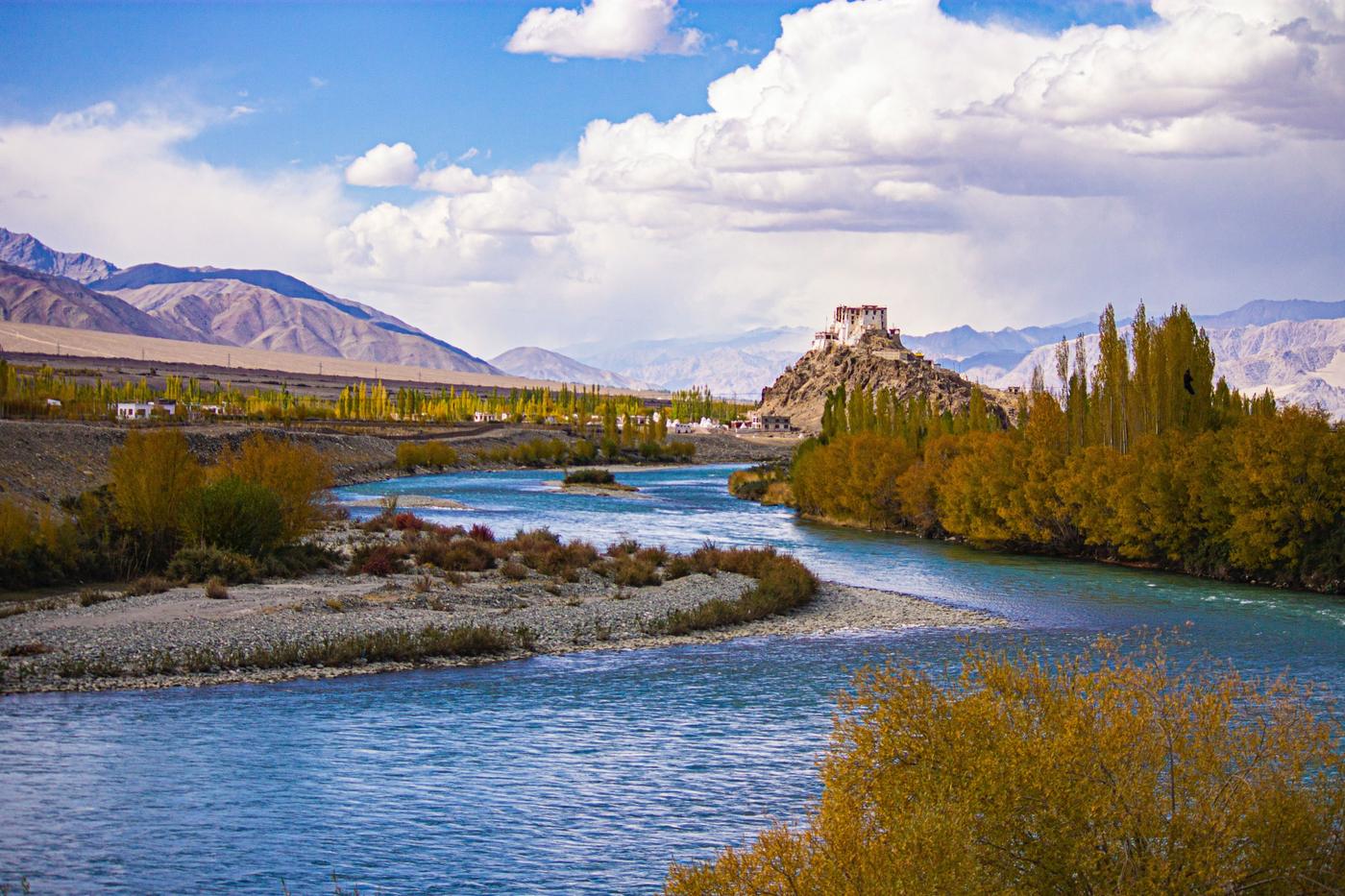
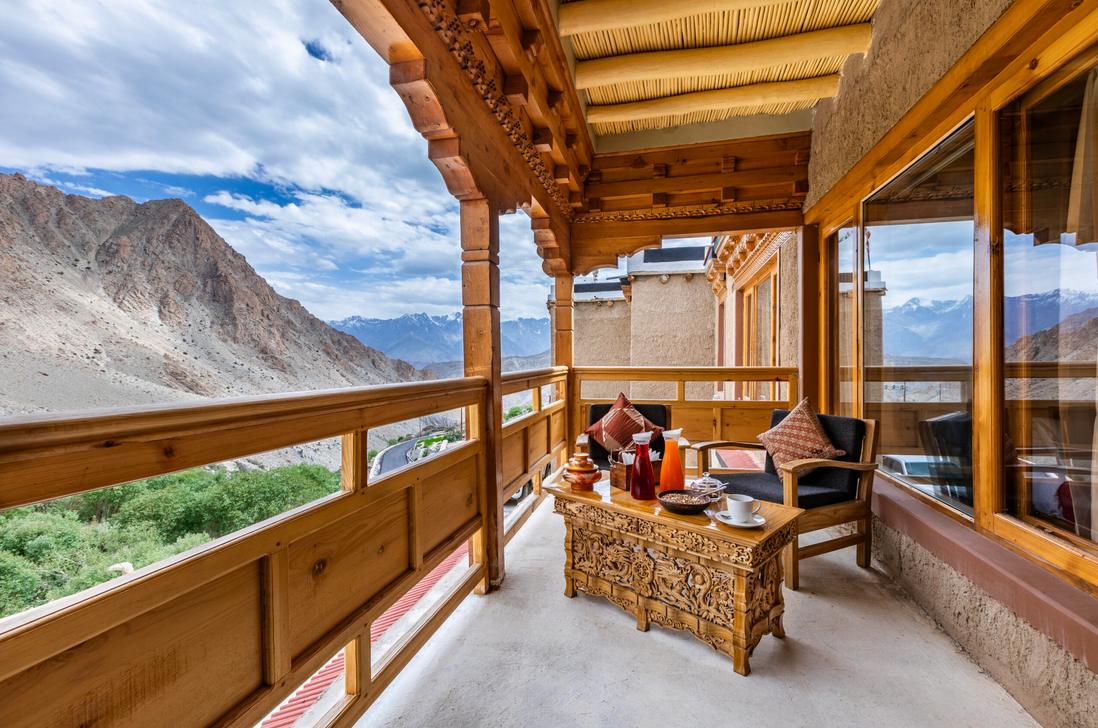
After breakfast we drive you two to three hours west of Leh to the village of Mangyu and the Snow Leopard Lodge. The village has an old monastery with a temple to Vairocana. In the afternoon you can settle in and watch the slopes from the lodge's terrace. Ibex, blue sheep and wolves are sometimes seen from there.
The lodge's spotters head out into the valleys at first light. They look for tracks in the snow and listen for the alarm calls of blue sheep and ibex. They also watch for vultures, crows or foxes gathering at a kill, and villagers report what they've seen. When there's a lead, you go out in the lodge's vehicle with your guide and walk the last part when it helps and you feel up to it.
Sightings are often more than a kilometre away, so the lodge has Zeiss telescopes and binoculars for you to use. Some days you find a cat early, and some days you search all day without one. On quieter days you can visit monasteries and villages nearby, or look for blue sheep in the Lavender Valley near Mangyu.
We drive you back to Leh for a last night at The Grand Dragon. The afternoon is free for the market, where you can buy pashmina shawls and local crafts.
Seasons, rules and schedules can change, and we rely on our partners on the ground for the latest. Ask us before you plan around any of these answers and we'll double-check them.
When is the best time to see snow leopards in Ladakh?
February and March are often the best months, though the season runs from November to April. In winter the cats follow blue sheep and ibex down to slightly lower ground. Late winter is also their courtship season, so they move around more. In summer the search spreads into high pastures beyond the roads, and sightings are far fewer.
Can you track snow leopards in Ladakh if you can't walk far?
Yes, for the most part. Much of the searching is done from the lodge's vehicles, so people with limited mobility can do a lot of the trip. You walk the last part when it helps and you feel up to it. The lodge still asks for a basic level of fitness, and at about 4,000 metres even a short climb is hard work.
What other wildlife can you see around Mangyu?
Ladakh urial share these valleys with the ibex and blue sheep. The urial is a wild sheep that in India lives only in Ladakh, mostly along the Indus valley. Golden eagles and lammergeiers are around all year, and the lammergeier is a huge vulture that lives mostly on bones.
How old is the monastery at Mangyu?
About 800 years. Its oldest temples were built in the late 12th or early 13th century, around the same time as the better-known temples at Alchi nearby. Two chapels hold large statues of Maitreya, the Buddha of the future.
How It Works
We Arrange All of It
Each trip idea is a starting point. We adjust the length, the pace and the hotels to suit you, then book and manage every part of it.
Flights. Booked with your points where they're worth the most, and with cash where they aren't.
Every transfer. Private drivers, boats and domestic flights between each stop, timed to your arrival.
Guides and tours. Booked for the days that suit you, private or shared.
The hotels. Booked directly with the properties we work with, with rooms matched to your group.
Support while you're away. If a flight cancels or plans change, you contact us and we sort it out.
Plan This Trip
We can add nights at the lodge for a better chance of a sighting, or an extra night in Leh if you'd like more time to adjust to the altitude. Before you fly up, we can add a few days in Delhi and Agra to see the Taj Mahal.
Every trip is priced for your dates. Send us rough dates and who's travelling, and we'll come back with the full plan.