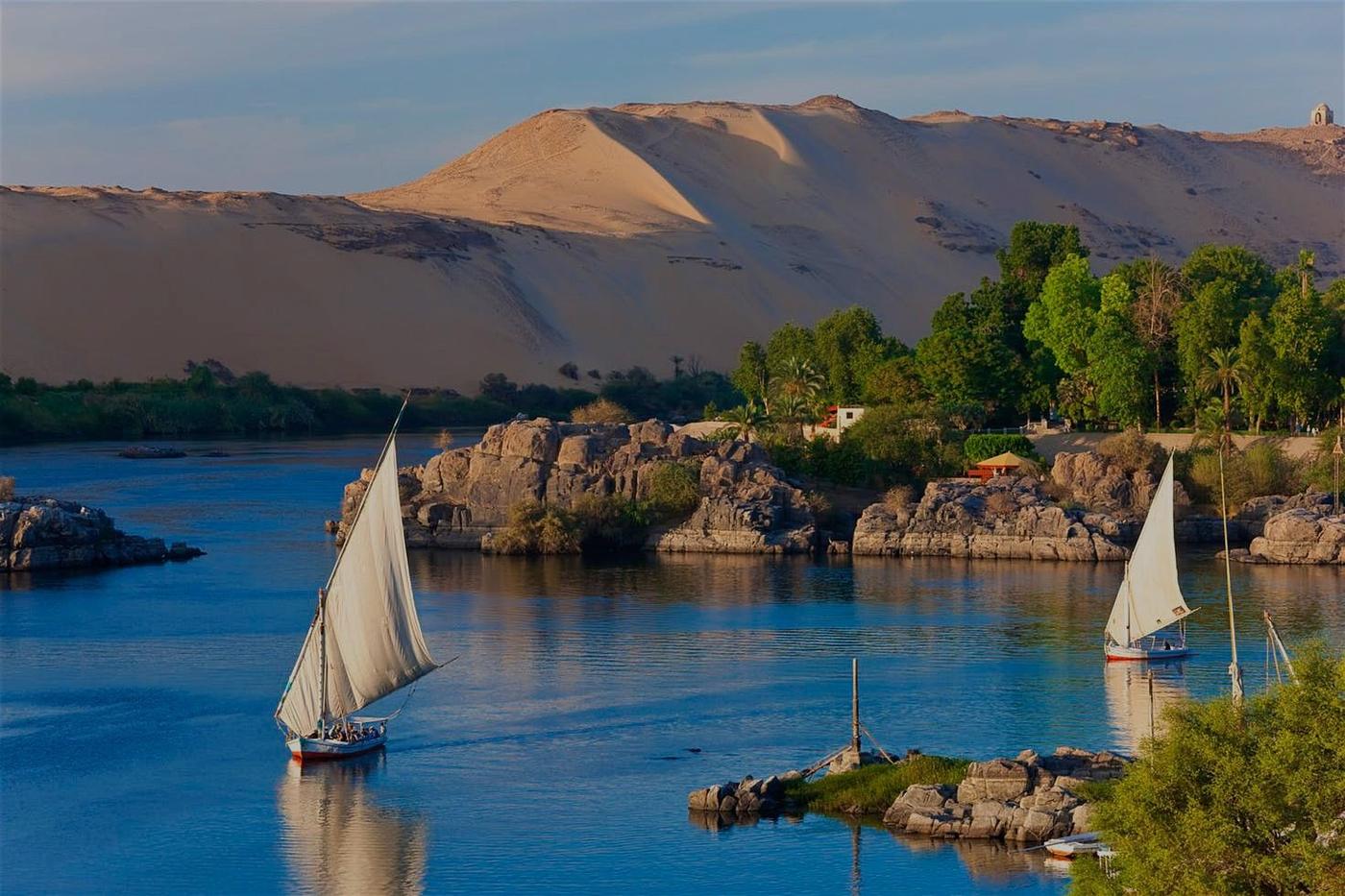
A felucca under sail on the Nile at Aswan, with golden dunes on the far bank

Trip Ideas · Egypt

Egypt: Giza, Luxor and a Nile Dahabiya to Aswan

Ten nights with your own Egyptologist: the pyramids at Giza, two nights in Luxor, four nights sailing up the Nile to Aswan on a dahabiya and a day at Abu Simbel.

11 days, 10 nights

The Trip

This trip takes in the great sites of ancient Egypt in ten nights, and an Egyptologist guides you privately the whole way. You start with two nights at Mena House, right at the foot of the pyramids at Giza, then fly to Luxor for two nights at Al Moudira on the West Bank. From Luxor you spend four nights sailing up the Nile to Aswan on Nawara, a dahabiya (a traditional Nile sailing boat). You finish with two nights at the Old Cataract in Aswan, with a day trip by air to Abu Simbel.

A dahabiya is much smaller than the Nile cruise ships, so it can stop at islands and villages where the big ships aren't allowed to dock. It suits couples and anyone with a real interest in ancient Egypt, and it works well as a first trip to the country.

By Next Mile Travel · Updated

The Route

1234GIZA2 nightsLUXOR2 nightsTHE NILE4 nightsASWAN2 nights 12–34GIZA2 nightsLUXORTHE NILE6 nightsASWAN2 nights

Itinerary

Day by Day

Day 1

Arrive in Cairo

We meet you at Cairo airport (CAI) and drive you to Marriott Mena House, at the foot of the pyramids at Giza. Once you've settled in, your Egyptologist takes you to the Grand Egyptian Museum, which sits between the pyramids and the city. It has 12 exhibition halls, and a statue of Ramesses II about 11 metres tall stands in the atrium.

Dinner is traditional Egyptian food at a restaurant looking out over the Giza Plateau.

Overnight: Marriott Mena House
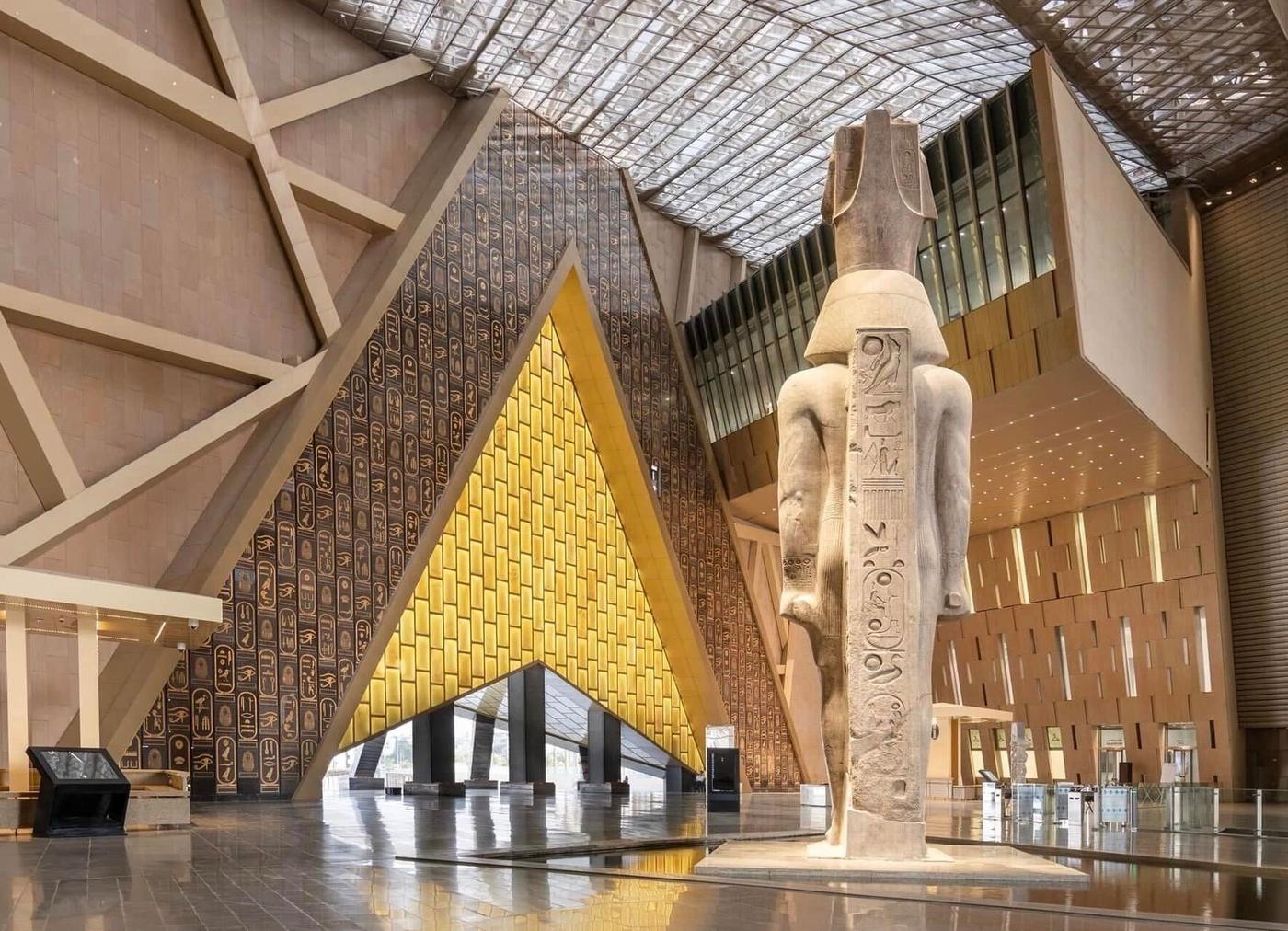
A colossal statue of Ramesses II in the atrium of the Grand Egyptian Museum

Day 2

The pyramids and the Sphinx

You start the morning with your Egyptologist at the Sphinx. Then you go inside the Great Pyramid, up the ascending passage and the Grand Gallery to the King's Chamber and its granite sarcophagus.

Brunch is traditional Egyptian food with a view across the plateau to the three pyramids. In the afternoon you go back to walk among the three pyramids of Khufu, Khafre and Menkaure. You go inside whichever of Khafre's or Menkaure's is open, and your Egyptologist gives short talks along the way.

Late in the afternoon you can ride a camel on the plateau or visit a perfume house in Giza run by the same family for five generations. Dinner is at the Moghul Room, Mena House's Indian restaurant, which looks out over the plateau.

Overnight: Marriott Mena House
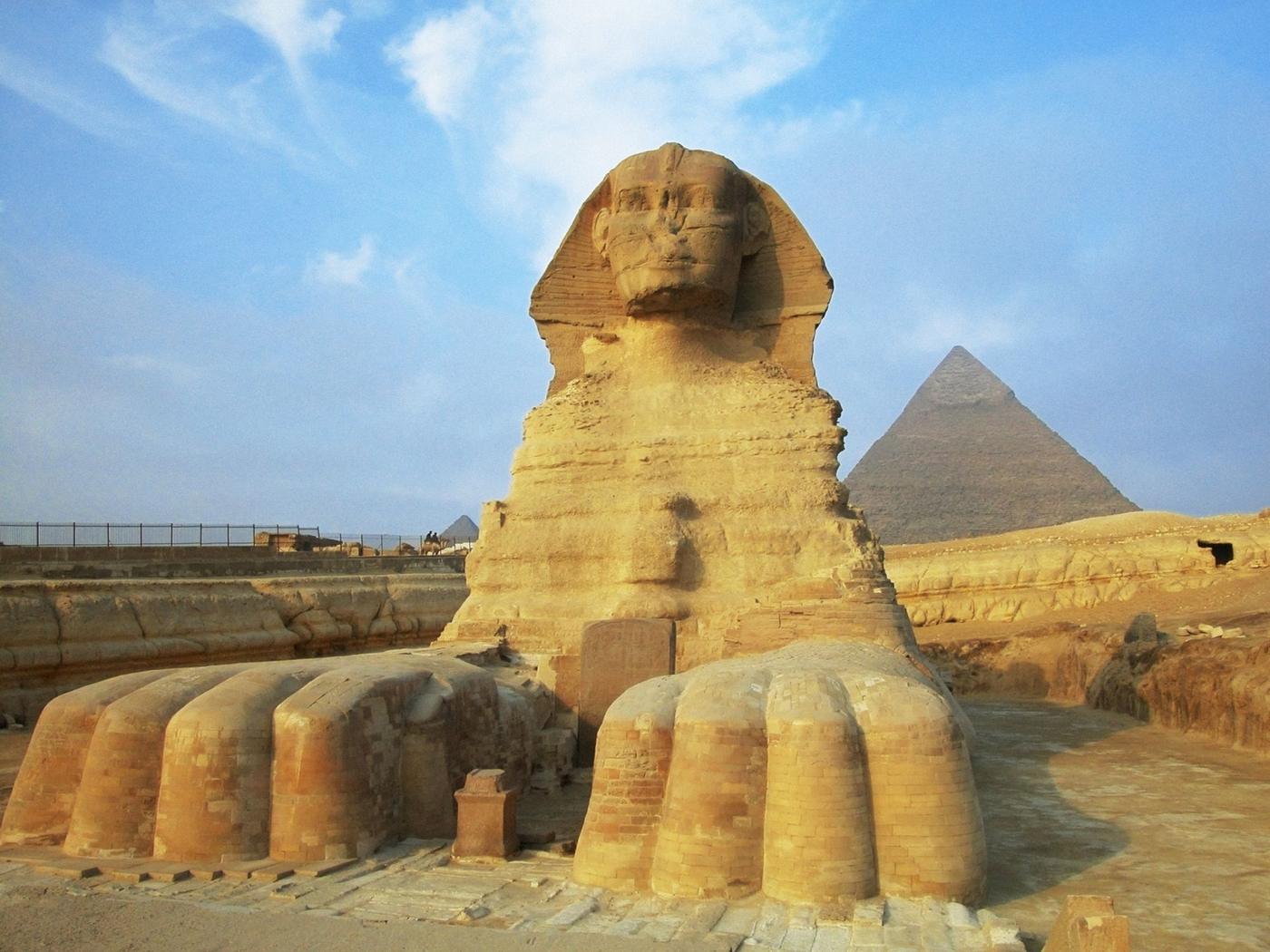
The Sphinx seen from between its paws, with a pyramid behind

Day 3

Fly to Luxor

After breakfast we drive you to Cairo airport for the flight to Luxor (LXR). You start at Luxor Temple with your Egyptologist, then have lunch on the roof of Sofra, which serves traditional Egyptian food on the East Bank.

Afterwards you cross the river to Al Moudira on the West Bank, a hotel of 54 suites around courtyards and gardens. Dinner is served in the gardens.

Overnight: Al Moudira

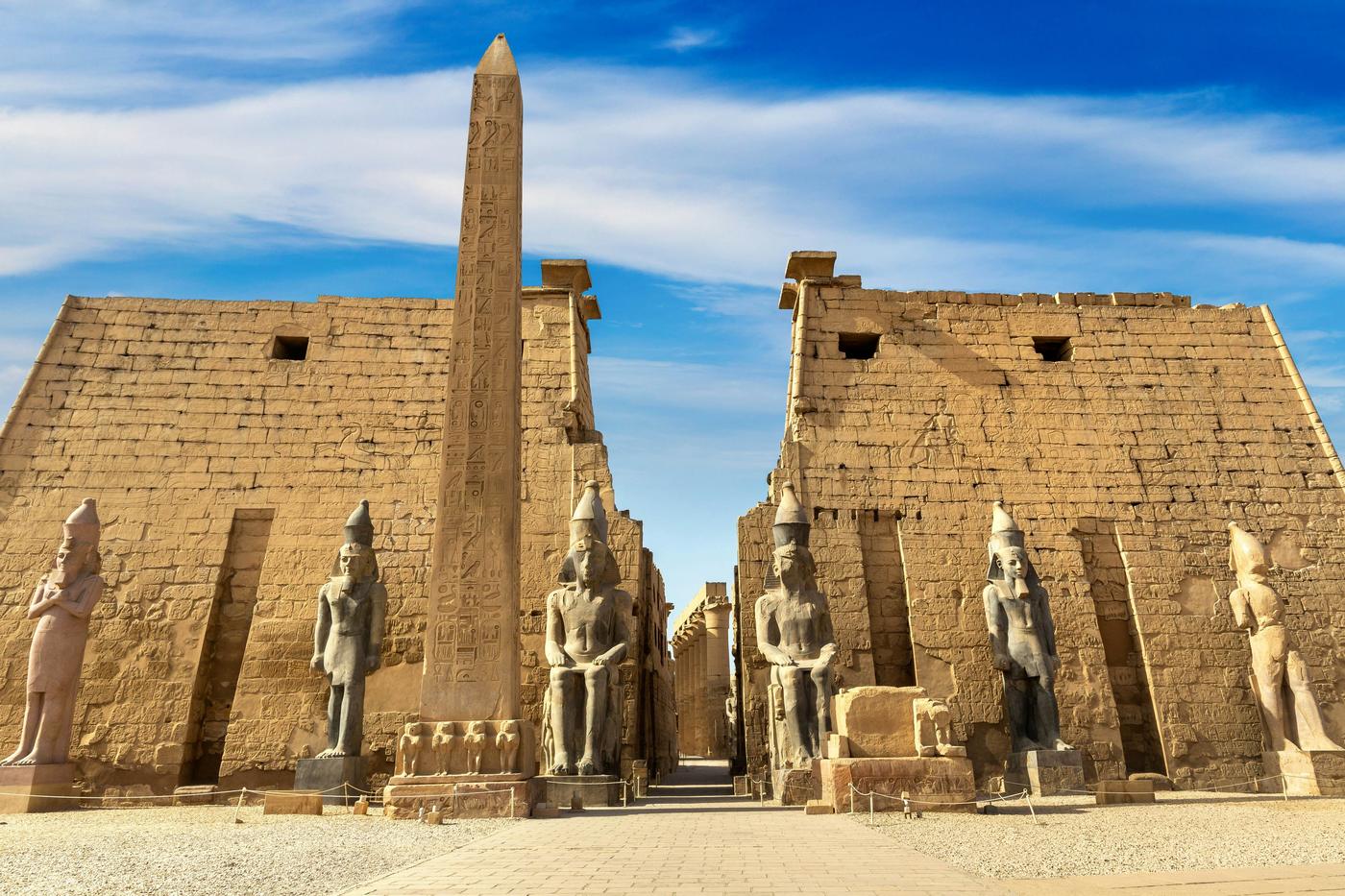
The entrance to Luxor Temple, with its obelisk and seated statues of Ramesses II

Day 4

The West Bank

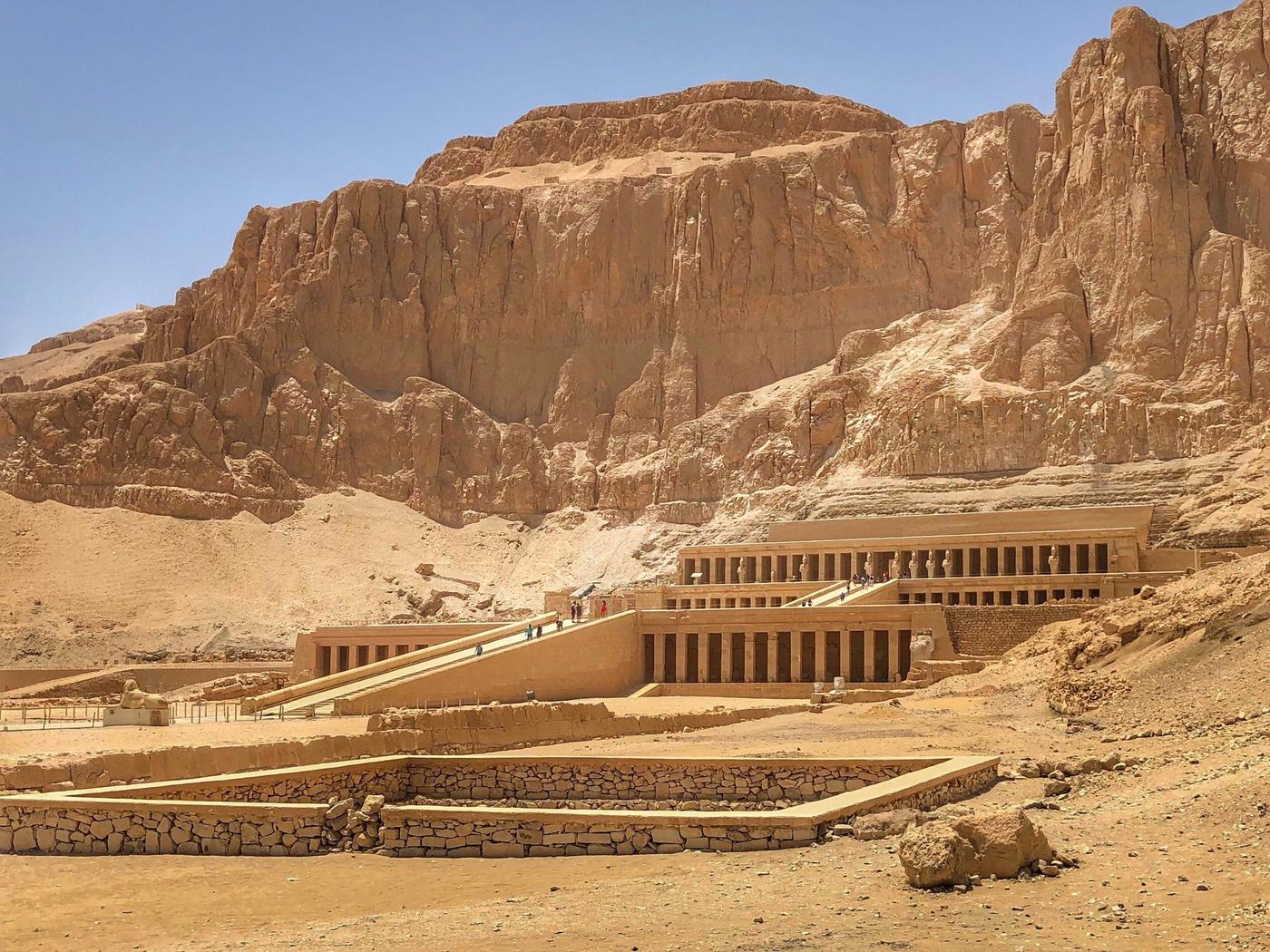
An early start takes you to Queen Hatshepsut's temple at Deir el-Bahari, built in terraces against the cliffs. It has a chapel to the goddess Hathor, and on the top terrace a sanctuary of Amun where the painted reliefs are well preserved. You're back at the hotel for breakfast in the garden.

Later you go to the Valley of the Kings for the tomb of Seti I, one of the finest in Egypt. Its long corridors and two pillared halls are decorated throughout, and the burial chamber has colourful wall scenes and an astronomical ceiling. Lunch is on the terrace at El Marsam on the West Bank, and the afternoon is free to rest before dinner at Al Moudira.

Overnight: Al Moudira

Hatshepsut's terraced temple at the foot of tall limestone cliffs

Day 5

Karnak, then on board

If you're up for it, you can start with a hot-air balloon flight over the West Bank at dawn and be back at Al Moudira for breakfast.

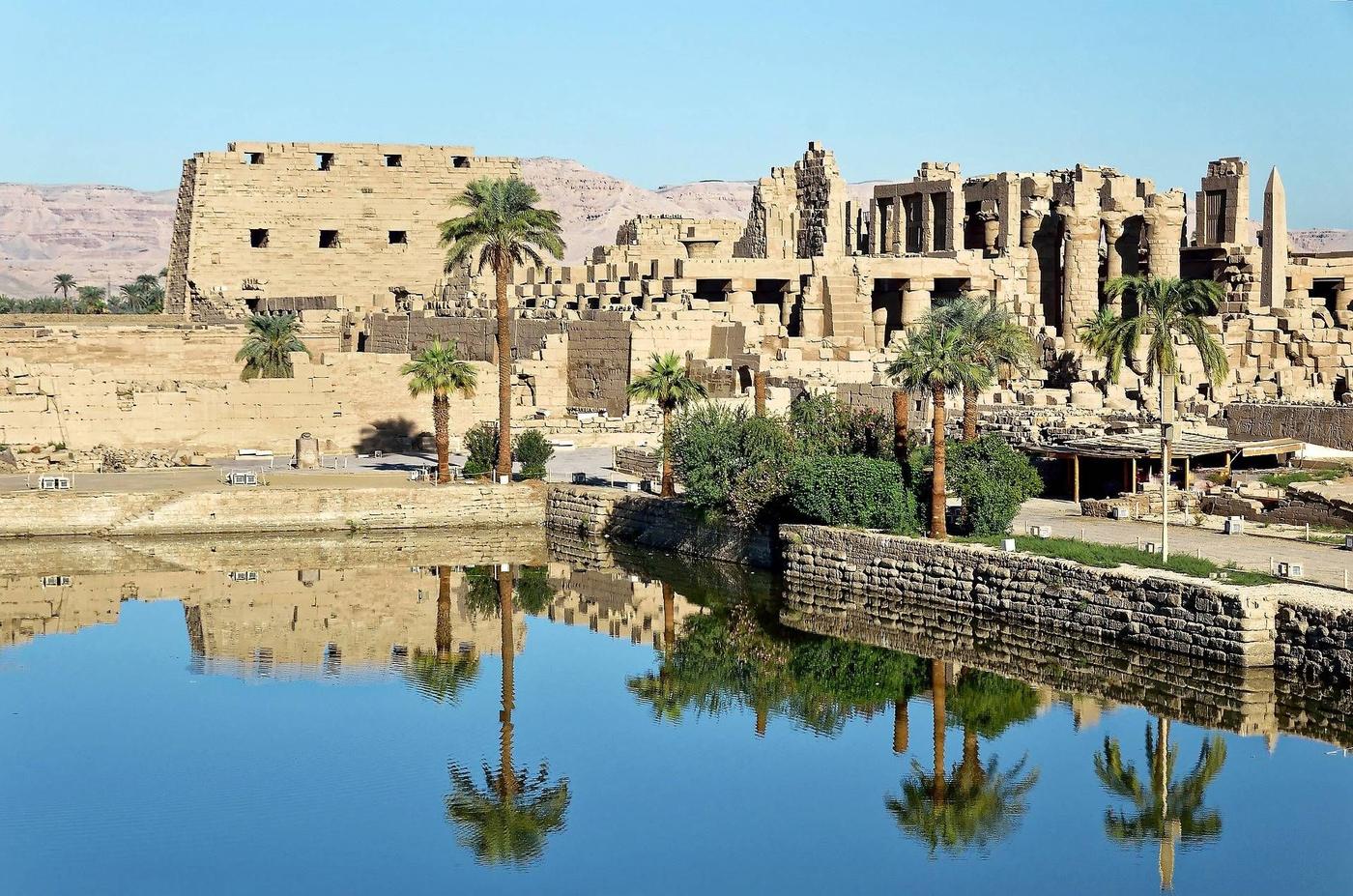
Then you cross to the East Bank for Karnak, one of the largest temple complexes in the world, built over about two thousand years. With your Egyptologist you focus on its goddess temples, which most visitors pass by. You see the Red Chapel of Hatshepsut and the temple of Opet, the hippopotamus goddess who protected women and children. Then you walk through the temple of the goddess Mut.

After lunch on the East Bank you can stop at a gold and silver jewellery workshop, then you board Nawara. That evening the boat sails south to Esna, going through the lock there.

Overnight: Nawara Dahabiya

The temple of Karnak reflected in its sacred lake, with palm trees along the bank

Day 6

Esna and El Kab

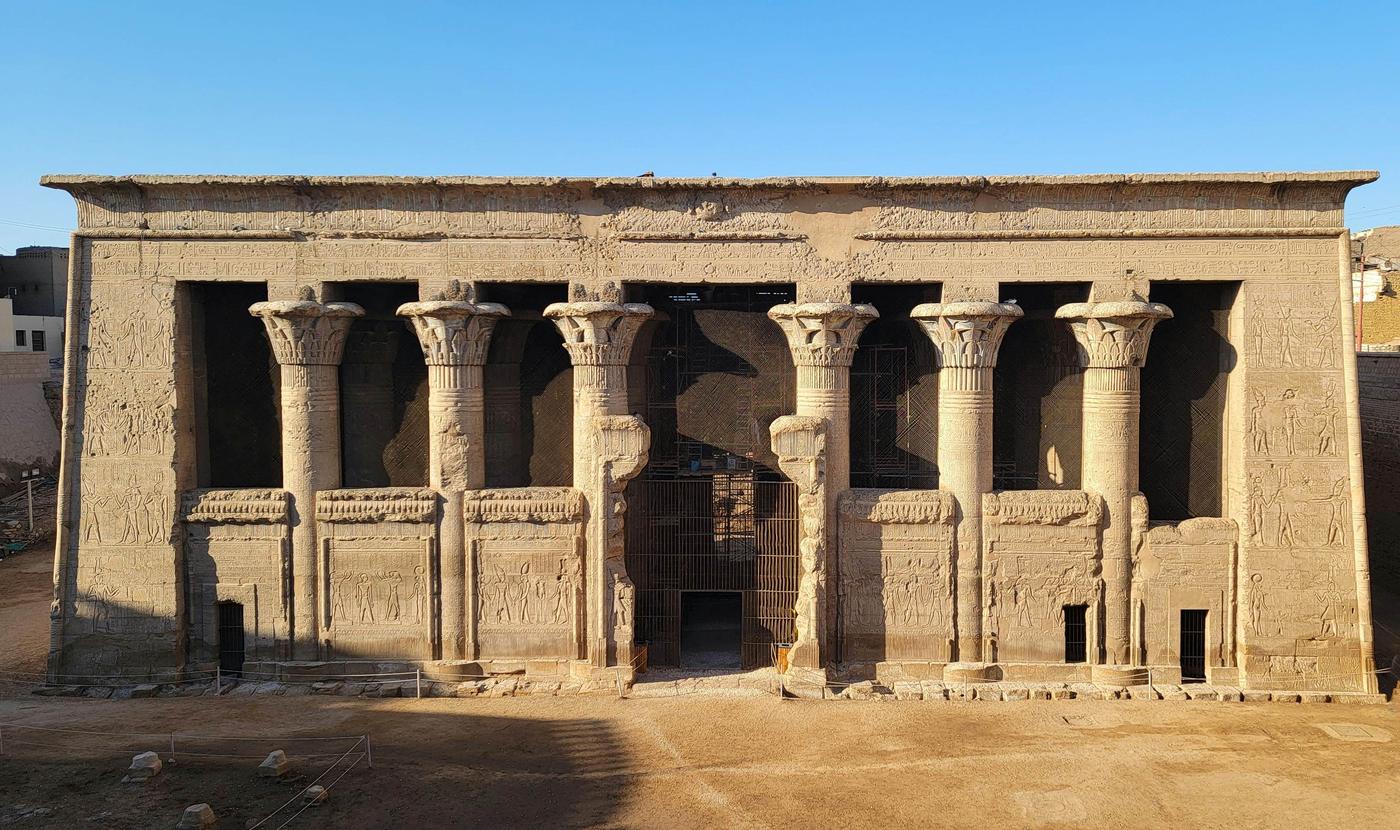
You visit the temple of Esna early, before breakfast. It's dedicated to the creator gods Khnum and Neith, and a long restoration has brought back the colour on its columns and astronomical ceiling.

After breakfast on board you sail on to El Kab, one of the oldest settlements in Upper Egypt. There you see its ancient town walls, a temple and rock-cut tombs from the New Kingdom. Lunch is on board as you sail, and in the evening there's a barbecue dinner on Ramadi Island.

Overnight: Nawara Dahabiya

The front of the temple of Esna, with its row of carved columns

Day 7

Bisaw Island and Gebel el-Silsila

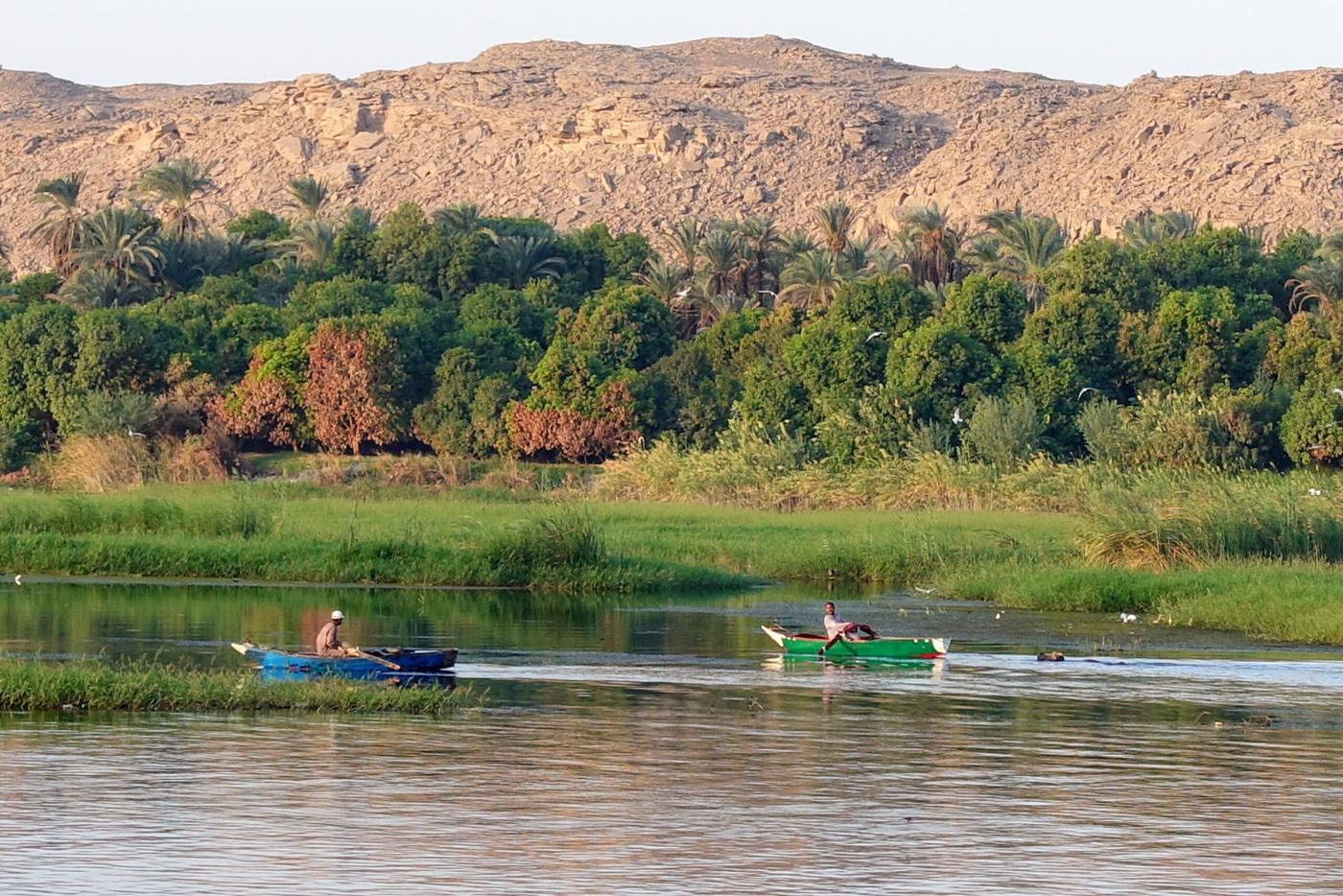
The boat sets off early, and you have breakfast on board on the way to Bisaw Island, a farming and fishing community. It's a break from the monuments. You walk through the fields and see how sun bread is baked at home, and you can go out with the fishermen in their boats.

After lunch on board you visit Gebel el-Silsila, where the ancient Egyptians quarried sandstone. There are rock-cut shrines and a small rock-cut temple of Horemheb, and a good view from the top of the hill. Then you sail on upstream toward Kom Ombo, with dinner on board.

Overnight: Nawara Dahabiya

Two fishermen in small boats on the Nile, with palms and a rocky ridge on the far bank

Day 8

Kom Ombo and Philae

After breakfast you visit the temple at Kom Ombo. It's dedicated to two gods, the crocodile god Sobek and the falcon god Horus, and the small Crocodile Museum is next door. Lunch is on board as you sail on to Aswan.

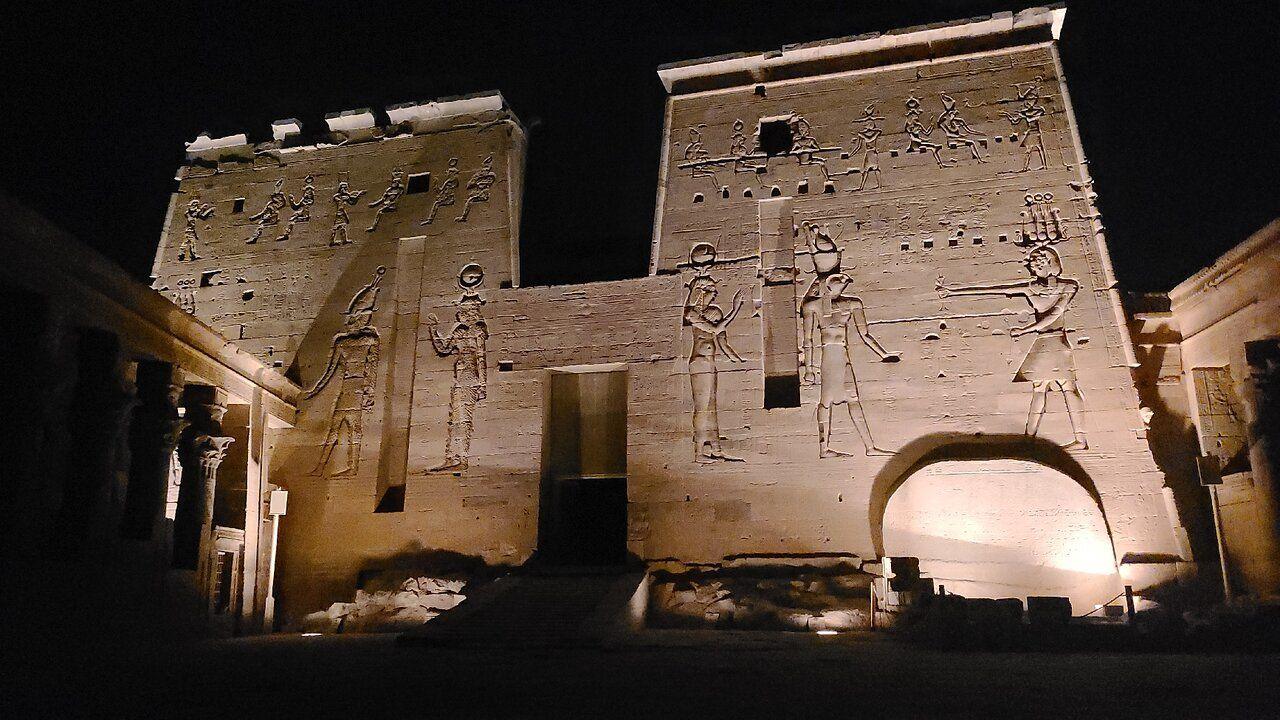
In the evening you can take a boat out to Philae, the temple of Isis on an island in the Nile near Aswan, for its sound and light show. It was one of the last places in Egypt where Isis was worshipped. Your farewell dinner is on board, and you spend a last night on the boat.

Overnight: Nawara Dahabiya

The pylon of the temple of Isis at Philae lit up at night, carved with figures of gods

Day 9

Aswan

After a last breakfast on board you leave the boat and move to the Old Cataract, the 1899 hotel above the Nile opposite Elephantine Island. From the hotel's back gate a private felucca takes you across to Elephantine, where your Egyptologist shows you the ruins of the temples of Khnum and Satet.

Back at the hotel there's afternoon tea on the terrace. Later you visit Kalabsha, a temple complex on its own island that fewer people see, with a temple to a Nubian sun god and a rock-cut temple to Amun-Re. If you'd rather shop, we can swap it for a papyrus workshop and a shop selling Egyptian cotton.

Overnight: Sofitel Legend Old Cataract

Feluccas sailing past rocky islands at Aswan, with a sand dune behind

Day 10

Abu Simbel

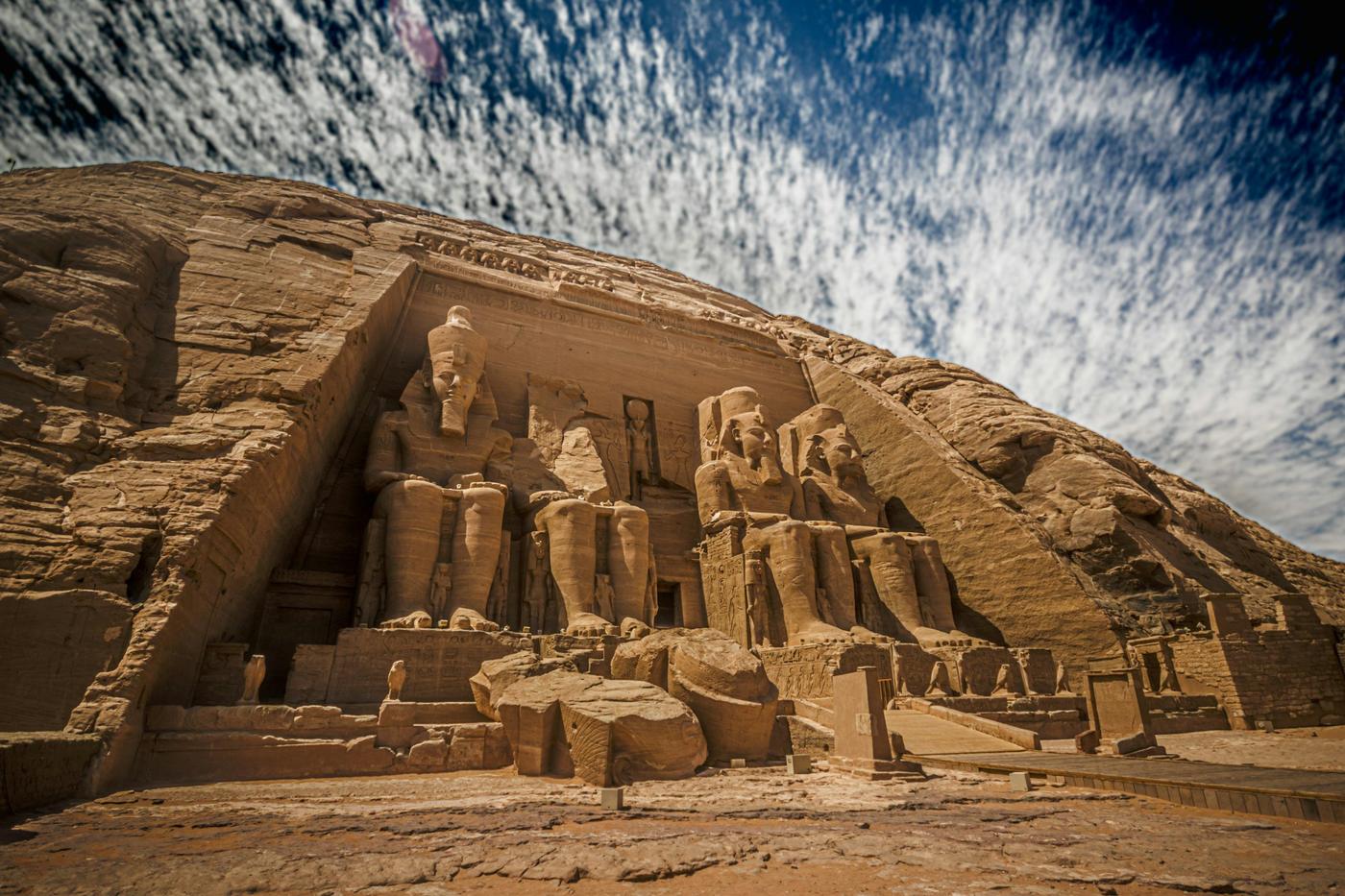
A short flight takes you across the Nubian desert to Abu Simbel and the two temples Ramesses II had carved into the mountainside, one for himself and one for his queen, Nefertari. Your Egyptologist guides you through both, and then you have a traditional brunch at a Nubian house before flying back to Aswan.

The rest of the day is yours at the Old Cataract.

Overnight: Sofitel Legend Old Cataract

The four seated colossi of Ramesses II carved into the rock at Abu Simbel

Day 11

Home via Cairo

We drive you to Aswan airport for the flight to Cairo and your connection home.

Questions

Questions About This Trip

Seasons, rules and schedules can change, and we rely on our partners on the ground for the latest. Ask us before you plan around any of these answers and we'll double-check them.

How long does a dahabiya take from Luxor to Aswan?

Most take three to five nights, and on this trip you have four on board. The wind on the Nile in Egypt mostly blows from the north, so a dahabiya can sail south to Aswan against the current. When there's little breeze, a small tug pulls the boat along.

Should you stay on the East Bank or the West Bank in Luxor?

Stay on the West Bank if you'd like it quieter. Most of the town is on the East Bank, along with Luxor Temple and Karnak. The West Bank is more rural, with sugar cane fields and villages around the Valley of the Kings and the other tombs and temples of ancient Thebes. Al Moudira is there, in ten hectares of palm groves and gardens.

Why was Abu Simbel moved?

It was moved to save it from Lake Nasser, the reservoir that rose behind the Aswan High Dam. Between 1964 and 1968 both temples were cut into blocks of about 20 tonnes each and rebuilt 65 metres higher and 200 metres back from the river. Philae and Kalabsha, which you also see on this trip, were moved to new sites in the same UNESCO campaign.

When is the sun festival at Abu Simbel?

It's on 22 February and 22 October each year. At sunrise on those two days the sun shines the length of the great temple and lights three of the four seated statues in the sanctuary, including Ramesses II. The fourth statue, of the god Ptah, stays in shadow.

Who discovered the tomb of Seti I in the Valley of the Kings?

Giovanni Belzoni, an Italian explorer, found it in October 1817. At about 137 metres it's one of the longest and deepest tombs in the valley. Belzoni brought Seti's alabaster sarcophagus to London, and it's been in Sir John Soane's Museum since 1824.

How It Works

We Arrange All of It

Each trip idea is a starting point. We adjust the length, the pace and the hotels to suit you, then book and manage every part of it.

  • Flights. Booked with your points where they're worth the most, and with cash where they aren't.
  • Every transfer. Private drivers, boats and domestic flights between each stop, timed to your arrival.
  • Guides and tours. Booked for the days that suit you, private or shared.
  • The hotels. Booked directly with the properties we work with, with rooms matched to your group.
  • Support while you're away. If a flight cancels or plans change, you contact us and we sort it out.

Plan This Trip

If your flight lands late on the first day, we add a night at Mena House so you still have time for the museum. For a family or a group of friends we can book Villa Zeina at Al Moudira, which has five bedrooms and its own pool. We can also add a night in Cairo at the end for the old city's mosques and markets.

Every trip is priced for your dates. Send us rough dates and who's travelling, and we'll come back with the full plan.

Ask About This Trip