Inside a safari tent at Galapagos Safari Camp, with a wide bed and doors open onto the deck and the trees

Trip Ideas · Ecuador

Ecuador: The Galápagos from a Tented Camp on Santa Cruz

Five nights at a tented camp in the Santa Cruz highlands, with private guided days on the island and boat trips to the uninhabited islands of North Seymour and Santa Fe.

8 days, 7 nights

The Trip

This trip keeps you in one place in the Galápagos: Galapagos Safari Camp, nine tents and a family suite on private land in the highlands of Santa Cruz, where giant tortoises roam the grounds. You have your own naturalist guide and car for the days on Santa Cruz. You see the twin sinkholes at Los Gemelos and a tortoise reserve, the beach at Garrapatero and a working farm, and you spend a day at sea with a local fisherman. Two days go to shared boat trips to the uninhabited islands of North Seymour and Santa Fe for seabirds, land iguanas and snorkelling with sea lions.

It suits families well. The camp welcomes children of all ages and has a kids club. Because the days on Santa Cruz are private, they can be slowed down or changed to suit everyone. In the national park you're always with a licensed naturalist guide, and you keep two metres from the animals. You spend a night in Quito at each end, at Casa Gangotena on Plaza San Francisco.

By Next Mile Travel · Updated

The Route

12QUITO2 nightsSANTA CRUZ5 nights 12QUITO2 nightsSANTA CRUZ5 nights

Itinerary

Day by Day

Day 1

Arrive in Quito

We meet you at Quito airport (UIO) and drive you about an hour to Casa Gangotena in the old town. Quito sits about 25 km (16 miles) south of the equator and was built on the ruins of an Inca city. Its old centre has been a UNESCO World Heritage Site since 1978. If you have time, you can visit the Alabado archaeology museum or go up El Panecillo, a 200-metre hill with views over the city to Cotopaxi and Pichincha.

Overnight: Casa Gangotena

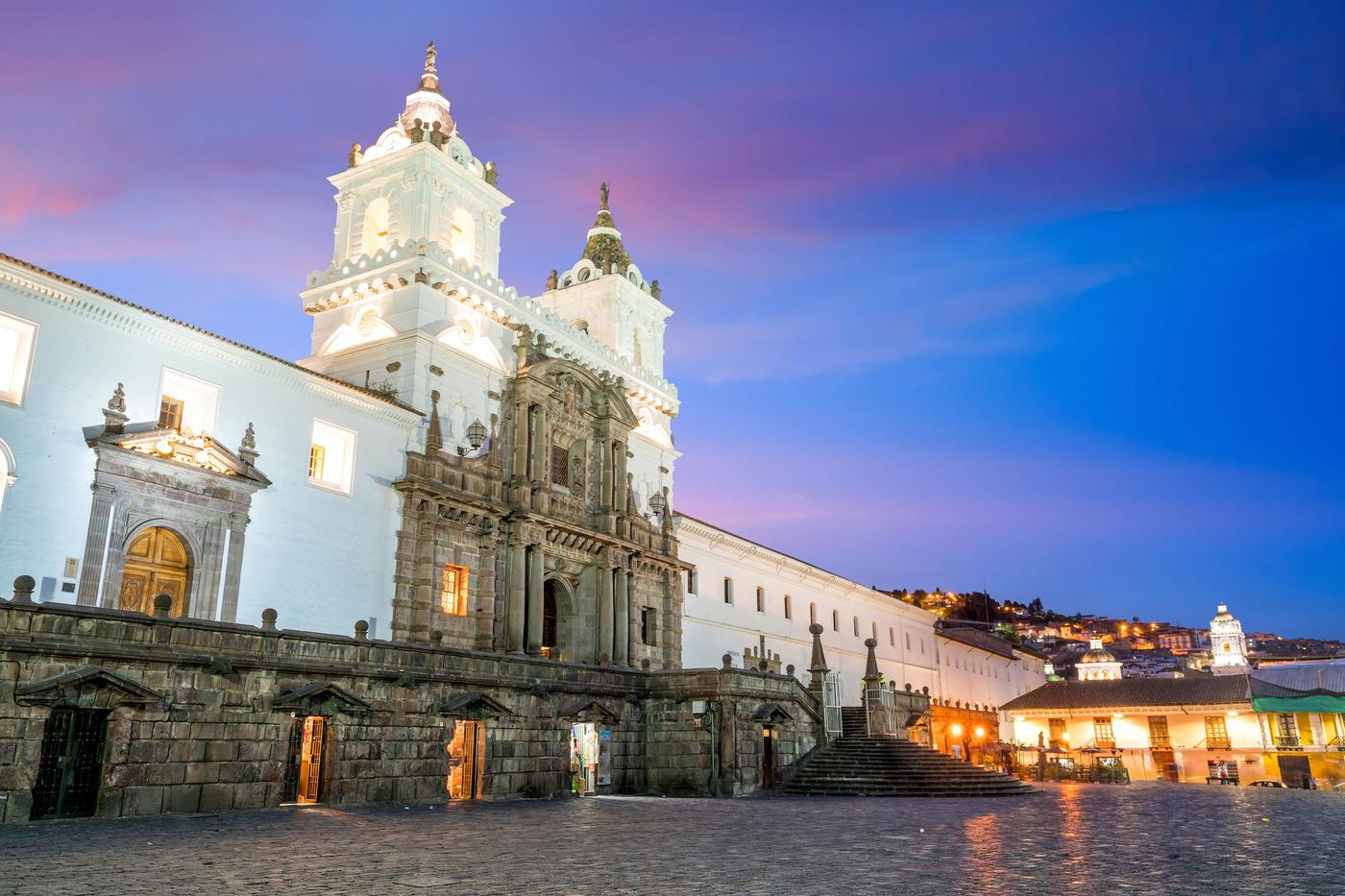
The church and convent of San Francisco on Plaza San Francisco at dusk

Day 2

Baltra and the Santa Cruz highlands

You fly from Quito to Baltra (GPS). The Galápagos is an hour behind mainland Ecuador. At the airport the staff look after your bags while you wait in a lounge, and then you meet your naturalist guide, who stays with you for the rest of your time on the islands.

A short drive takes you to the dock, where a boat crosses the Itabaca Channel to Santa Cruz, and then it's about 30 minutes by car up into the highlands. On the way you stop at Los Gemelos, two huge sinkholes, and walk the rim through the Scalesia forest looking for Galápagos doves and Darwin's finches.

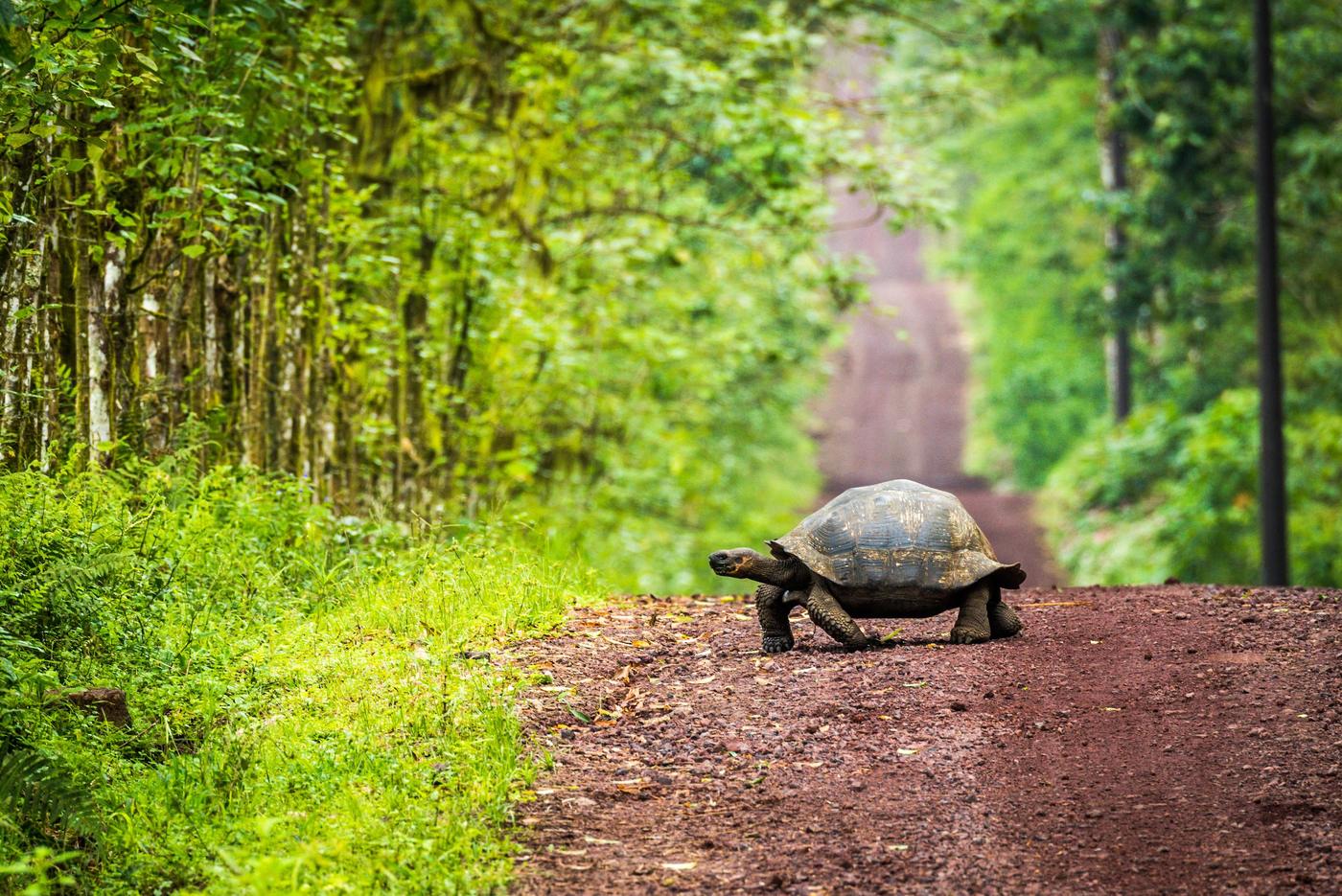
Next is a reserve where you walk a gentle trail among giant tortoises in the wild, and you might spot short-eared owls in the trees. After lunch at a local restaurant you go down into the lava tubes under the reserve, tunnels left by old lava flows. You reach the camp in the afternoon.

Overnight: Galapagos Safari Camp

A giant tortoise crossing a red dirt track through green highland forest

Day 3

North Seymour and Las Bachas

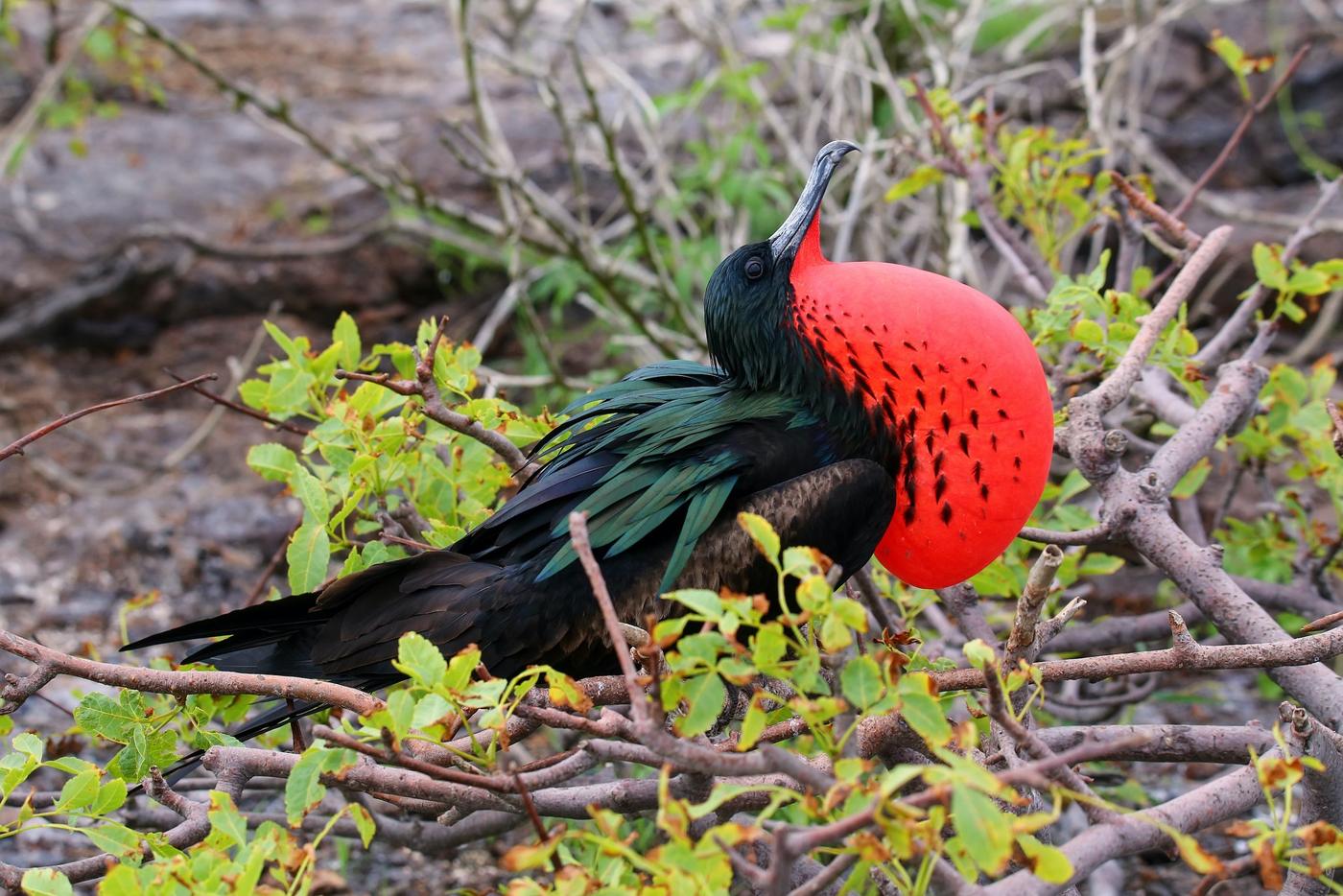
A shared boat takes you from the Itabaca Channel to North Seymour, a small uninhabited island just north of Baltra. From a dry landing you walk a flat trail of about 2 km through dwarf palo santo trees, past colonies of nesting boobies and frigatebirds. The blue-footed boobies do their courtship dance and the male frigatebirds puff up their red throat pouches. They breed at any time of year, whenever there's plenty of food. You'll also see land iguanas, and sea lions resting under the rocks near the end of the trail.

After a snorkel off the island you have lunch on the boat on the way to Las Bachas, a white beach on the north coast of Santa Cruz that you can only reach by sea. Green turtles come ashore to nest here at night from about December to June. Your guide walks you along the beach to a lagoon where flamingos are sometimes seen, and on the way you pass the half-hidden remains of a barge the US army left in the Second World War. Then there's time to swim before the boat takes you back. If the sea is too rough off North Seymour, you snorkel at Las Bachas instead.

Overnight: Galapagos Safari Camp

A male frigatebird with its red throat pouch puffed out, perched in a bush

Day 4

Cerro Mesa, Garrapatero and El Trapiche

The day starts at Cerro Mesa, a private reserve full of native plants and birds. You walk its trails with your guide to a lookout where, on a clear day, you can see across Santa Cruz to the nearby islands. Then you go down to Garrapatero beach by car or, if you like, by bike on an easy 8 km (5 mile) downhill ride. From the car park it's a 500-metre walk to the beach. Watch out for the manzanillo trees along the path, whose small apples are poisonous, and even the sap can burn your skin.

Garrapatero is a white beach between black lava and mangroves, with a small lagoon behind it where flamingos are sometimes seen. You can snorkel in the bay or take a kayak into the mangroves. Lunch is a picnic in the shade or a later meal at a restaurant in Puerto Ayora.

On the way back to camp you stop at El Trapiche, a working farm in the highlands that grows coffee and makes a spirit from sugar cane. The farmer shows you how the cane is pressed, including the old way with a mule-driven press.

Overnight: Galapagos Safari Camp

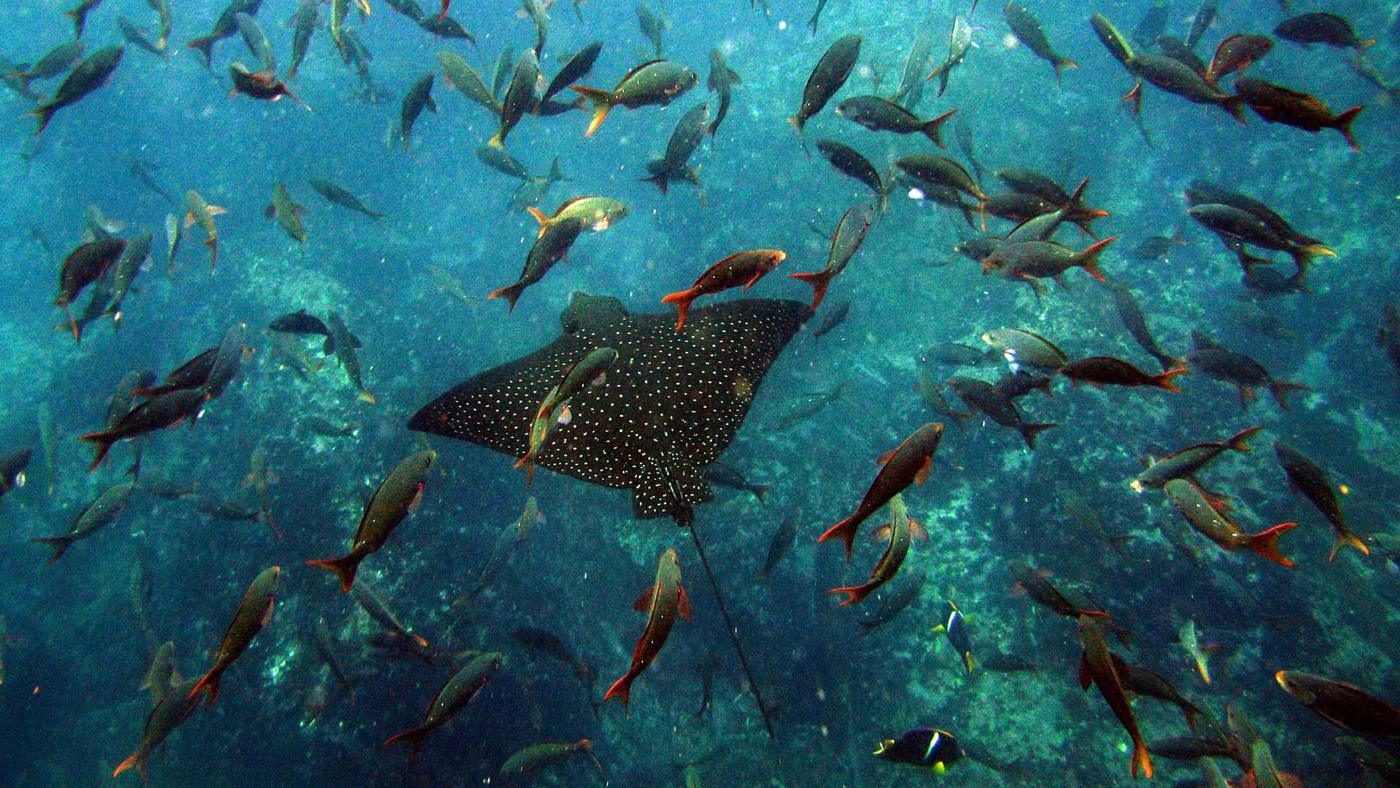
A spotted eagle ray swimming among a shoal of fish

Day 5

Santa Fe

Today a shared boat takes you about two hours from Puerto Ayora to Santa Fe, one of the oldest islands in the archipelago. It was pushed up from the sea floor rather than built by a volcano, and the lava under the water here is 3.9 million years old. You land on the beach at Barrington Bay among groups of sea lions.

Your guide takes you on two trails, about 1.8 km in all. One loops through a forest of Santa Fe prickly pear cactus, which grows nowhere else and has a much thicker trunk than the others. The other climbs the cliffs for a view over the bay and the islands around it. Look out for the pale yellow Santa Fe land iguana, which lives only on this island, as well as the Santa Fe rice rat and sometimes a Galápagos hawk.

The rest of the morning is for snorkelling in the bay, where sea lions slip into the water to swim with you and marine iguanas sun themselves on the rocks. Lunch is on the boat on the way back to Santa Cruz.

Overnight: Galapagos Safari Camp
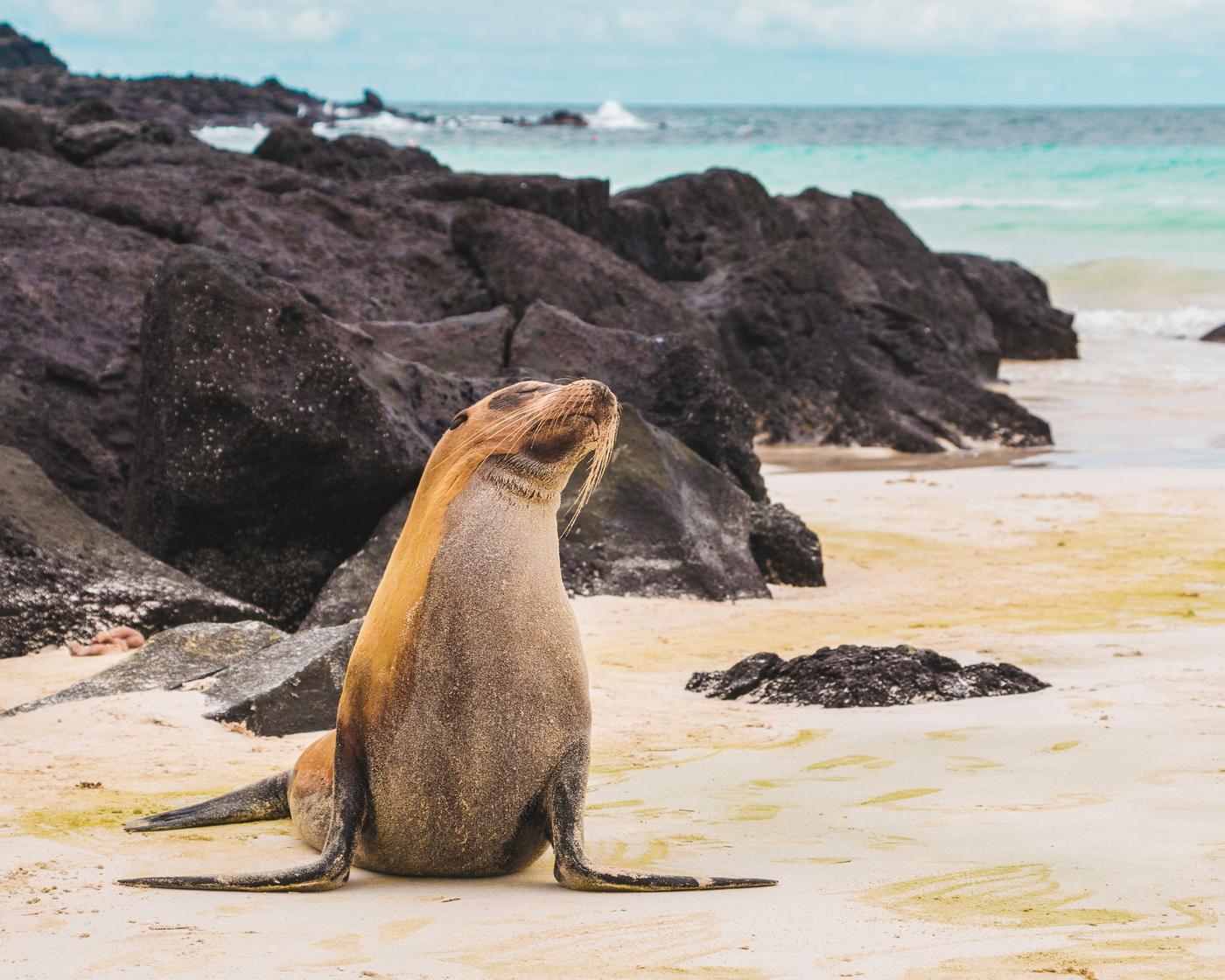
A Galápagos sea lion sitting up on a sandy beach by black rocks

Day 6

A day out with a local fisherman

You spend the day at sea on a local fisherman's boat, leaving from the Itabaca Channel. This is part of a national park scheme that gives fishermen another way to earn a living and eases the pressure from overfishing. After a hands-on lesson you try to catch your dinner, most often yellowfin tuna or palometa. The crew can make sashimi on board for lunch, or you take your catch back to camp for the chef to cook.

Between fishing spots you snorkel with rays, schools of fish and sea lions, and stop at a quiet beach that most visitors never reach. Sometimes dolphins follow the boat. You can spend as much or as little of the day fishing as you like.

Overnight: Galapagos Safari Camp
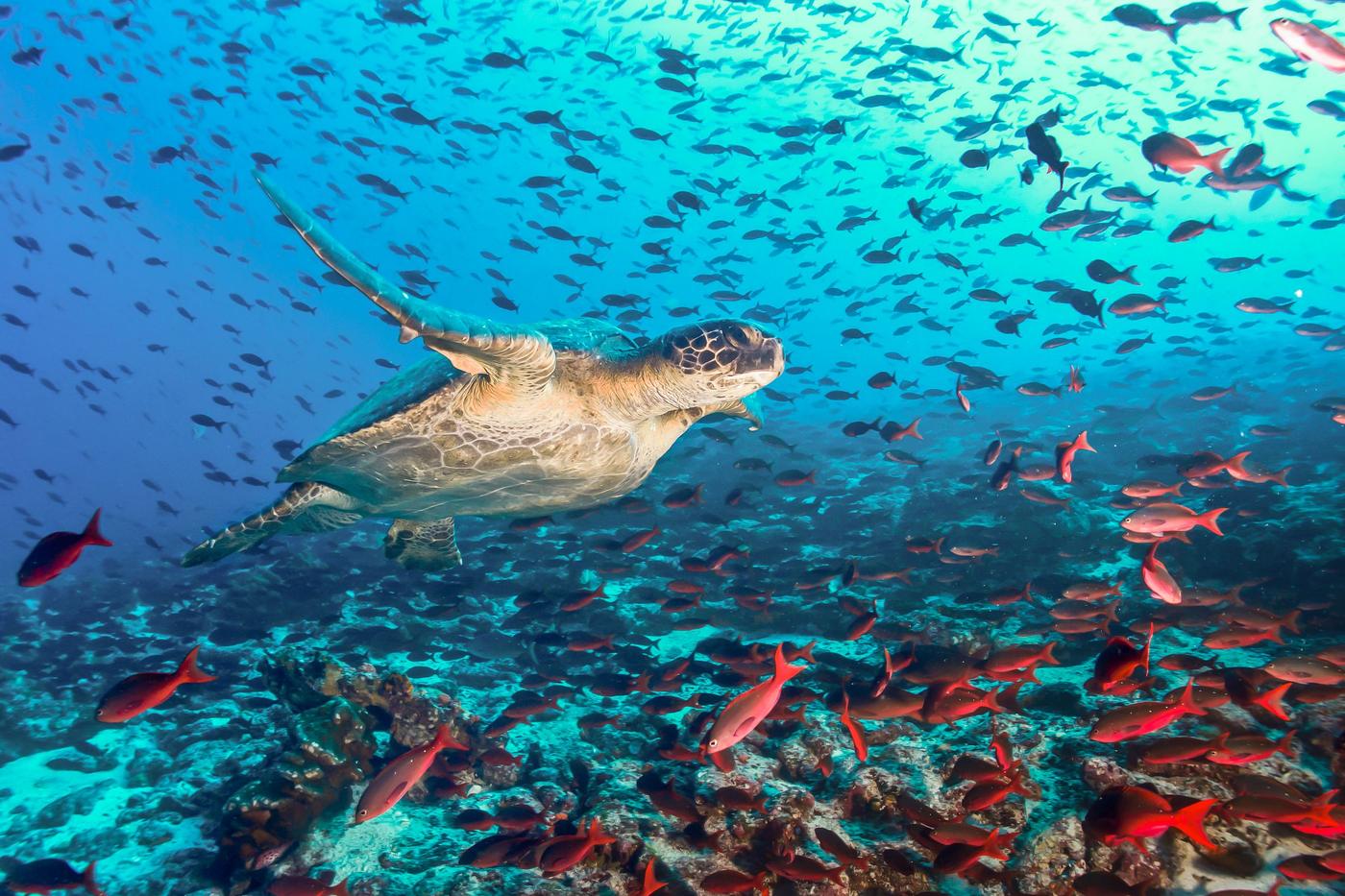
A sea turtle swimming among shoals of red and blue fish

Day 7

Back to Quito

You can get up early to watch the sunrise from the camp's observation deck, then have breakfast on the veranda with the finches and warblers. Your guide comes with you across the Itabaca Channel to Baltra airport (GPS) for the flight back to Quito, where we take you to Casa Gangotena for the night.

Overnight: Casa Gangotena

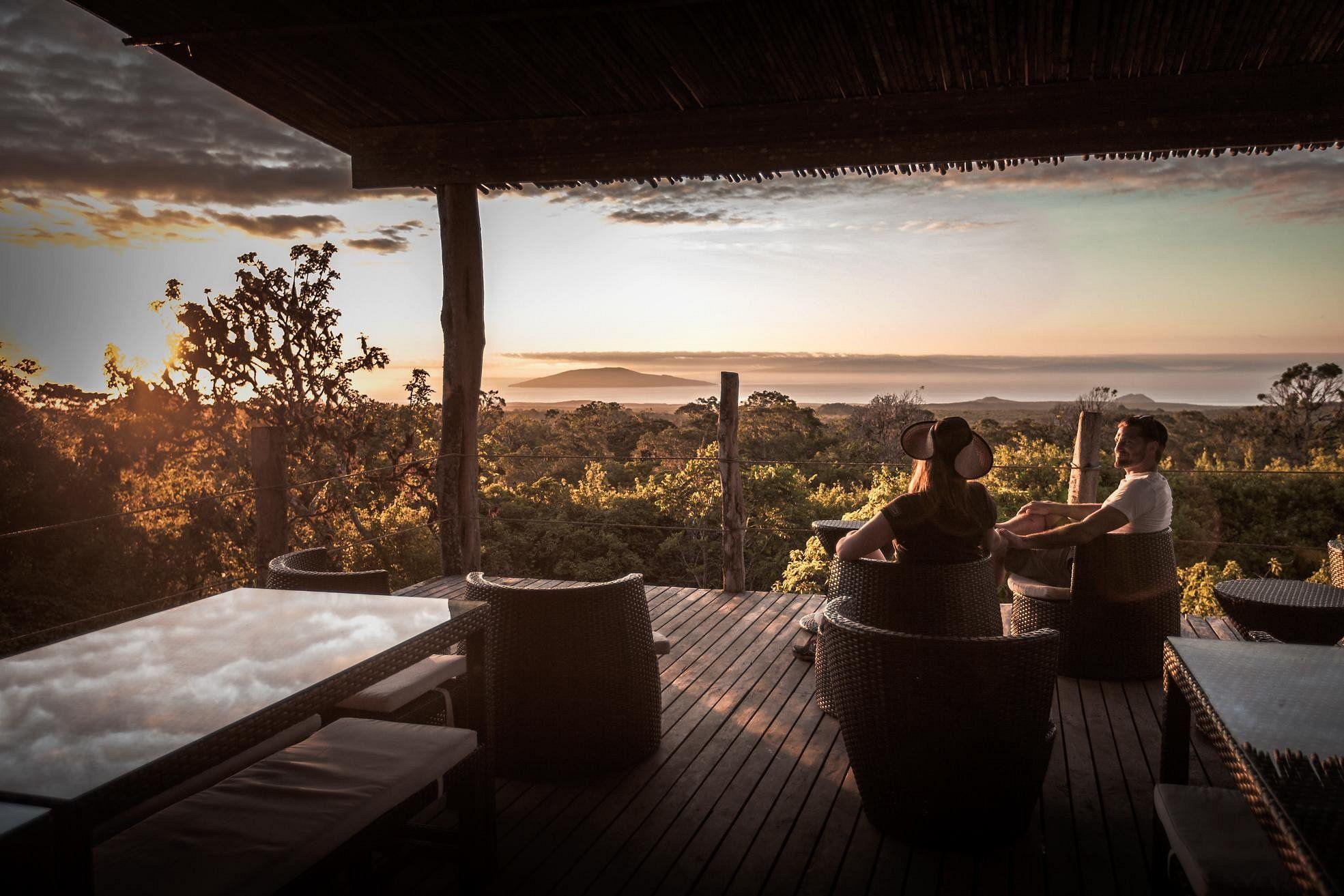
Two guests on the camp's covered deck at sunset, looking out over the forest to the sea

Day 8

Home from Quito

After breakfast we drive you about an hour to Quito airport (UIO) for your flight home.

Questions

Questions About This Trip

Seasons, rules and schedules can change, and we rely on our partners on the ground for the latest. Ask us before you plan around any of these answers and we'll double-check them.

Is Galapagos Safari Camp good for young children?

Yes. The Family Suite sleeps six in three bedrooms, each with its own bathroom, and has a playroom and a big deck away from the tents. Some of the tents have two bedrooms and two bathrooms, and the others take an extra bed and a cot. Each tent is up a short flight of stairs, and the staff can drive you between the lodge and your tent.

Do the giant tortoises on Santa Cruz migrate?

Many of the adults do. Around June, when the cool dry season starts, they walk up into the highlands to feed on plants the mist keeps green. They head back down to the lowlands when the rains return, and some walk as far as 10 kilometres. The young stay in the lowlands all year, and not every adult makes the trip.

What's the weather like in the highlands of Santa Cruz?

The highlands are cooler and mistier than the coast, most of all from about June to December. That's the garúa season, when a fine drizzle settles over the high ground while the lowlands stay mostly dry. From about December to June it's warmer, with heavy showers that clear to blue sky, so the highlands stay green all year.

How It Works

We Arrange All of It

Each trip idea is a starting point. We adjust the length, the pace and the hotels to suit you, then book and manage every part of it.

  • Flights. Booked with your points where they're worth the most, and with cash where they aren't.
  • Every transfer. Private drivers, boats and domestic flights between each stop, timed to your arrival.
  • Guides and tours. Booked for the days that suit you, private or shared.
  • The hotels. Booked directly with the properties we work with, with rooms matched to your group.
  • Support while you're away. If a flight cancels or plans change, you contact us and we sort it out.

Plan This Trip

We can add nights at the camp for more days on Santa Cruz and the islands nearby, or start with our week in the Andes and the Amazon. If you'd like to see more than one island from the land, our island-hopping trip moves between hotels on San Cristóbal, Isabela and Santa Cruz. If you get seasick, the calmer seas from about December to June are the better time to go.

Every trip is priced for your dates. Send us rough dates and who's travelling, and we'll come back with the full plan.

Ask About This Trip