A snorkeller diving down beside a green sea turtle over red seaweed

Trip Ideas · Ecuador

Ecuador: Snorkelling, Hiking and Biking on Three Galápagos Islands

Island hopping between beach hotels on San Cristóbal, Isabela and Santa Cruz, where you snorkel with sea lions and turtles and hike up an active volcano.

10 days, 9 nights

The Trip

This is the Galápagos by land, moving between three islands with a beach hotel on each instead of sleeping on a boat. You start on San Cristóbal, where you snorkel with sea lions at La Lobería and take a boat out to Kicker Rock. A small plane takes you on to Isabela for three nights. There you ride bikes along the coast, snorkel through the lava arches at Los Túneles, hike to the rim of Sierra Negra and kayak to Las Tintoreras. A speedboat brings you to Santa Cruz for the giant tortoises in the highlands and a surf lesson at Tortuga Bay.

You spend a night in Quito at each end, at Casa Gangotena on Plaza San Francisco. Every visit in the national park is with a licensed naturalist guide. You'll be in the water most days, so you'll want to be comfortable snorkelling.

By Next Mile Travel · Updated

The Route

123–4QUITO2 nightsSAN CRISTÓBAL2 nightsISABELASANTA CRUZ5 nights 12–4QUITO2 nightsSAN CRISTÓBALISABELASANTA CRUZ7 nights

Itinerary

Day by Day

Day 1

Arrive in Quito

We meet you at Quito airport (UIO) and drive you about an hour to Casa Gangotena in the old town. If you land early, there's time to walk the old town's churches and squares. In the evening your guide goes through the trip with you.

Overnight: Casa Gangotena

A couple on a cobbled street of white colonial houses in Quito's old town

Day 2

San Cristóbal and La Lobería

You fly from Quito to San Cristóbal (SCY), and the hotel is less than ten minutes from the airport in Puerto Baquerizo Moreno. After a short briefing on the days ahead, you go out in the afternoon to La Lobería, a beach where Galápagos sea lions live.

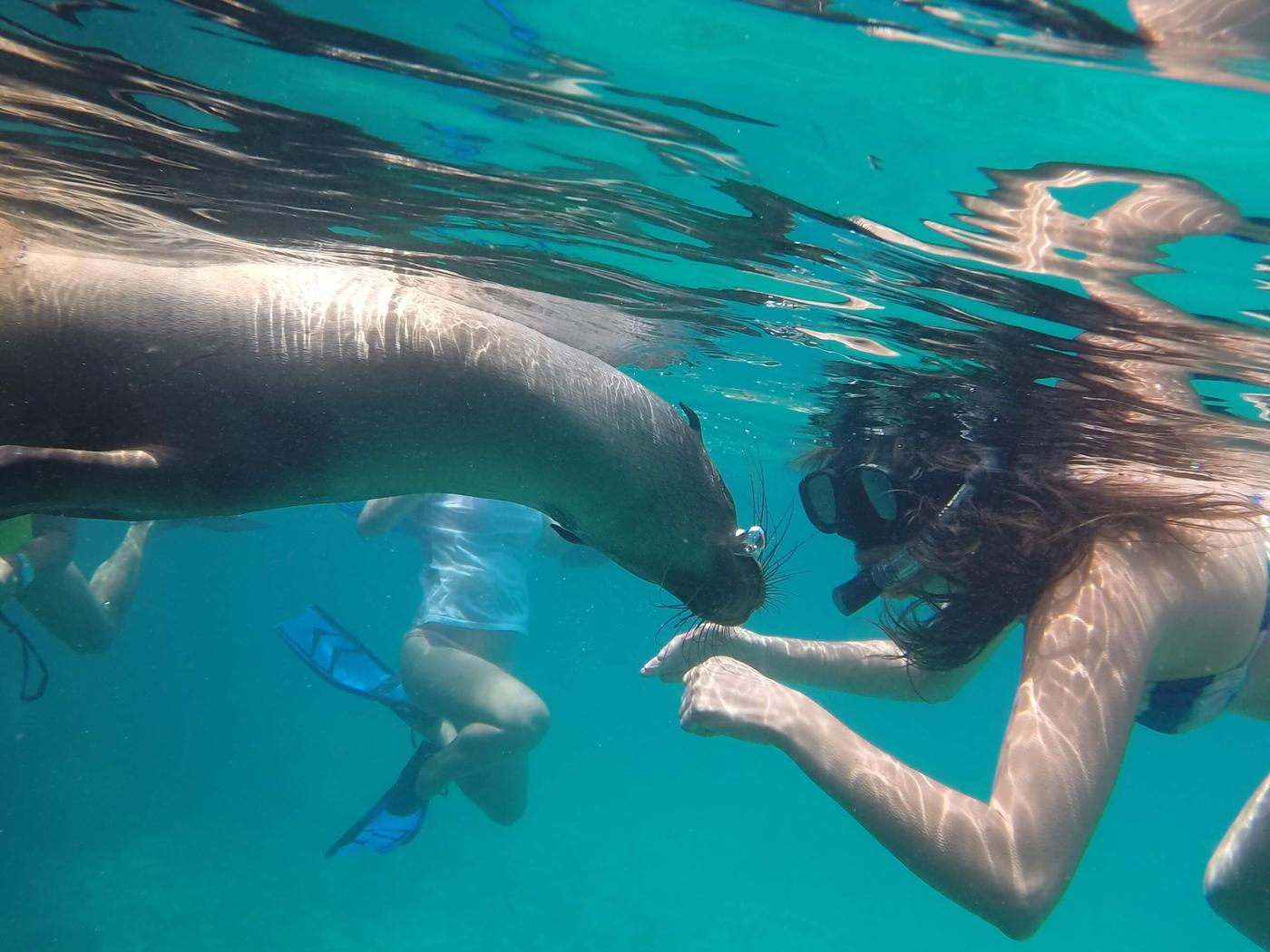
The sea lions are curious and often swim right up to you while you snorkel, or you'll find them asleep on the rocks and sand. Yellow warblers, frigatebirds and several kinds of Darwin's finch live along the beach, and marine iguanas lie between the rocks. There's time to swim and relax on the beach too.

Overnight: Golden Bay Galapagos

Snorkellers swimming with a sea lion in clear green water

Day 3

Kicker Rock

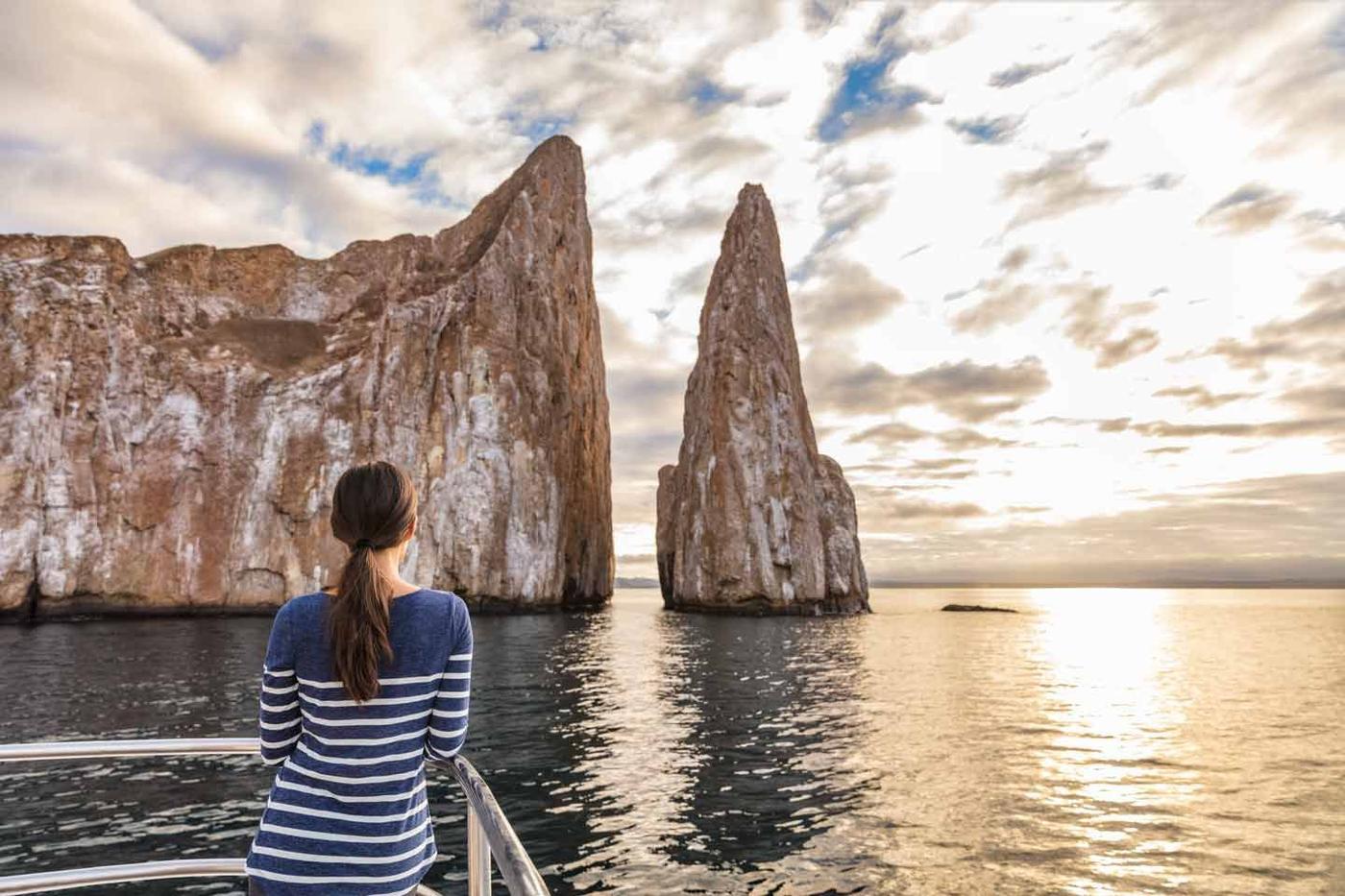
In the morning a boat takes you out to Kicker Rock, which is also called León Dormido (the Sleeping Lion) for its shape. It's what's left of a lava cone worn down by the sea: two sheer rocks about 150 metres (500 feet) high, with a channel between them that small boats can pass through. Tropicbirds, frigatebirds and boobies fly overhead.

Underwater there are shoals of colourful fish, and you may see hammerhead and white-tip sharks. After lunch you spend some time on a beach before heading back to the hotel.

Overnight: Golden Bay Galapagos

A woman on a boat deck looking out at the two towers of Kicker Rock at sunset

Day 4

Isabela by bike

A short flight in a small plane takes you to Isabela, the largest island in the Galápagos. It was formed by six shield volcanoes, and five of them are still active. Most of the volcanic activity in the islands happens here.

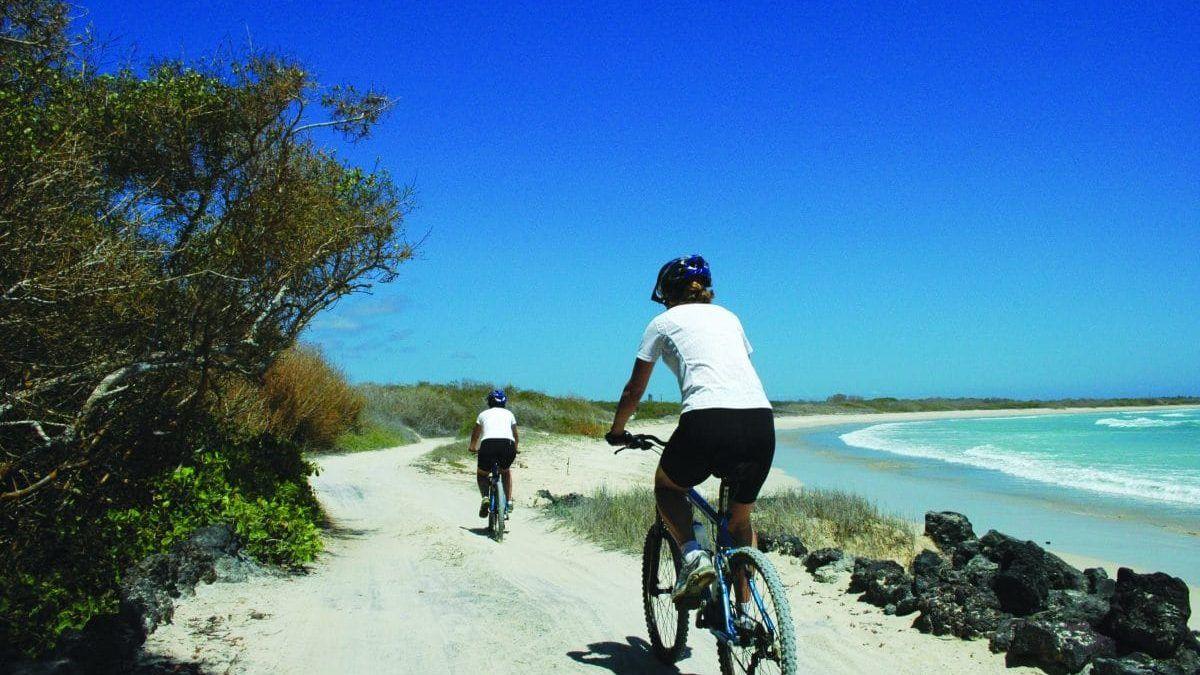
In the afternoon you ride bikes along the coast from Puerto Villamil. The first stop is the Wall of Tears, a huge wall of lava rock that prisoners were made to build in the 1950s, when Isabela was a penal colony. From there the trail runs past white beaches, mangroves and lagoons. Flamingos, herons, oystercatchers and finches live in the lagoons. You'll see sea lions and marine iguanas all along the way, and giant tortoises too. In the evening you can watch the sunset from the beach at Puerto Villamil.

Overnight: Iguana Crossing

Two cyclists on a sandy track beside a white beach and turquoise sea

Day 5

Snorkelling at Los Túneles

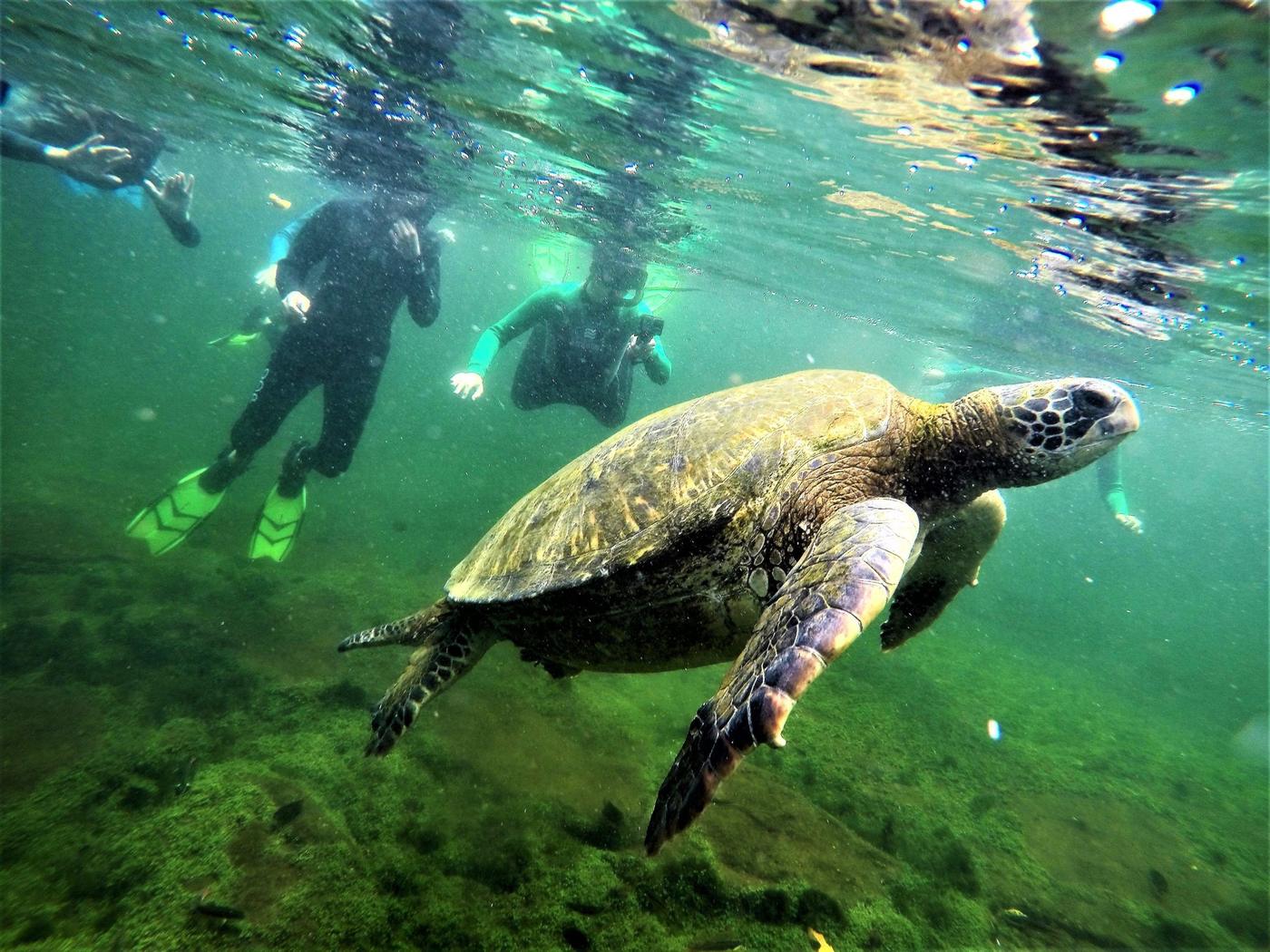
Today is the best snorkelling of the trip, at Los Túneles. Old lava flows along the shore have formed a maze of arches and tunnels in clear water. Sea turtles use the channels to travel between the mangroves and the open sea, and you swim with them alongside eagle rays, sea lions and sharks. You may also see Galápagos penguins.

Overnight: Iguana Crossing

Snorkellers above a green sea turtle swimming over the sea floor

Day 6

Sierra Negra and Las Tintoreras

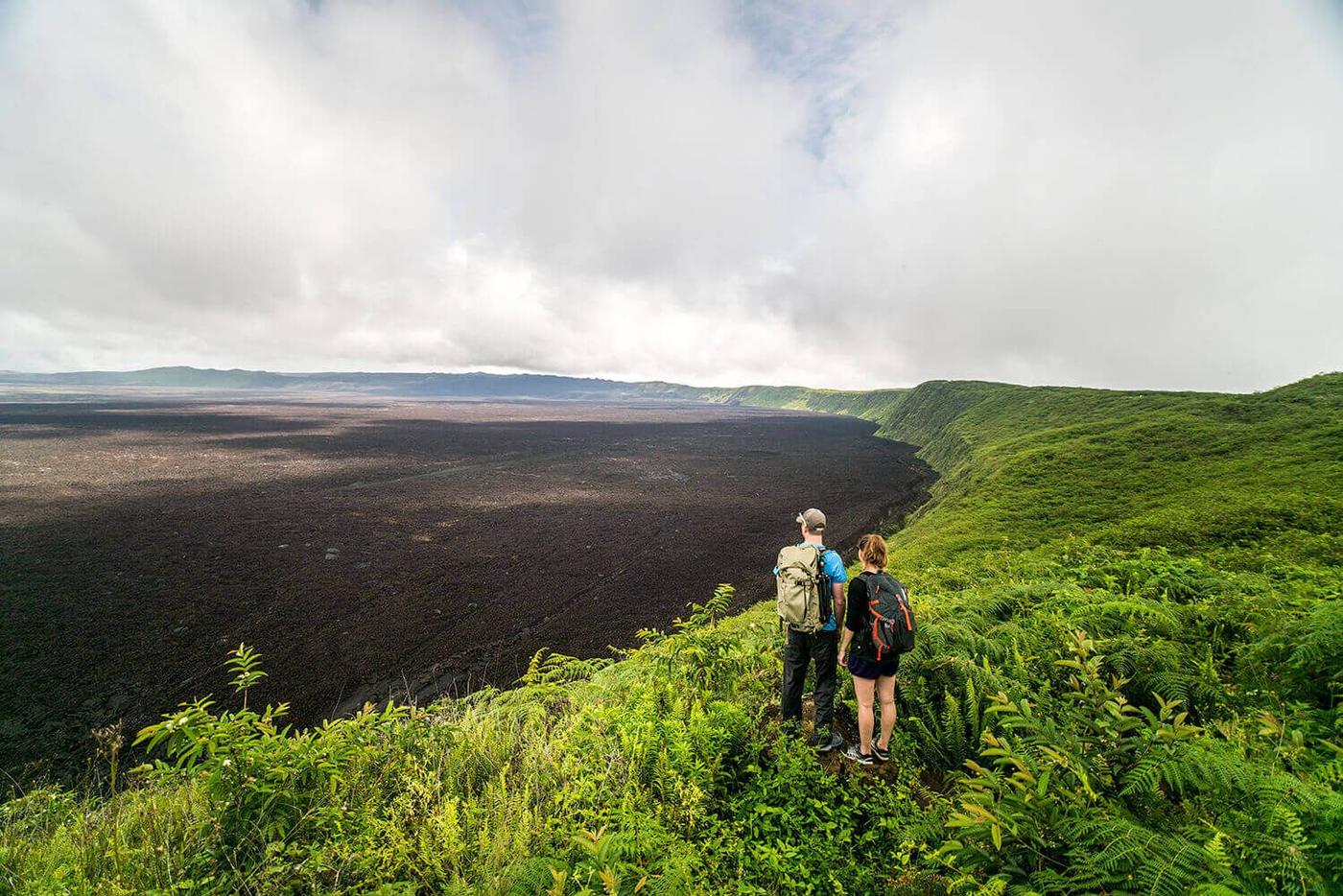
You drive up from Puerto Villamil to the trailhead and hike through young forest on fairly new volcanic ground to the rim of Sierra Negra, an active volcano. The caldera is more than six miles (about ten kilometres) across at its widest, and its floor is filled with lava. If you still have energy, you can carry on to Volcán Chico, a side crater with steaming fumaroles and colourful lava.

In the afternoon you kayak out to Las Tintoreras, a small islet just off Puerto Villamil. In its clear water you'll find white-tipped reef sharks, Galápagos penguins, sea turtles and sea lions. One of its mangrove-lined beaches is one of the few places where marine iguanas breed successfully.

Overnight: Iguana Crossing

Two hikers on a green ridge above the black lava floor of Sierra Negra's caldera

Day 7

Santa Cruz and the giant tortoises

In the morning a speedboat takes you from Isabela to Santa Cruz, where you check in at Finch Bay. Then you visit the Charles Darwin Research Station to learn about the islands' native species and the work being done to protect them.

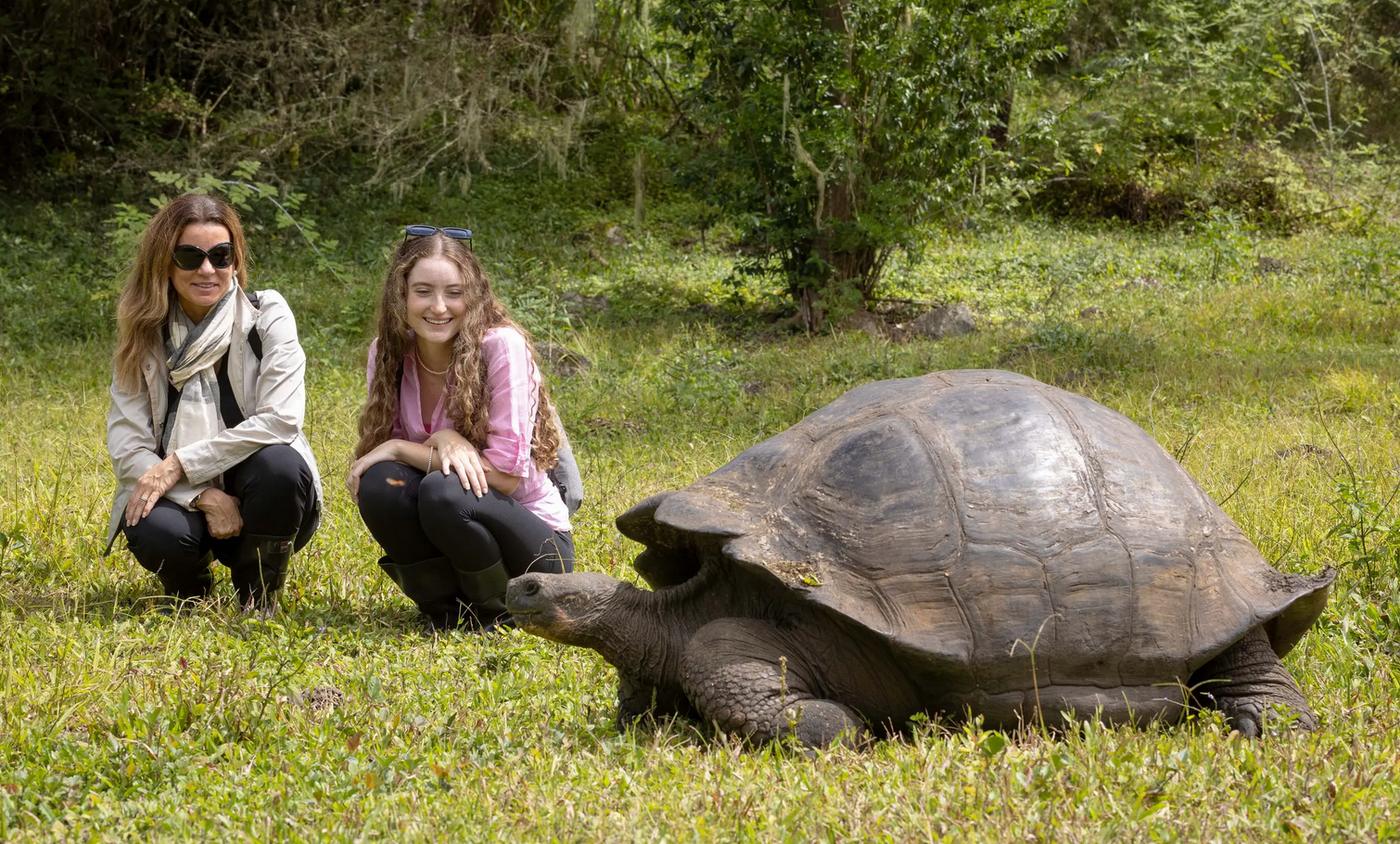
In the afternoon you go up to the El Chato reserve in the highlands, where giant tortoises live in the wild, and walk among them. You may also see pintail ducks, egrets and flycatchers. Frigatebirds come to a freshwater lake here to wash the salt off their feathers. In the evening you can go into Puerto Ayora, the biggest town in the Galápagos.

Overnight: Finch Bay Galapagos Hotel

Two women crouching on the grass beside a giant tortoise

Day 8

A surf lesson at Tortuga Bay

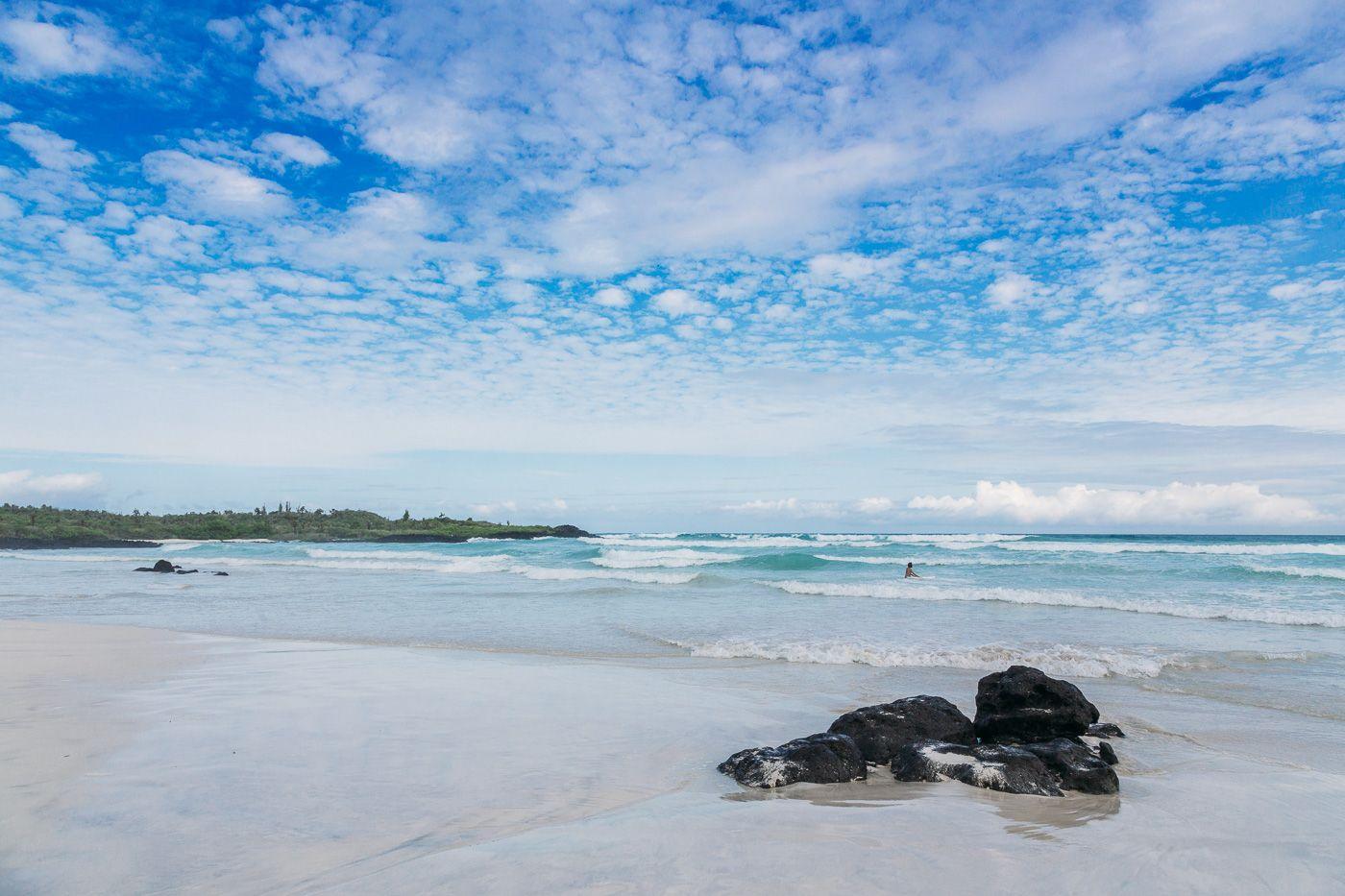
This morning you have a surf lesson at Tortuga Bay, a beach on Santa Cruz with clear water, and there's time to snorkel too. The rest of the day is yours at Finch Bay, by the pool or on the beach next door.

Overnight: Finch Bay Galapagos Hotel

Waves rolling onto a wide white beach under a blue sky

Day 9

Back to Quito

After a last breakfast on the islands, a water taxi and a drive take you to the Itabaca Channel. You cross by ferry to Baltra and fly from Baltra airport (GPS) back to Quito, where we take you to Casa Gangotena for the night.

Overnight: Casa Gangotena

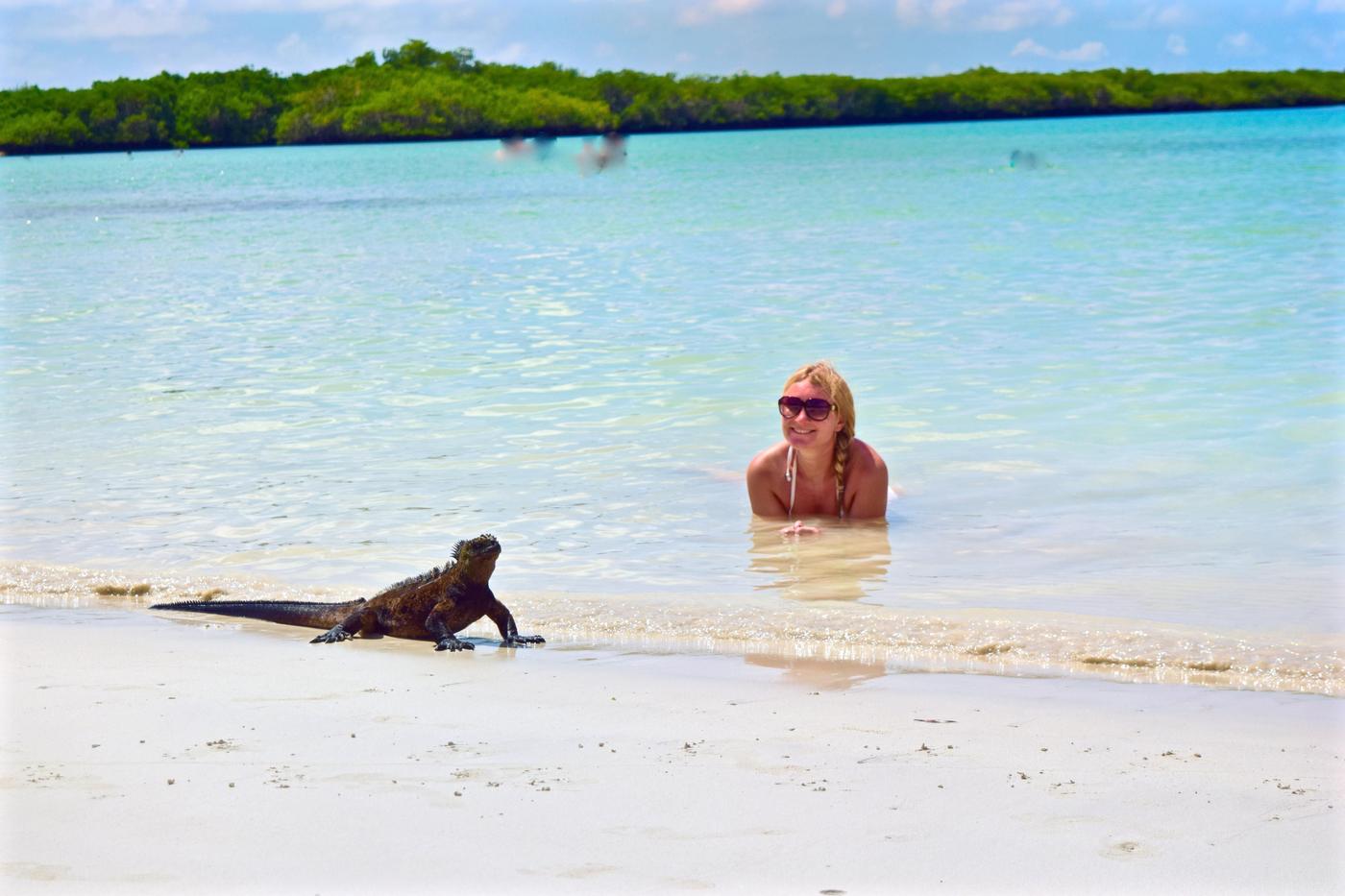
A woman lying in the shallows of a white beach, with a marine iguana on the sand beside her

Day 10

Home from Quito

After breakfast we drive you about an hour to Quito airport (UIO) for your flight home.

Questions

Questions About This Trip

Seasons, rules and schedules can change, and we rely on our partners on the ground for the latest. Ask us before you plan around any of these answers and we'll double-check them.

Can you see penguins in the Galápagos?

Yes, mostly around Isabela. About 90 to 95% of Galápagos penguins live on Isabela and the neighbouring island of Fernandina, where cold currents keep the water cool and full of fish. It's the only penguin that lives north of the equator, and one of the smallest. A count in 2020 found about 1,940 of them.

How long is the boat from Isabela to Santa Cruz?

About two hours, and up to three when the sea is rough. It's open water between the two islands, so the ride can be bumpy, most of all in September and October when the sea is often choppy. The boats arrive in Puerto Ayora, five minutes by water taxi from Finch Bay.

How long is the Sierra Negra hike on Isabela?

With the side trip to Volcán Chico, it's about 16 kilometres there and back and takes five to six hours. The trail is often in mist and light rain, most of all from about June to December, when a fine drizzle called garúa hangs over the highlands. Down in Puerto Villamil it can be dry and sunny at the same time.

How It Works

We Arrange All of It

Each trip idea is a starting point. We adjust the length, the pace and the hotels to suit you, then book and manage every part of it.

  • Flights. Booked with your points where they're worth the most, and with cash where they aren't.
  • Every transfer. Private drivers, boats and domestic flights between each stop, timed to your arrival.
  • Guides and tours. Booked for the days that suit you, private or shared.
  • The hotels. Booked directly with the properties we work with, with rooms matched to your group.
  • Support while you're away. If a flight cancels or plans change, you contact us and we sort it out.

Plan This Trip

We can add a night on any of the islands, or start with our week in the Andes and the Amazon before you fly out. If you'd rather unpack once, our trip to a tented camp on Santa Cruz covers much of the same wildlife from one base. If you get seasick, the calmer seas from about December to June are the better time to go.

Every trip is priced for your dates. Send us rough dates and who's travelling, and we'll come back with the full plan.

Ask About This Trip