Day 1
Arrive in La Paz
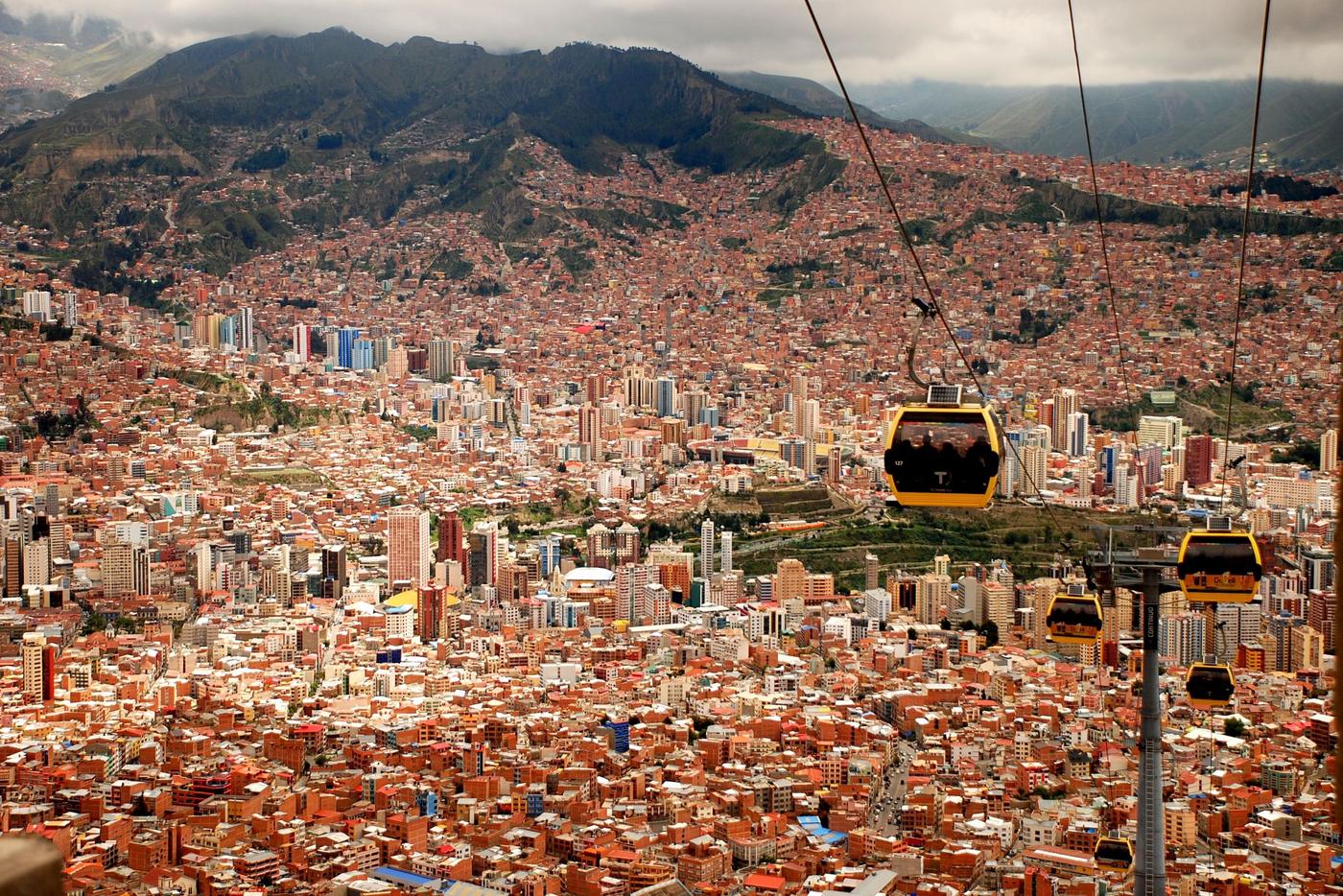
We meet you at La Paz airport (LPB) and take you to a hotel in the city that we choose with you. La Paz fills a valley below snow-capped peaks, and if you have time there are markets, museums and colonial churches to see.

Trip Ideas · Bolivia and Chile
Overland by private vehicle from the Uyuni salt flats across the high lagoons of southern Bolivia to San Pedro de Atacama, sleeping in a hotel built of salt and another built into a rock.
The Trip
This trip crosses the high desert between Bolivia and Chile by road. You land in La Paz, fly on to Uyuni and spend two nights at Palacio de Sal, a hotel built of salt on the shore of the Salar de Uyuni. From there a private vehicle takes you south across the salt and through the deserts and coloured lagoons of Bolivia's far south-west. You spend a night at Mallku Cueva, a hotel built into a huge rock at Villa Mar, then cross the border into Chile. The last three nights are at Hotel Desértica in San Pedro de Atacama, with two days to explore the Atacama.
The salt flat is more than 3,600 metres up and the geysers on day five are at 4,900, so it's worth taking the first days gently. The drives are long, but they're broken up by walks, viewpoints and stops for flamingos and vicuñas. It suits travellers who are happy with full days in a vehicle and cold desert nights.
By Next Mile Travel · Updated
The Route
Itinerary
Day 1
We meet you at La Paz airport (LPB) and take you to a hotel in the city that we choose with you. La Paz fills a valley below snow-capped peaks, and if you have time there are markets, museums and colonial churches to see.
Day 2
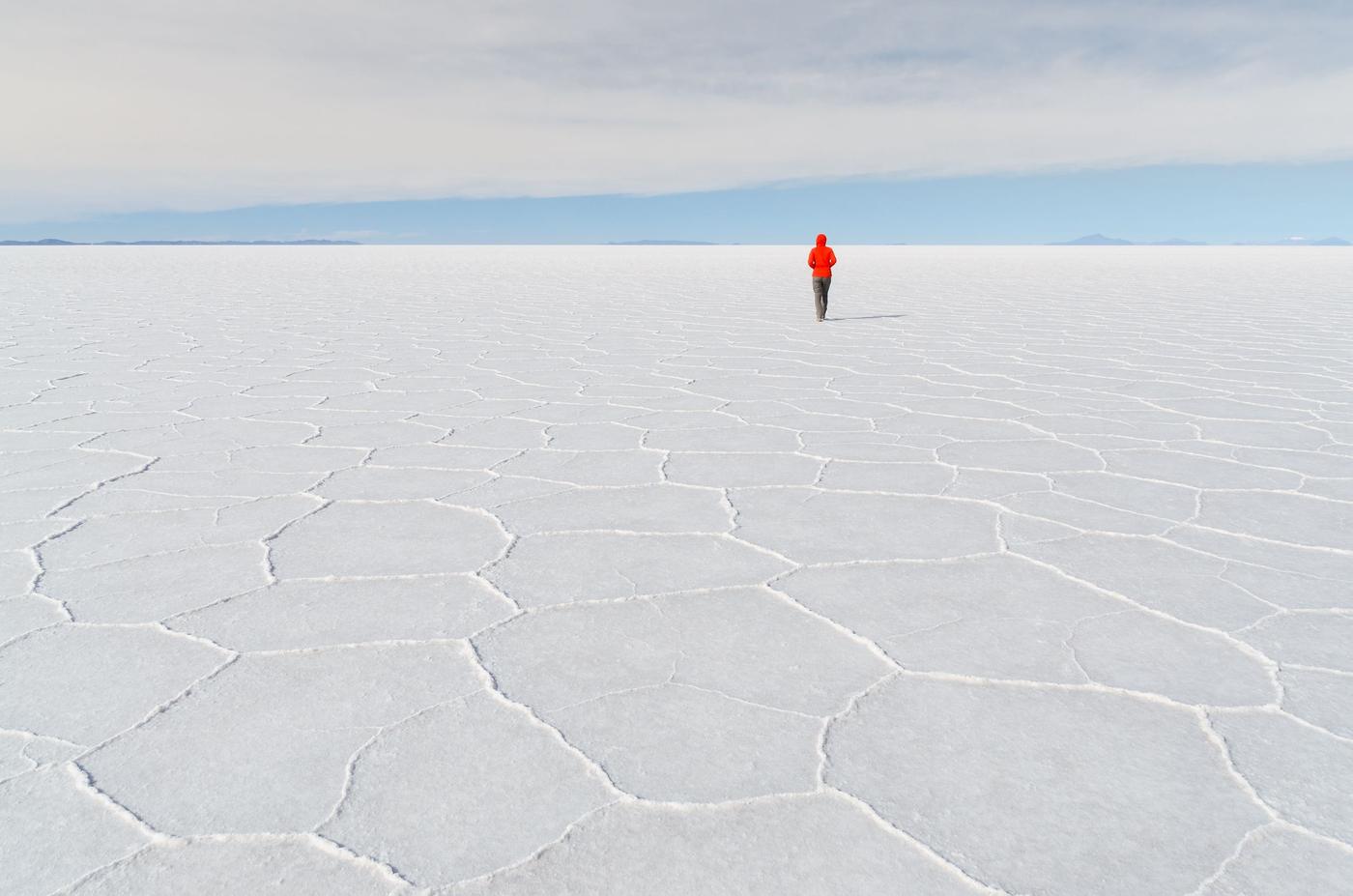
On the drive back to the airport you have Illimani in view, and from there it's a short flight to Uyuni (UYU). A private vehicle meets you and heads straight out onto the Salar de Uyuni, the largest salt flat on earth at about 12,000 square kilometres.
Late in the day you reach Isla Incahuasi, also called Fish Island, a rocky outcrop in the middle of the salt covered in thousands of giant cacti. Some are more than 12 metres tall and over a hundred years old. You watch the sunset there, then drive to Palacio de Sal for dinner.
Overnight: Palacio de Sal
Day 3
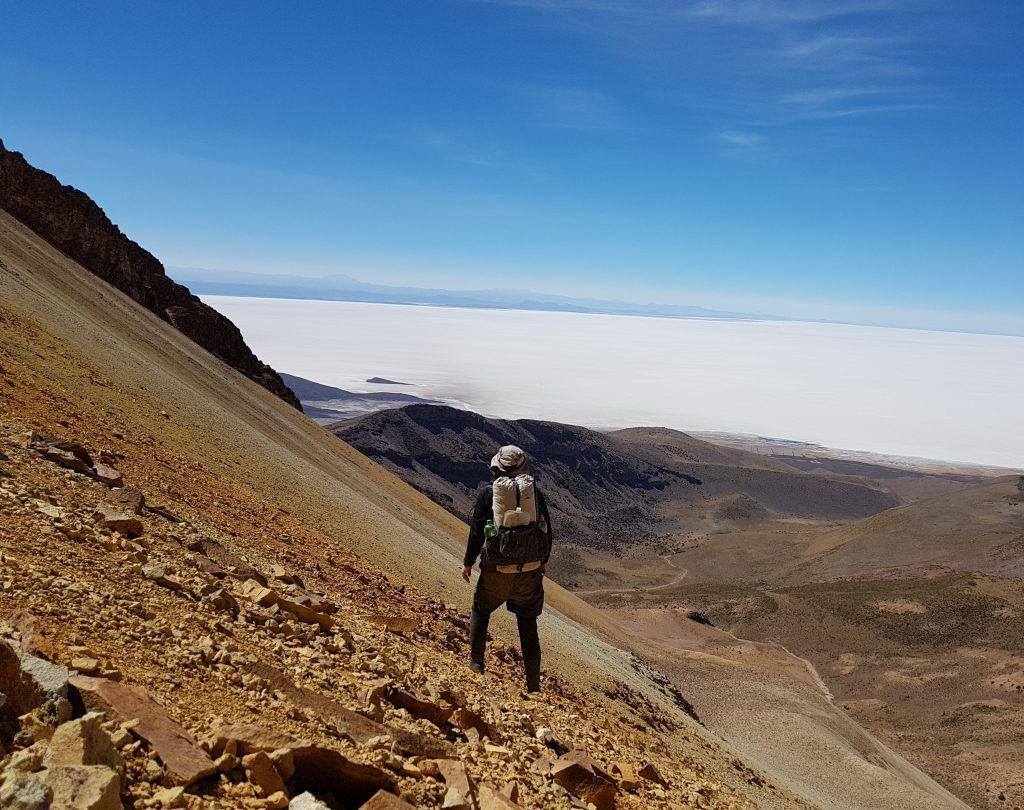
Today you walk on the slopes of Tunupa, a volcano on the northern edge of the salar, following paths the local people have used since before the Spanish arrived. Stone walls split the hillsides into plots belonging to members of the community, and the quinoa harvest is in May. You pass through the village and its small colonial church, and you may meet herders with their llamas.
With luck you'll see wild vicuñas and vizcachas, a rodent that looks like a rabbit. Andean foxes and condors live here too. You have lunch on the trail, and there are wide views from the top before you head back to Palacio de Sal for the evening.
Overnight: Palacio de Sal
Day 4
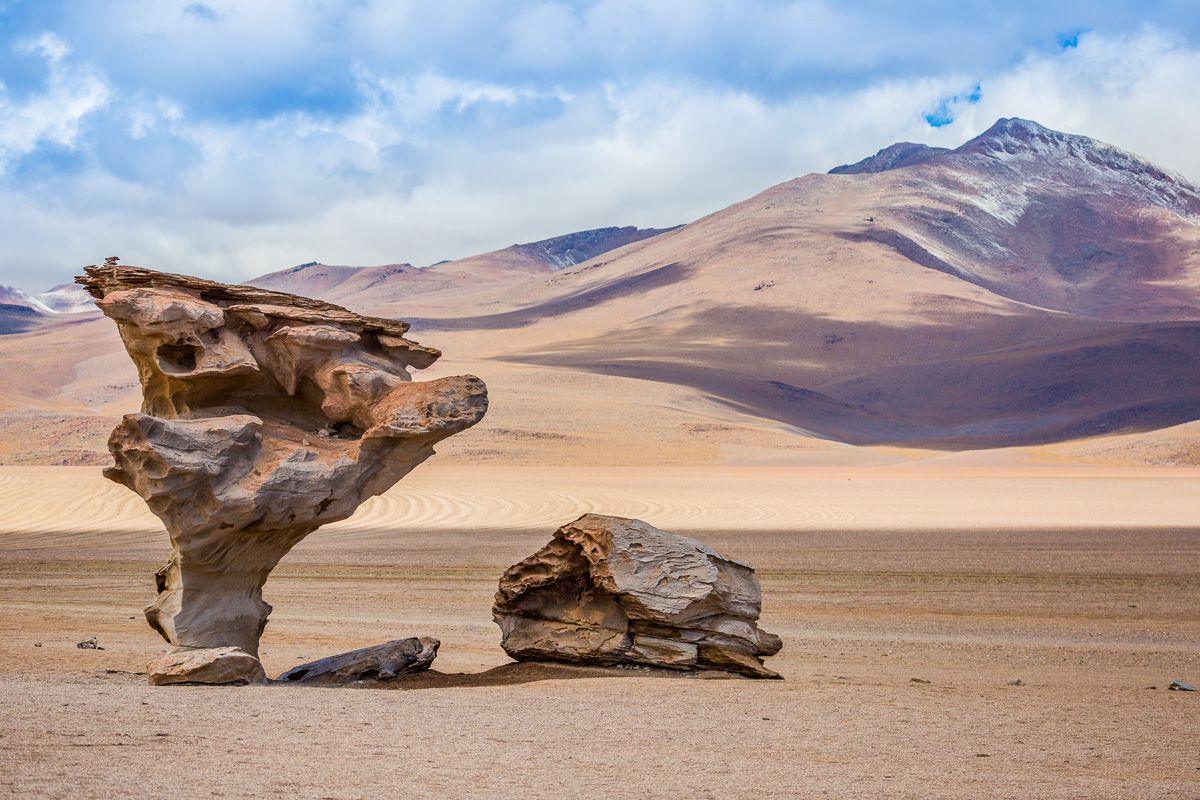
You leave the salt behind and head south into country shaped by volcanoes and wind. In the Siloli and Dalí deserts the lava and ash have been worn into strange rock sculptures by the wind and the big swings in temperature.
Ollagüe volcano is in sight for much of the drive, and you'll see flamingos and vicuñas along the way. You stop at four small lagoons: Cañapa, Hedionda, Honda and Ramaditas. You reach Mallku Cueva in time to settle in before dinner.
Overnight: Mallku Cueva
Day 5
Your first stop is Laguna Colorada, a red lagoon of about 60 square kilometres at 4,278 metres. Three kinds of flamingo feed in it, and you may also see vicuñas, llamas and vizcachas. Next come the Sol de Mañana geysers at 4,900 metres, a field of steaming vents and craters where jets of steam rise 80 to 100 metres.
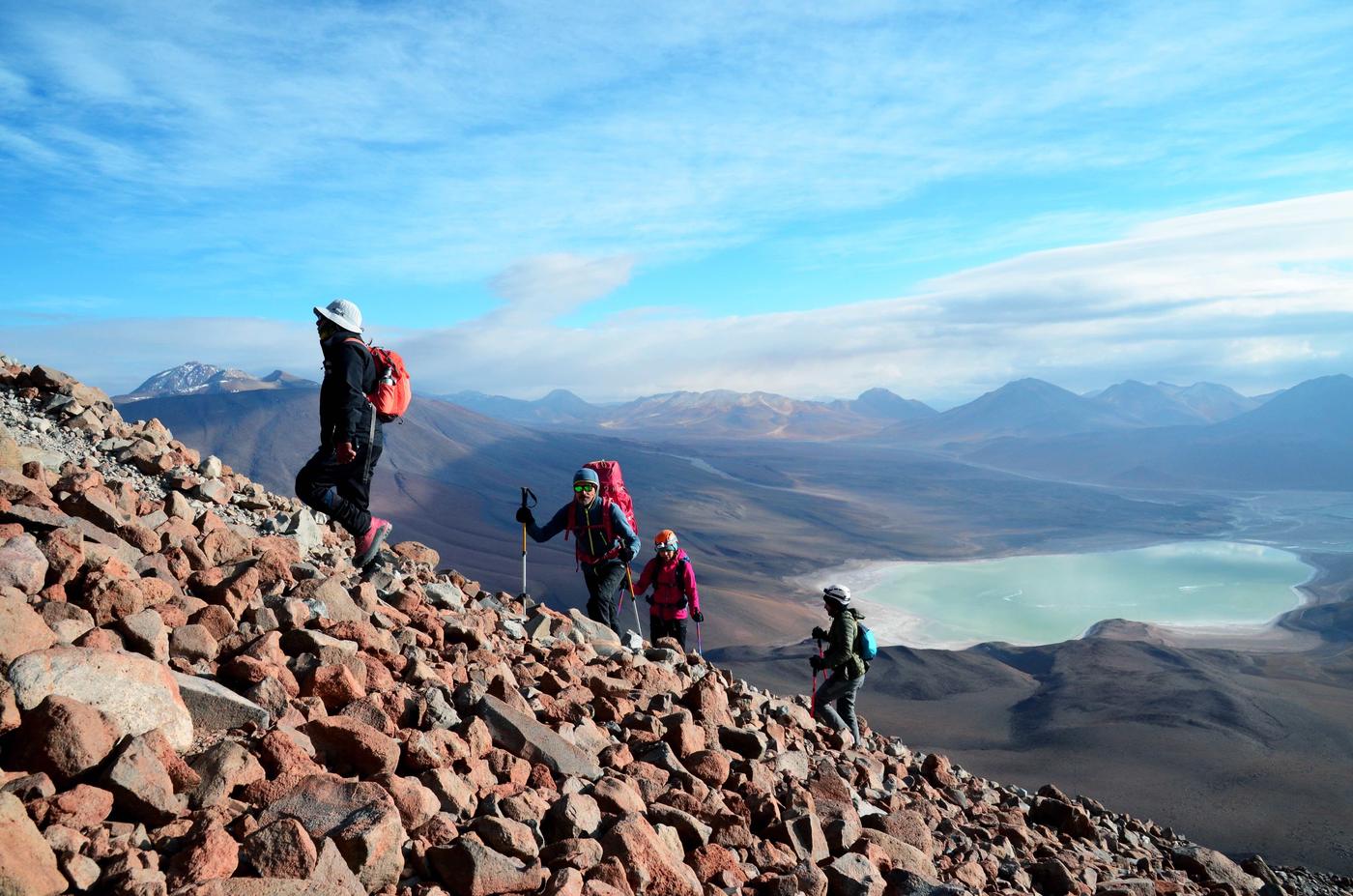
The last stop in Bolivia is Laguna Verde, a green lagoon below Licancabur volcano (5,865 metres), where you take a short walk on the volcano. Then you cross into Chile at Hito Cajón and drive on to San Pedro de Atacama, arriving in time for dinner at Hotel Desértica.
Overnight: Hotel Desértica
Days 6–7
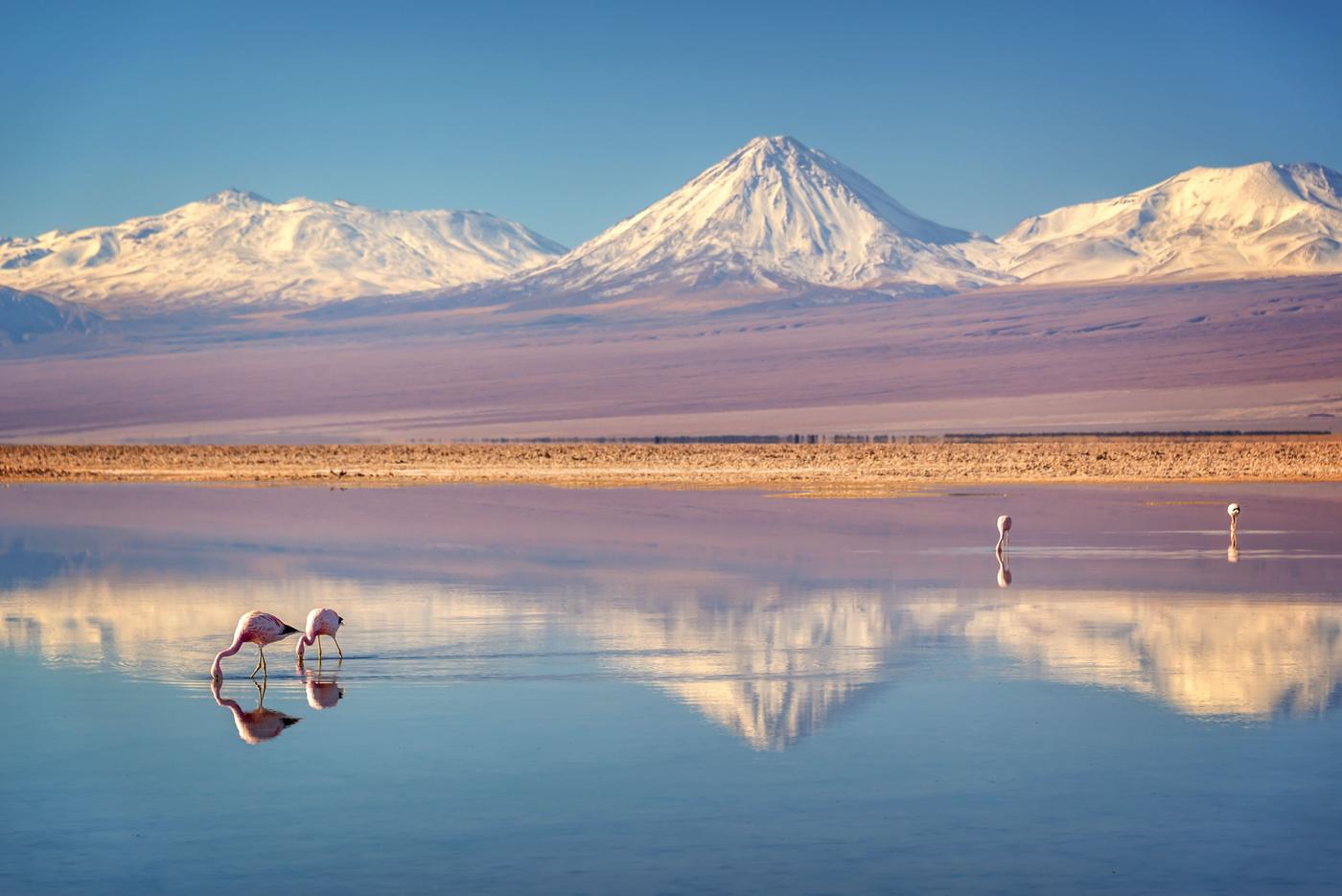
You have two days to explore the Atacama, one of the driest places on earth, and we plan them around what you enjoy. There are half and full days out by car, on foot, by bike or on horseback.
From San Pedro you can reach moon-like valleys, salt flats, high lagoons and canyons. You can also soak in hot springs, walk in a valley of cacti or climb a volcano. The desert has about 330 cloud-free nights a year, so it's a good place to look at the stars.
Overnight: Hotel Desértica
Day 8
We drive you to Calama airport (CJC) for your flight home. If it leaves later in the day, there's time for a last morning in San Pedro first.
Where You Stay

2 nights · Salar de Uyuni, Bolivia
The first hotel in the world built of salt, on the shore of the Salar de Uyuni about 25 kilometres from the town of Uyuni.
About the property
1 night · Villa Mar, southern Bolivia
A 12-room refuge built into a huge rock at Villa Mar, on the lagoon route through the far south-west of Bolivia.
About the property
3 nights · San Pedro de Atacama, Chile
Twelve adobe rooms in a former Atacameño orchard, a five-minute walk from the main square of San Pedro de Atacama.
About the propertyQuestions
Seasons, rules and schedules can change, and we rely on our partners on the ground for the latest. Ask us before you plan around any of these answers and we'll double-check them.
Red sediment and algae give it its colour. The lagoon is very shallow, only about 35 centimetres deep on average, and a salt-loving alga turns the water anywhere from soft pink to deep red depending on the sun and the temperature. The white islands in it are borax, and James's flamingos are the most common of the three kinds that feed there.
It sits at about 2,400 metres, which is more than 1,200 metres lower than the Salar de Uyuni. On day five the road comes down from the border at Hito Cajón, at about 4,480 metres, and drops more than 2,000 metres in the 45 kilometres to San Pedro.
It gets very cold at night, especially from May to September. The days are cool then, and nights fall well below freezing, to an average low of about minus 10°C in July. From October it warms up, and from December to March afternoons reach about 20°C, though nights are still only a few degrees above freezing.
Yes. More than a million blocks cut from the salar went into it, and in the Ukhu Standard rooms the walls, the ceiling and even the bed are salt. The first hotel stood out on the salt flat itself, but it was taken down in 2002 because its waste was polluting the salt around it.
How It Works
Each trip idea is a starting point. We adjust the length, the pace and the hotels to suit you, then book and manage every part of it.
We can add a second night in La Paz so you have more time to get used to the altitude before the salt flat. In San Pedro a fourth night gives you another full day in the desert or an evening of stargazing. We can also run the route the other way round, starting in the Atacama and finishing in La Paz.
Every trip is priced for your dates. Send us rough dates and who's travelling, and we'll come back with the full plan.