A trekker on a rocky outcrop strung with prayer flags, above a sea of cloud and layers of hills

Trip Ideas · Bhutan

Bhutan: Trekking the Druk Path from Paro to Thimphu

A five-day camping trek over the mountains from Paro to Thimphu, with two nights in Paro first to get used to the altitude and two in Thimphu at the end.

9 days, 8 nights

The Trip

The Druk Path is a five-day trek on an old trading route over the mountains between Paro and Thimphu. It climbs through rhododendron forest and over yak pastures, past high lakes stocked with trout, and crosses passes above 4,000 metres. On clear days you see Jomolhari and the other peaks on the border with Tibet. You come down through pine and juniper forest by Phajoding Monastery into Thimphu.

Before the trek you spend two nights at Naksel above the Paro Valley and walk up to the Tiger's Nest. On the trail your own crew of horsemen and pack animals carries the camp, and your cook makes every meal. Camp is set up each afternoon before you arrive. At the end you have two nights at Terma Linca by the river in Thimphu and a day to see the capital. It suits fit walkers who are happy camping at altitude.

By Next Mile Travel · Updated

The Route

1–3PARODRUK PATHTHIMPHU8 nights 1–3PARODRUK PATHTHIMPHU8 nights

Itinerary

Day by Day

Day 1

Arrive in Paro

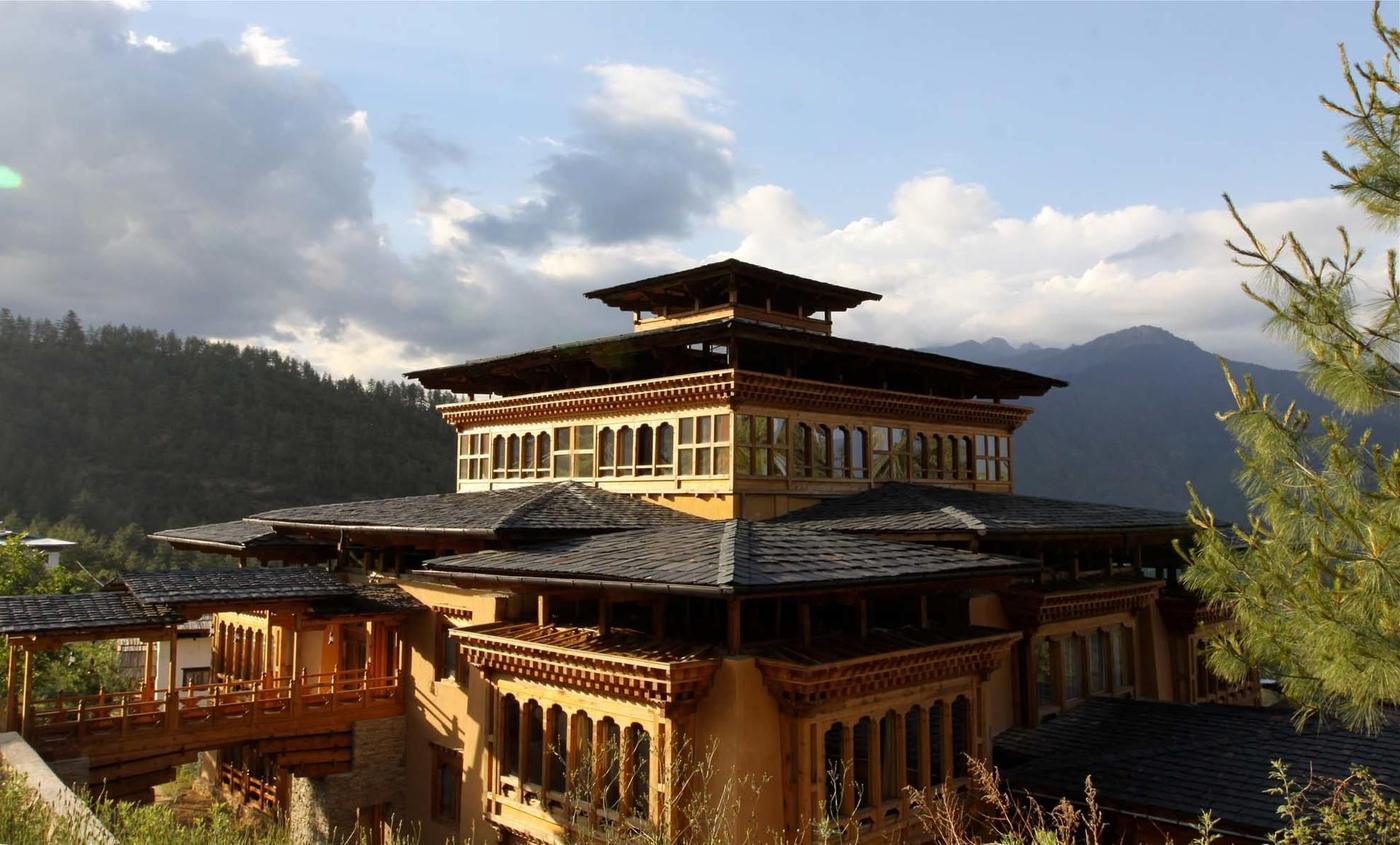
We meet you at Paro airport (PBH) and drive you about 30 minutes up to Naksel, at about 2,700 metres above the village of Ngoba. The rest of the day is yours. Two nights here give you time to get used to the altitude before the trek.

Overnight: Naksel Boutique Hotel & Spa

The tiered roofs of the main lodge at dusk, with forested hills behind

Day 2

The Tiger's Nest

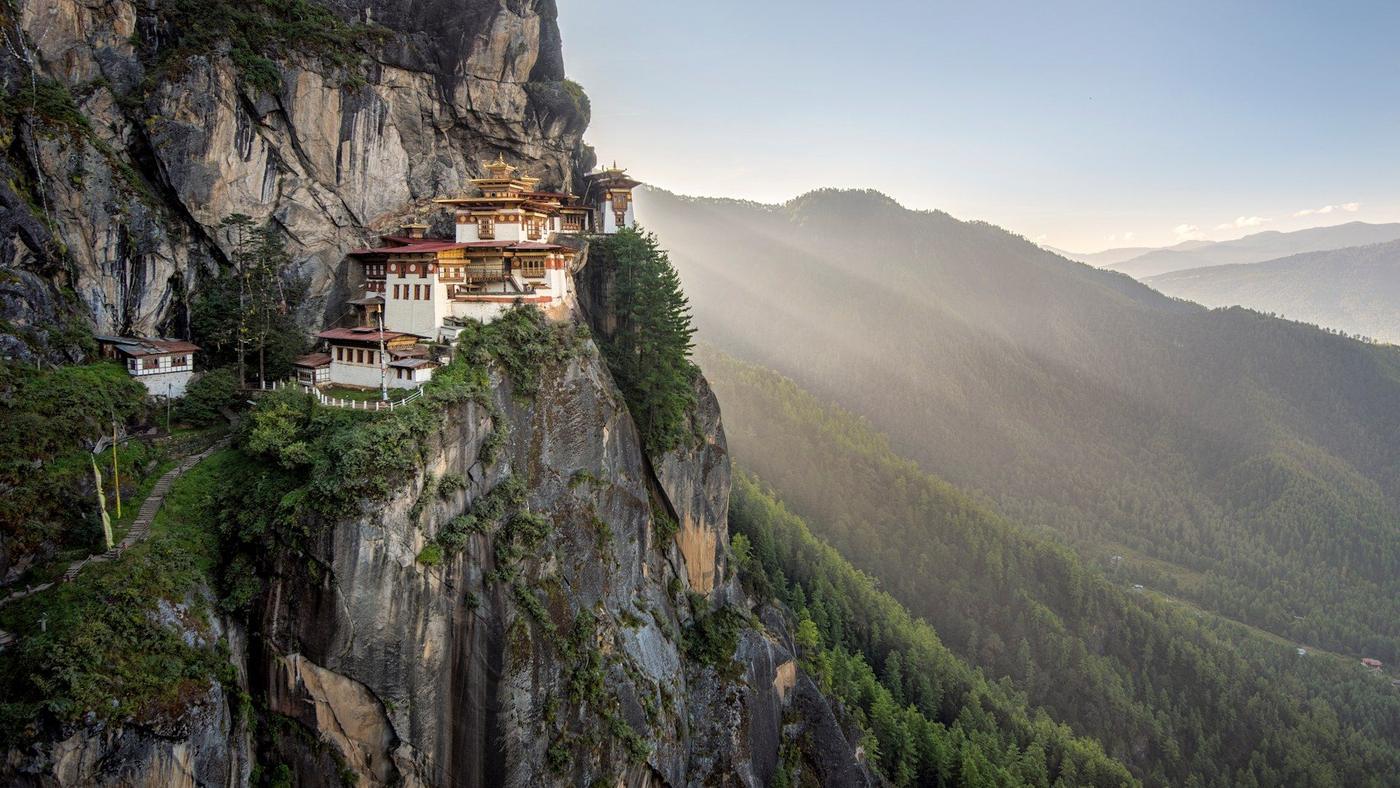
Your first walk is up to Taktsang, the Tiger's Nest, a monastery on a cliff 900 metres above the valley floor. The story is that Guru Rinpoche arrived here on the back of a tigress and meditated on the cliff. It's about five hours there and back, which makes it a good warm-up for the trek.

In the late afternoon you drive to the end of the valley to Drukgyel Dzong, built in 1646 after a victory over Tibetan invaders. It burned in 1951 and has been restored. On a clear day you can see Jomolhari from the village below it. The mountain is more than 7,300 metres high. Nearby you visit a farmhouse built the traditional way, without a single nail.

Overnight: Naksel Boutique Hotel & Spa

The Tiger's Nest monastery on the edge of a cliff, with sunlight falling across the forested valley

Day 3

Paro to Jele Dzong

At the National Museum in Paro you meet your trekking crew and the horsemen with their pack animals. The trail climbs steeply through blue pine forest and past farmhouses and apple orchards, with views back over the Paro Valley. You stop for a packed lunch at Damche Gom, a grassy clearing with a long mani wall at about 2,995 metres.

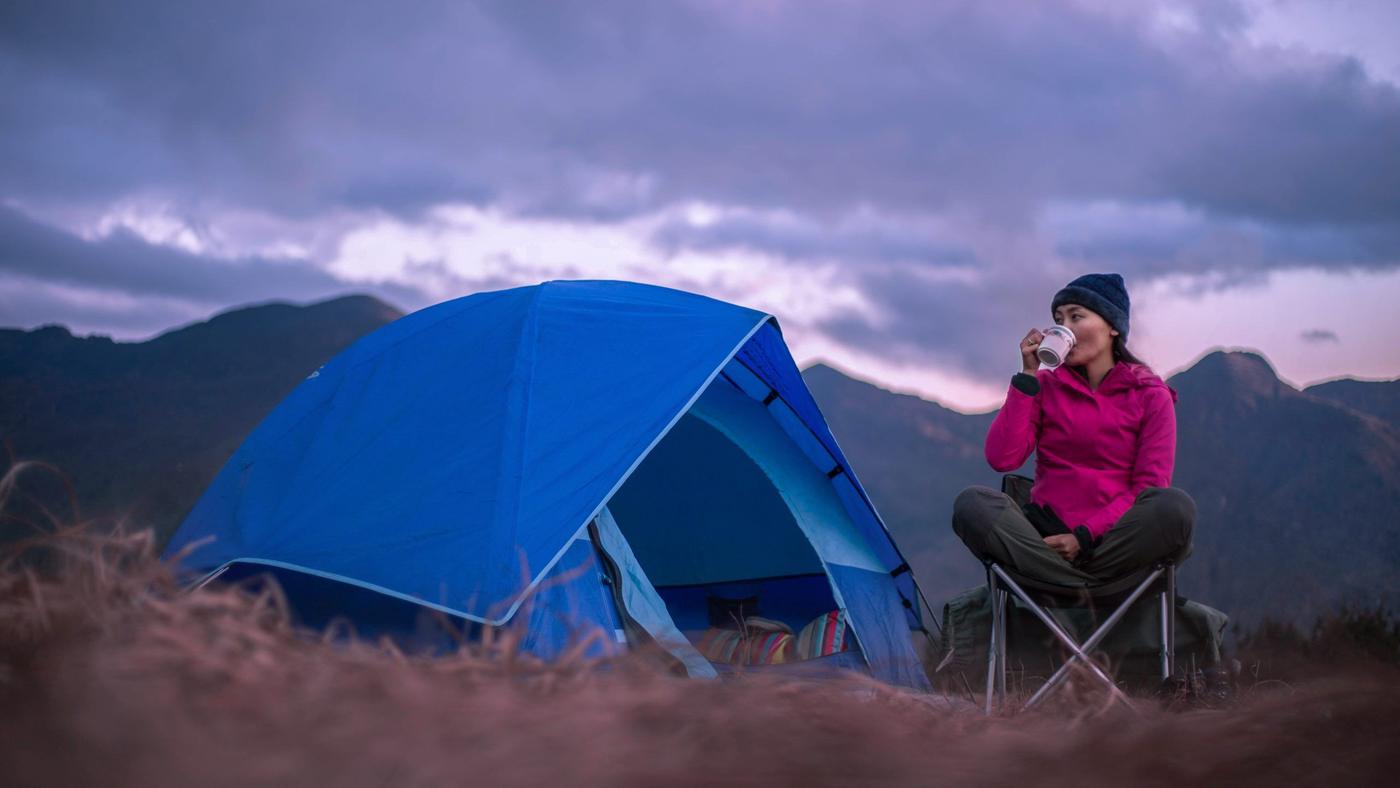
In the afternoon you pass a hemlock tree more than 600 years old. Camp is just below a small pass under Jele Dzong, at about 3,435 metres. It's about 8 kilometres and five to six hours on foot, with about 1,070 metres of climbing.

Overnight: Druk Path Private Trek Camps

A trekker in a pink jacket drinking from a mug beside a blue tent at dusk

Day 4

Jele Dzong to Tshokam

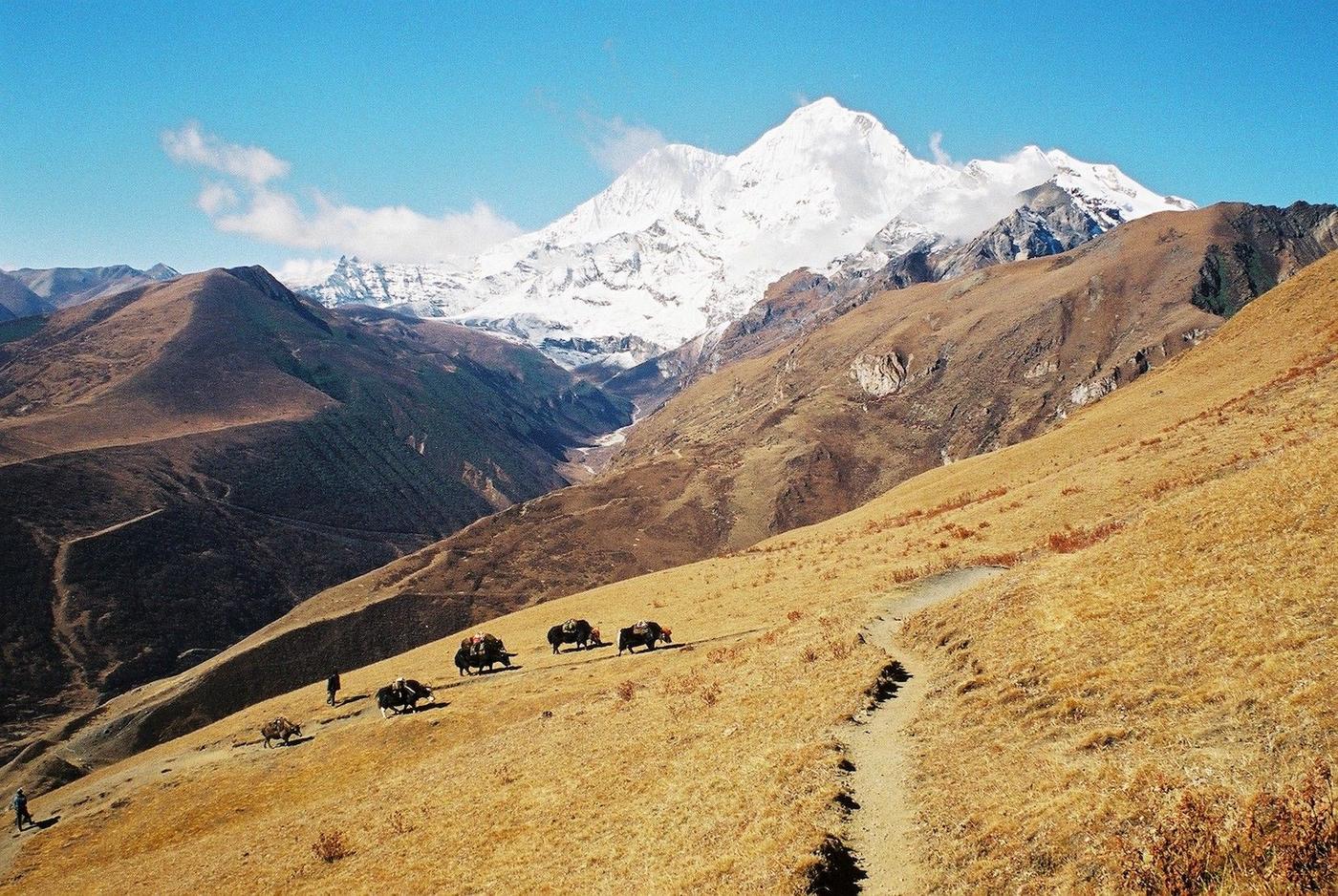
You climb back to the pass and up to Jele Dzong at about 3,595 metres, a fort hung with prayer flags. From here you look down on the Paro Valley and across to the snow peaks on the border with Tibet, with Jomolhari in the middle. The trail follows the ridge north and then goes into the forest, with a steep climb to about 3,750 metres.

Behind you is the Doo Chhu valley, and the Dagala range is off to the south. Camp is at Tshokam, at about 3,960 metres. It's about 9 kilometres and five to six hours, with about 525 metres of climbing.

Overnight: Druk Path Private Trek Camps

Yaks on a grassy hillside path, with a big snow-covered peak behind

Day 5

Tshokam to Jimilang Tsho

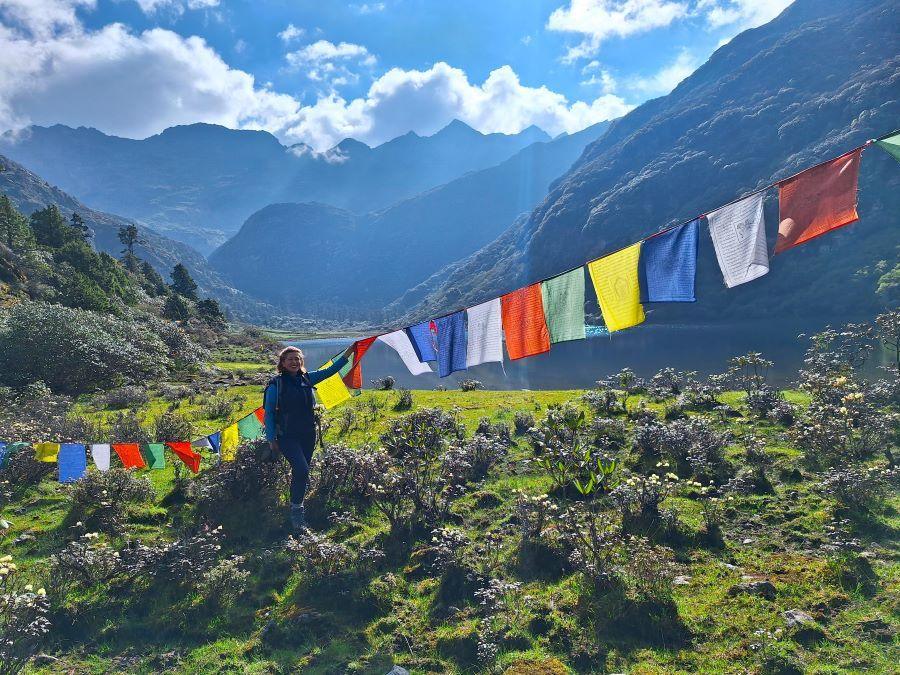
Today you head north along the ridge for most of the day. The trail climbs gently to a small pass at about 4,070 metres, then follows the ridge to the next one with a view of Jomolhari. Below you is Jimilang Tsho, a big lake stocked with trout, with a chorten at one end.

Camp is at the east end of the lake at about 3,880 metres. If you bring your own fishing gear you may catch a trout for dinner. It's about 10 kilometres and six to seven hours, with about 215 metres up and 295 metres down.

Overnight: Druk Path Private Trek Camps
A walker beside a line of prayer flags in a green valley, with a lake and mountains behind

Day 6

Jimilang Tsho to Phajoding

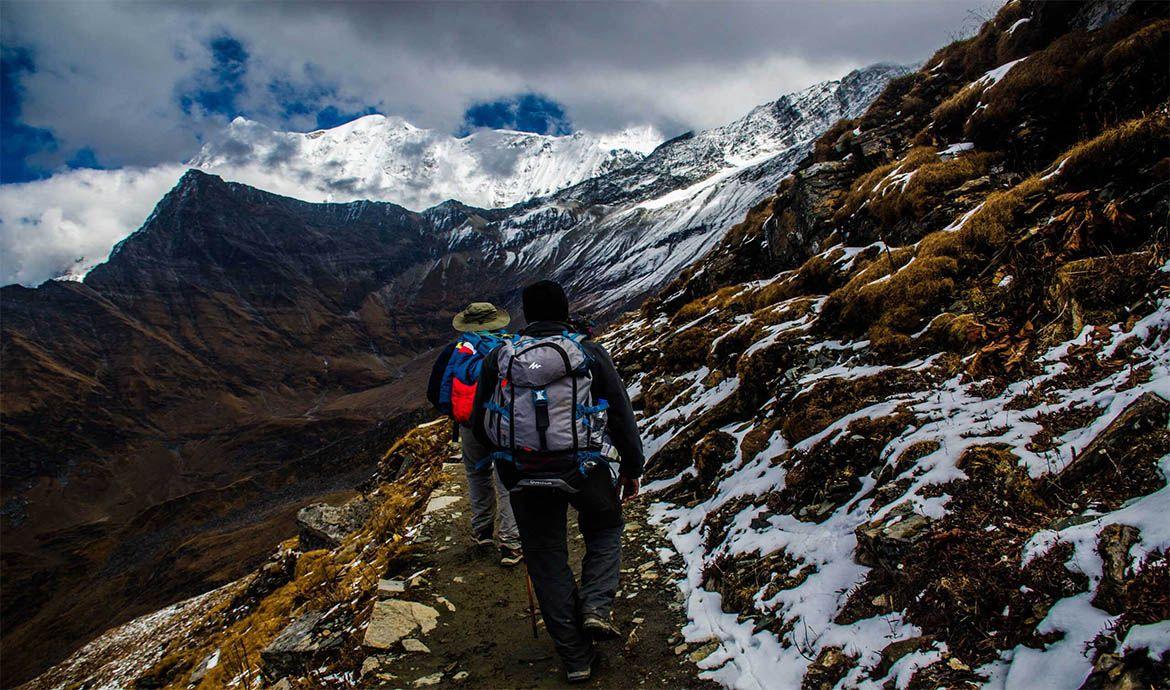
You walk round the lake to its western end, then climb through bushes and along a cliff path to a saddle at about 4,100 metres. Below is Jana Tsho, and a stone path through rhododendrons leads on past more small lakes. After another hour you reach a viewpoint at about 4,150 metres above Simkotra Tsho.

A few more short climbs bring you to the last ridge, where you look down on Phajoding Monastery and Thimphu. On a clear day you can see Gangkar Puensum, Bhutan's highest mountain. Camp tonight is by the monastery. It's about 11 kilometres and five to six hours.

Overnight: Druk Path Private Trek Camps
Two trekkers on a narrow trail across a snowy slope, with mountains and cloud ahead

Day 7

Down to Thimphu

The last day is short, about 4 kilometres and two hours. It's all downhill, dropping about 1,130 metres from Phajoding to Motithang above Thimphu. If you'd like, you can stop at the Takin Preserve to see the takin, Bhutan's national animal and a rare member of the goat family.

Your driver meets you at the road and takes you to Terma Linca by the river. The rest of the day is yours for a hot shower and a rest.

Overnight: Terma Linca Resort & Spa

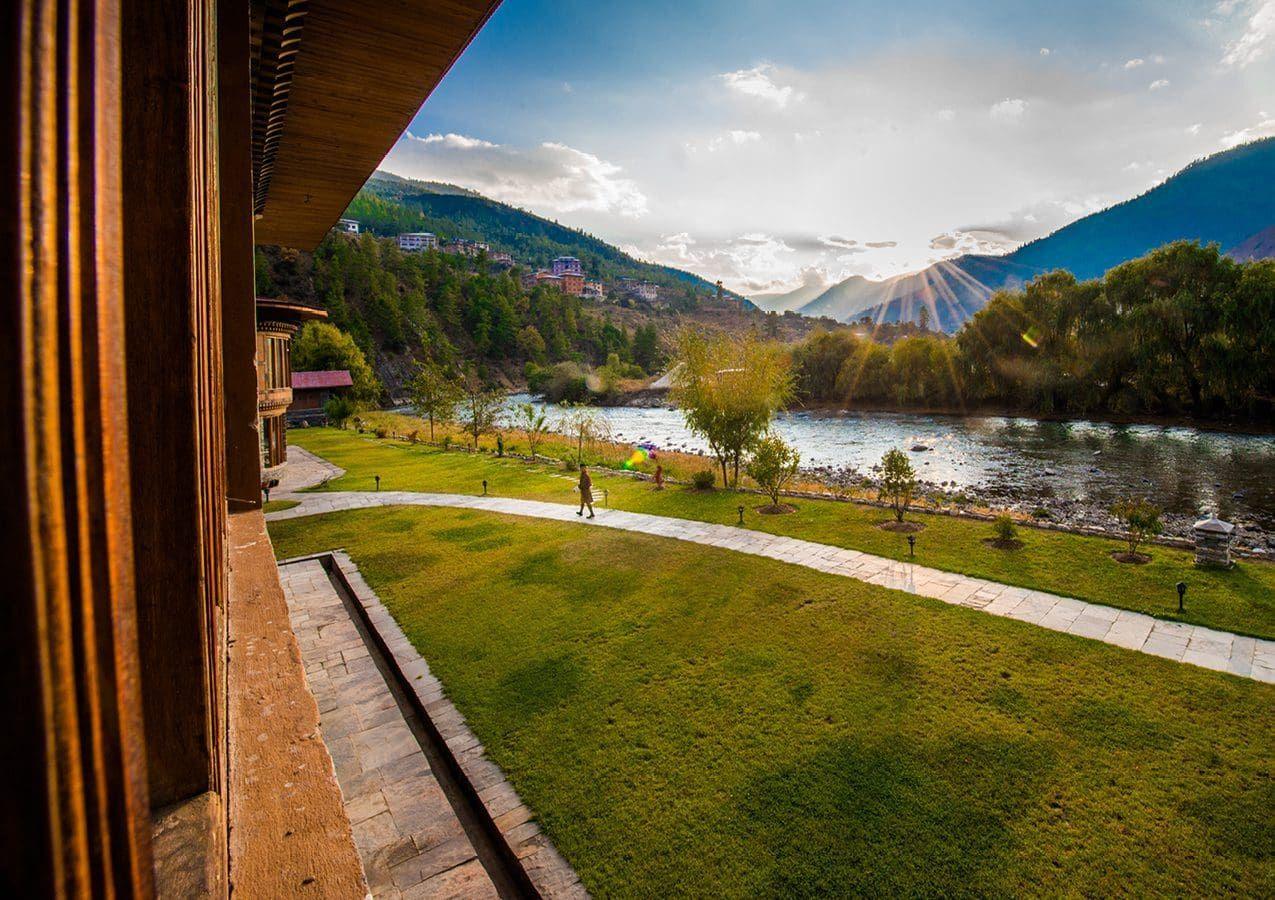
A lawn and garden path along the river, seen from the hotel's veranda

Day 8

Thimphu

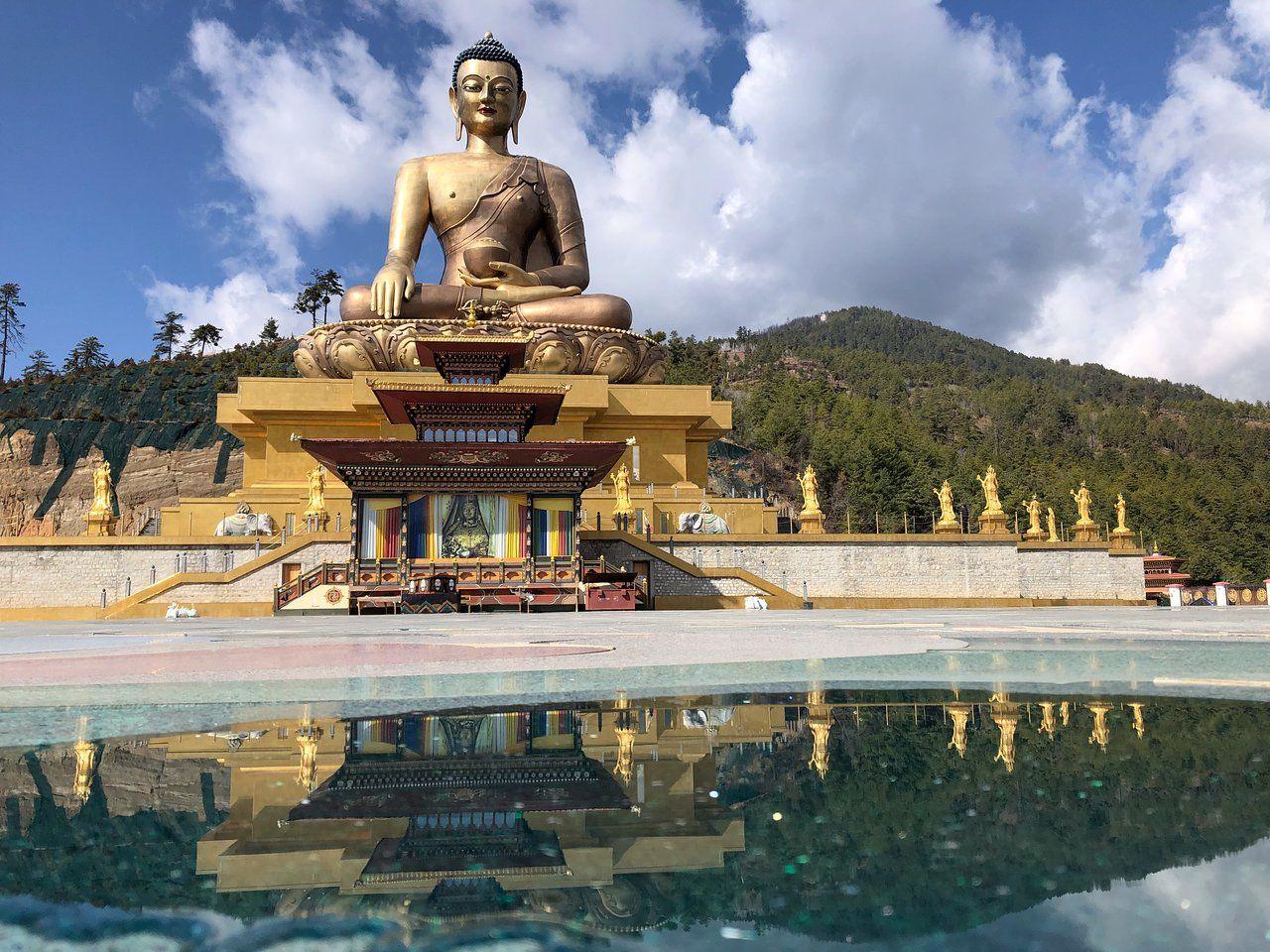
Your last full day is in the capital. You start at Buddha Dordenma, the gilded bronze Buddha 51.5 metres tall on a hill above the city. Then you visit the Postal Museum, where you can have your own stamps made next door, and the Textile Museum.

After lunch you watch the craft students at the National Institute for Zorig Chusum and visit the Folk Heritage Museum, which shows how rural Bhutanese have lived. You finish at the Centenary Farmers Market and Tashichho Dzong, the seat of the government and the chief abbot.

Overnight: Terma Linca Resort & Spa

The giant gilded Buddha Dordenma on its temple base, reflected in a pool

Day 9

Home from Paro

After breakfast we drive you about an hour to Paro airport (PBH) for your flight home.

Questions

Questions About This Trip

Seasons, rules and schedules can change, and we rely on our partners on the ground for the latest. Ask us before you plan around any of these answers and we'll double-check them.

How hard is the Druk Path trek?

It's a moderate trek with one hard day at the start. You walk about 42 kilometres over five days, and the highest point is the Labana La, a pass of about 4,200 metres. You don't need any climbing skills, and the hard part is the altitude, since you sleep at up to about 4,000 metres.

Should you trek the Druk Path in spring or autumn?

Spring is quieter, and autumn usually has the clearer views. From March to May there are fewer trekkers on the trail, and the rhododendrons are in flower. Late September to November is the busier season, with the best chance of clear days for Jomolhari and the peaks along the Tibetan border.

Druk Path or Jomolhari trek?

The Druk Path is shorter and easier. The Jomolhari trek takes a week or more, with longer days and a camp at the foot of Jomolhari. Its passes reach about 4,900 metres, some 700 metres above the Druk Path's highest point. It gets you much closer to the big peaks.

Are there teahouses on the Druk Path?

No. There's no accommodation along the Druk Path, so you camp every night. You sleep in a tent with a mattress and a sleeping bag, and you eat at a table in the dining tent. There's also a separate toilet tent.

How It Works

We Arrange All of It

Each trip idea is a starting point. We adjust the length, the pace and the hotels to suit you, then book and manage every part of it.

  • Flights. Booked with your points where they're worth the most, and with cash where they aren't.
  • Every transfer. Private drivers, boats and domestic flights between each stop, timed to your arrival.
  • Guides and tours. Booked for the days that suit you, private or shared.
  • The hotels. Booked directly with the properties we work with, with rooms matched to your group.
  • Support while you're away. If a flight cancels or plans change, you contact us and we sort it out.

Plan This Trip

We can add a couple of nights in Punakha or the Phobjikha Valley after the trek, or a few days in Nepal before you arrive. If you'd rather not camp, we can plan a lodge-to-lodge walking trip in the same valleys instead.

Every trip is priced for your dates. Send us rough dates and who's travelling, and we'll come back with the full plan.

Ask About This Trip