The Tiger's Nest monastery on its cliff above green forested hills

Trip Ideas · Bhutan

Bhutan: A Week of Highlights in Thimphu, Punakha and Paro

Seven days in Thimphu, Punakha and Paro with two nights in each valley and the walk up to the Tiger's Nest on the last full day.

7 days, 6 nights

The Trip

This is a week in western Bhutan that takes in the main sights without rushing. You spend two days in Thimphu, the capital, then cross the Dochula Pass to the warm Punakha Valley. You finish in Paro, where the last full day is the walk up to the Tiger's Nest.

You stay at Amankora Thimphu in a pine forest above the capital, at &Beyond's tented lodge by the river in Punakha and at COMO Uma Paro on a wooded hill above Paro. Your guide and driver are with you the whole way. It suits first-time visitors and couples who have a week.

By Next Mile Travel · Updated

The Route

123THIMPHU2 nightsPUNAKHA2 nightsPARO2 nights 123THIMPHU2 nightsPUNAKHA2 nightsPARO2 nights

Itinerary

Day by Day

Day 1

Arrive in Paro and drive to Thimphu

We meet you at Paro airport (PBH) with a tashi khaddar, the white scarf Bhutanese give to welcome a guest. The drive to Thimphu follows the Paro valley down to Chuzom, where the Paro and Thimphu rivers meet. Just before it you pass Tachog Lhakhang, a temple built by Thangtong Gyalpo, the engineer who brought iron-chain bridges to Bhutan and Tibet. Its bridge was rebuilt in the old style in 2005, and you can walk across it.

Thimphu is the capital, and it still has no traffic lights. In the afternoon you visit the National Memorial Chorten, where local people come to walk around it and spin the big red prayer wheels. Then you walk along the main street and through the market.

Overnight: Amankora Thimphu Lodge
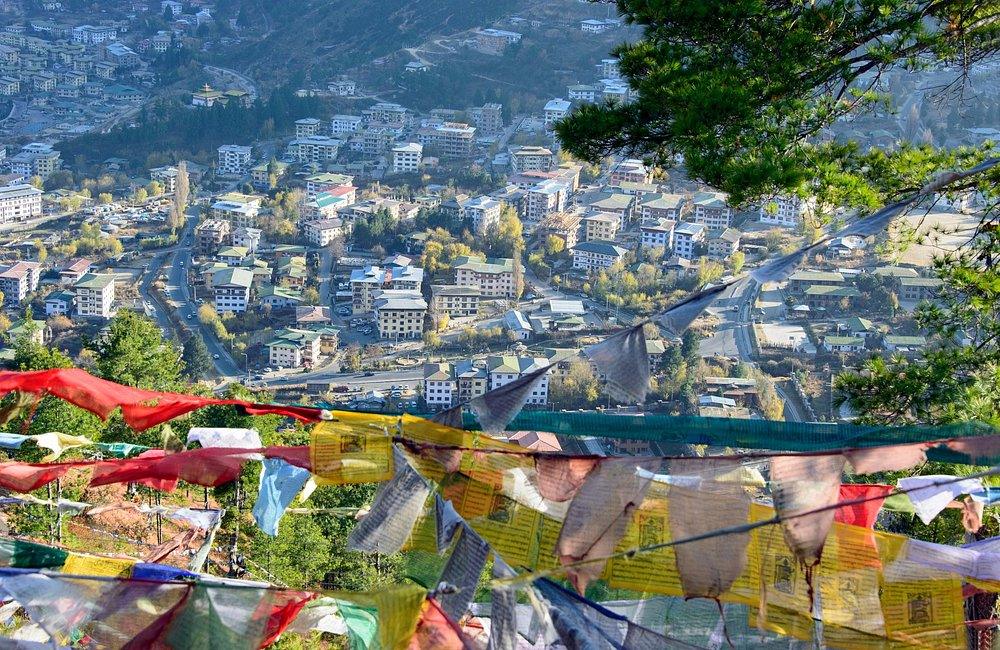
Thimphu seen from the hillside above, with prayer flags in front

Day 2

Thimphu

In the morning you drive up to Buddha Dordenma, a gilded bronze Buddha 51.5 metres tall on a hill above the city. Then you visit the Postal Museum, where you can have your own stamps made next door, and the Textile Museum.

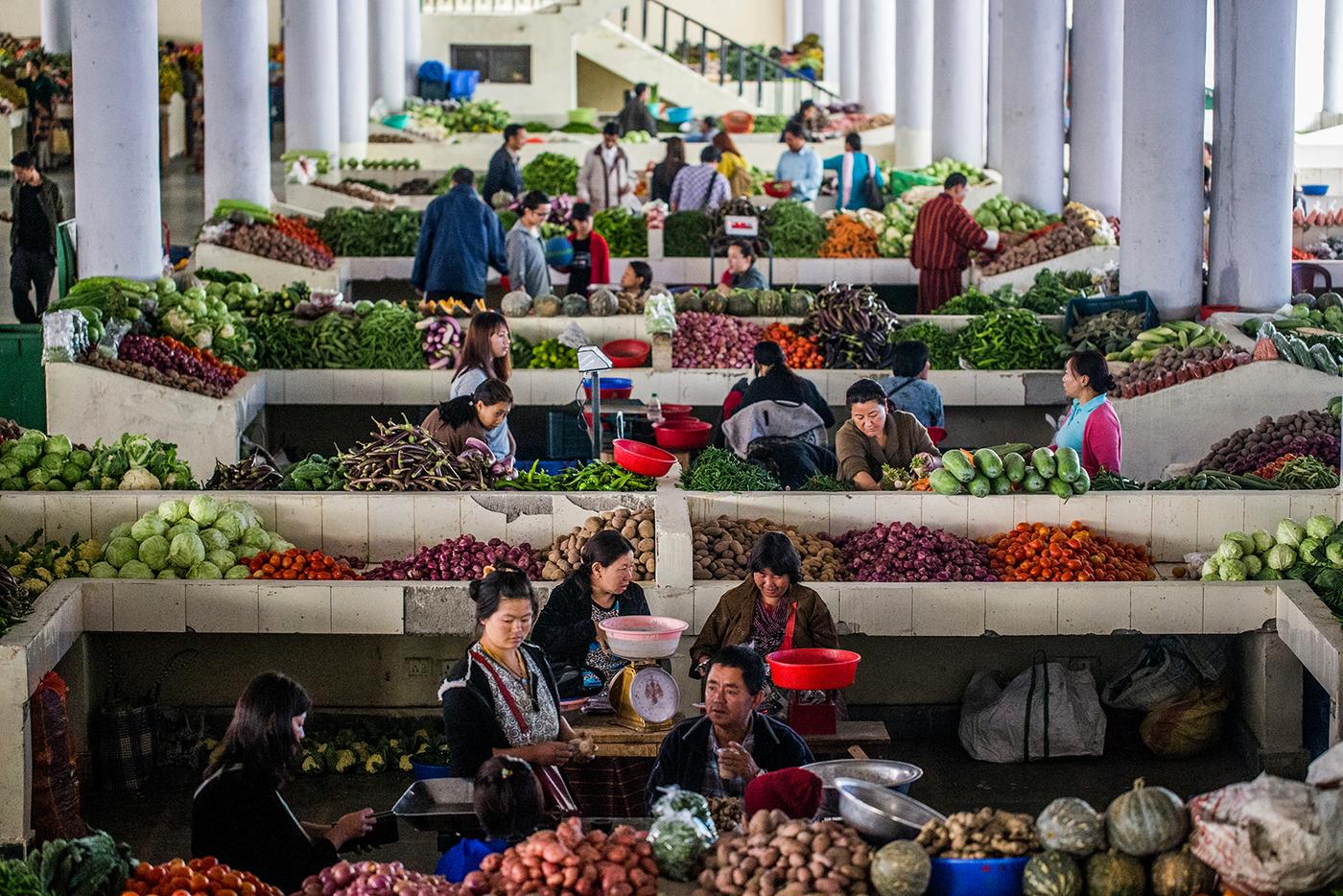
After lunch you see the students at the National Institute for Zorig Chusum learning Bhutan's 13 traditional arts and crafts. Then you visit the Folk Heritage Museum, which shows how people have lived in rural Bhutan. The day ends at the Centenary Farmers Market and Tashichho Dzong, first built in 1641 and rebuilt in the 1960s without nails or plans.

Overnight: Amankora Thimphu Lodge
Stallholders selling vegetables under the columns of the Centenary Farmers Market

Day 3

Over the Dochula Pass to Punakha

You drive up to the Dochula Pass at 3,088 metres, where 108 chortens stand in three tiers around a main one. On a clear day you can see a line of Himalayan peaks from here, including Gangkar Puensum, Bhutan's highest mountain. Then the road goes down to Punakha, a warm valley at about 1,300 metres.

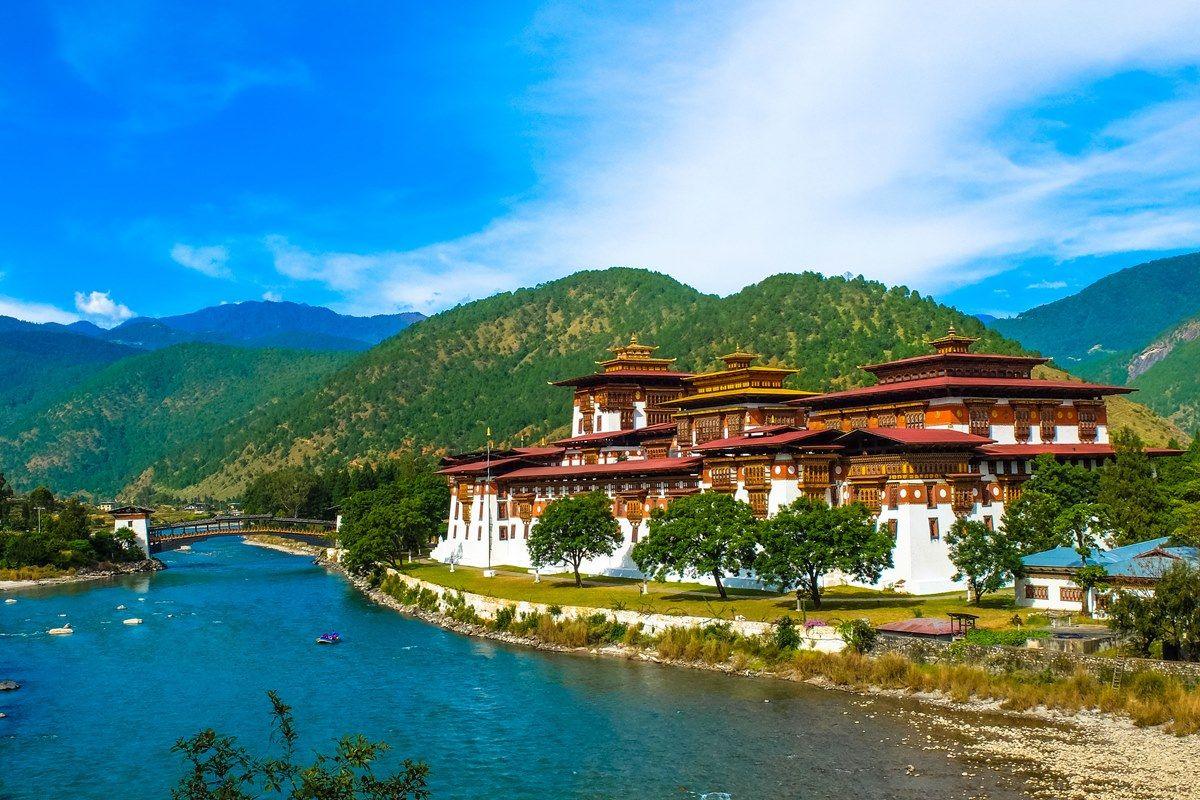
In the afternoon you visit Punakha Dzong, where two rivers meet. It once housed Bhutan's government and is now the winter home of the Je Khenpo, the chief abbot, and the central monk body. Then a short walk through farmland and rice paddies brings you to Chimi Lhakhang, a 15th-century temple. It's dedicated to Drukpa Kunley, the saint known as the Divine Madman, and couples have long come here to pray for a child.

Overnight: &Beyond Punakha River Lodge

Punakha Dzong beside a wide blue river, with forested hills behind

Day 4

Punakha

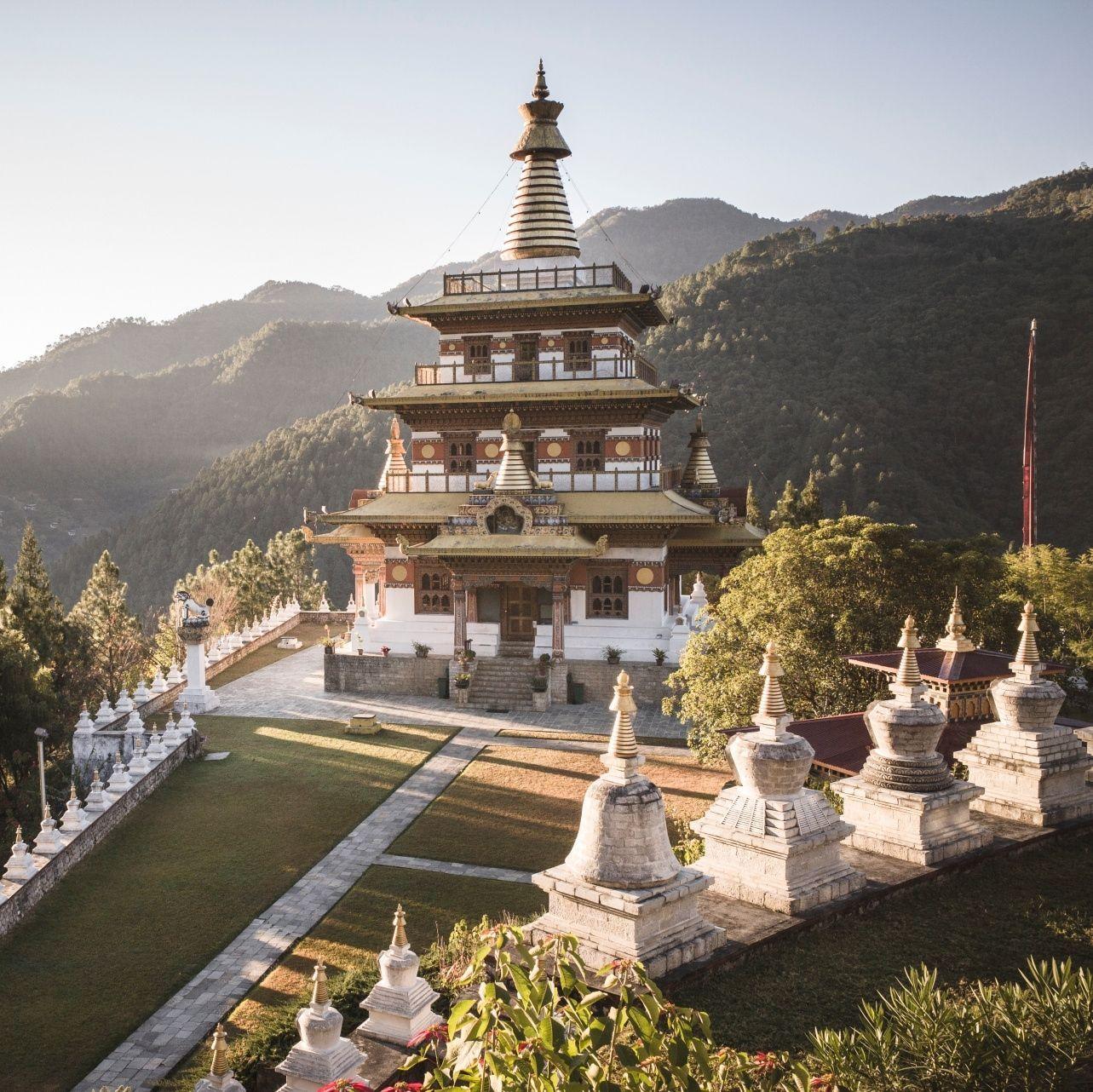
In the morning you walk up to Khamsum Yuelley Namgel Chorten for views over the Mo Chhu to the mountains of Gasa. It's about two hours there and back, and lunch is a picnic by the river.

In the afternoon you visit Talo and Nobgang to meet farming families at home. Then you go on to the Nalanda Buddhist Institute, a monastic school where you can talk with the monks. If there's time you also stop at Sangchhen Dorji Lhuendrup Nunnery on a pine ridge above the valley. Its main bronze statue of Avalokiteshvara is about four metres tall, and the nuns there learn crafts such as tailoring and thangka painting as well as their studies.

Overnight: &Beyond Punakha River Lodge

Khamsum Yuelley Namgel Chorten, a tiered temple with small white chortens in its garden

Day 5

Wangdue and on to Paro

After breakfast you visit Wangdue Phodrang Dzong, founded in 1638 on a high ridge between two rivers. It was damaged by fire in 2012 and the restoration was finished in 2022. Then you drive on to Paro, home to many of Bhutan's oldest temples and its only international airport.

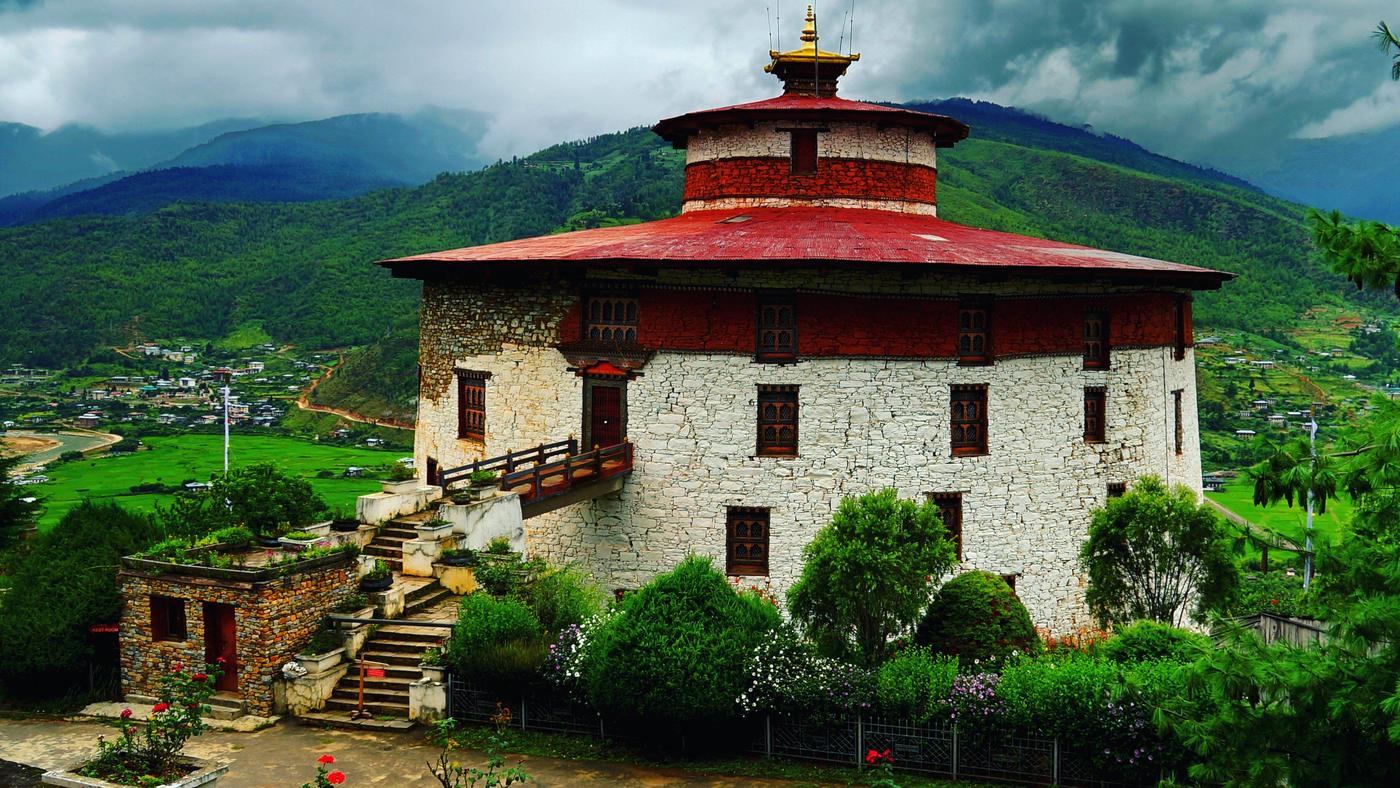
After lunch you visit the National Museum in Ta Dzong, an old watchtower, and walk down to Rinpung Dzong. The wooden galleries around its courtyard are painted with scenes from Buddhist stories.

Overnight: COMO Uma Paro

Ta Dzong, a round stone watchtower with a red roof, above the green Paro Valley

Day 6

The Tiger's Nest

Today you walk up to Taktsang, the Tiger's Nest, a monastery on a cliff 900 metres above the Paro Valley. The story is that Guru Rinpoche arrived here on the back of a tigress and meditated on the cliff. It takes about five hours there and back.

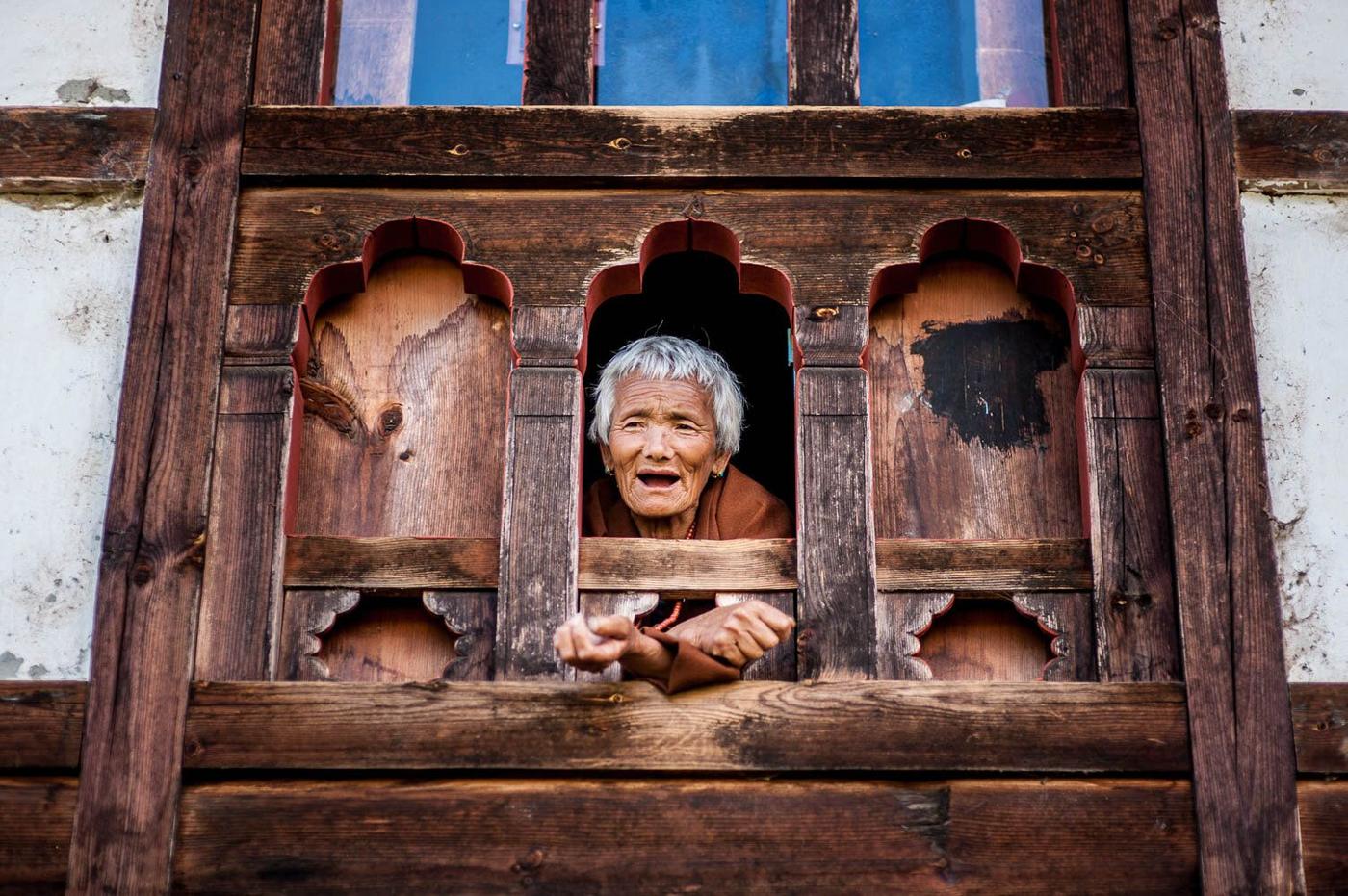
In the late afternoon you drive to the end of the valley to Drukgyel Dzong, built in 1646 and restored after a fire in 1951. On a clear day you can see Jomolhari from the village below it. Nearby you visit a farmhouse built the traditional way, without a single nail.

Overnight: COMO Uma Paro

An older woman looking out of a carved wooden farmhouse window

Day 7

Home from Paro

After breakfast we drive you about 10 minutes to Paro airport (PBH) for your flight home.

Questions

Questions About This Trip

Seasons, rules and schedules can change, and we rely on our partners on the ground for the latest. Ask us before you plan around any of these answers and we'll double-check them.

How hard is the Tiger's Nest hike?

It's steep, but it's a walk with no scrambling. The path is about 3 to 4 kilometres each way through pine forest, with a cafeteria about halfway up. After the viewpoint, several hundred stone steps go down to a bridge by a waterfall and back up to the monastery at about 3,120 metres.

COMO Uma Paro or Amankora Paro?

It depends where in the valley you'd like to be. COMO Uma Paro is on a wooded hill above Paro town, about ten minutes from the airport, with a heated indoor pool and a gym. Amankora Paro is in a pine forest further up the valley near Drukgyel Dzong, about 25 minutes from the airport. Its 24 suites have wood-burning stoves, and hiking trails start at the door.

Why has no one climbed Gangkar Puensum?

Because Bhutan doesn't allow it. Climbing peaks over 6,000 metres was banned in 1994 out of respect for local beliefs, and all mountaineering has been banned since 2003. At about 7,570 metres, Gangkar Puensum is Bhutan's highest mountain and the highest unclimbed mountain in the world. Four expeditions tried in 1985 and 1986, before the ban, and none reached the top.

How It Works

We Arrange All of It

Each trip idea is a starting point. We adjust the length, the pace and the hotels to suit you, then book and manage every part of it.

  • Flights. Booked with your points where they're worth the most, and with cash where they aren't.
  • Every transfer. Private drivers, boats and domestic flights between each stop, timed to your arrival.
  • Guides and tours. Booked for the days that suit you, private or shared.
  • The hotels. Booked directly with the properties we work with, with rooms matched to your group.
  • Support while you're away. If a flight cancels or plans change, you contact us and we sort it out.

Plan This Trip

We can add two nights in the Phobjikha Valley at Gangtey between Thimphu and Punakha, or a few days in Nepal before or after. An extra day in Paro leaves time to cycle down from the Chele La pass.

Every trip is priced for your dates. Send us rough dates and who's travelling, and we'll come back with the full plan.

Ask About This Trip