Punakha Dzong on the riverbank, with trees in front and green hills behind

Trip Ideas · Bhutan

Bhutan: A Lodge-to-Lodge Tour of Thimphu, Gangtey, Punakha and Paro

Nine days and four lodges across Bhutan, from Thimphu over the Dochula Pass to Gangtey and Punakha and back to Paro for the walk up to the Tiger's Nest.

9 days, 8 nights

The Trip

This is a nine-day tour of western and central Bhutan that moves between four lodges, with two nights at each. You start in Thimphu, the capital, then cross the Dochula Pass to the Phobjikha Valley at Gangtey. From there you go down to the warm Punakha Valley and finish in Paro, where the last full day is the walk up to the Tiger's Nest.

Along the way you see the big dzongs and temples, and you also spend time with weavers, monks and farming families. You hang prayer flags on the Dochula Pass, try natural dyeing at a farmhouse in Punakha and have a go at archery in Paro. Your guide and driver are with you the whole way. It suits couples and friends who want to see a lot of Bhutan without rushing it.

By Next Mile Travel · Updated

The Route

1234THIMPHU2 nightsGANGTEY2 nightsPUNAKHA2 nightsPARO2 nights 1234THIMPHU2 nightsGANGTEY2 nightsPUNAKHA2 nightsPARO2 nights

Itinerary

Day by Day

Day 1

Arrive in Paro and drive to Thimphu

The flight into Paro runs along the Himalaya, and on a clear day you see the high peaks before the plane comes down into the valley. We meet you at the airport (PBH) with a tashi khaddar, the white scarf Bhutanese give to welcome a guest. Then you drive to Thimphu, the capital, which takes about an hour.

On the way you stop at Tachog Lhakhang, a temple built by Thangtong Gyalpo, the engineer who brought iron-chain bridges to Bhutan and Tibet. Its bridge was rebuilt in the old style in 2005, and the walk across and back takes about 50 minutes.

In the evening you walk around the centre of Thimphu and the Centenary Farmers Market. Then a Bhutanese scholar gives you a talk on Gross National Happiness. It's the idea the Fourth King put forward in the 1970s, that a country should measure its progress by its people's wellbeing as well as its economy.

Overnight: Six Senses Thimphu
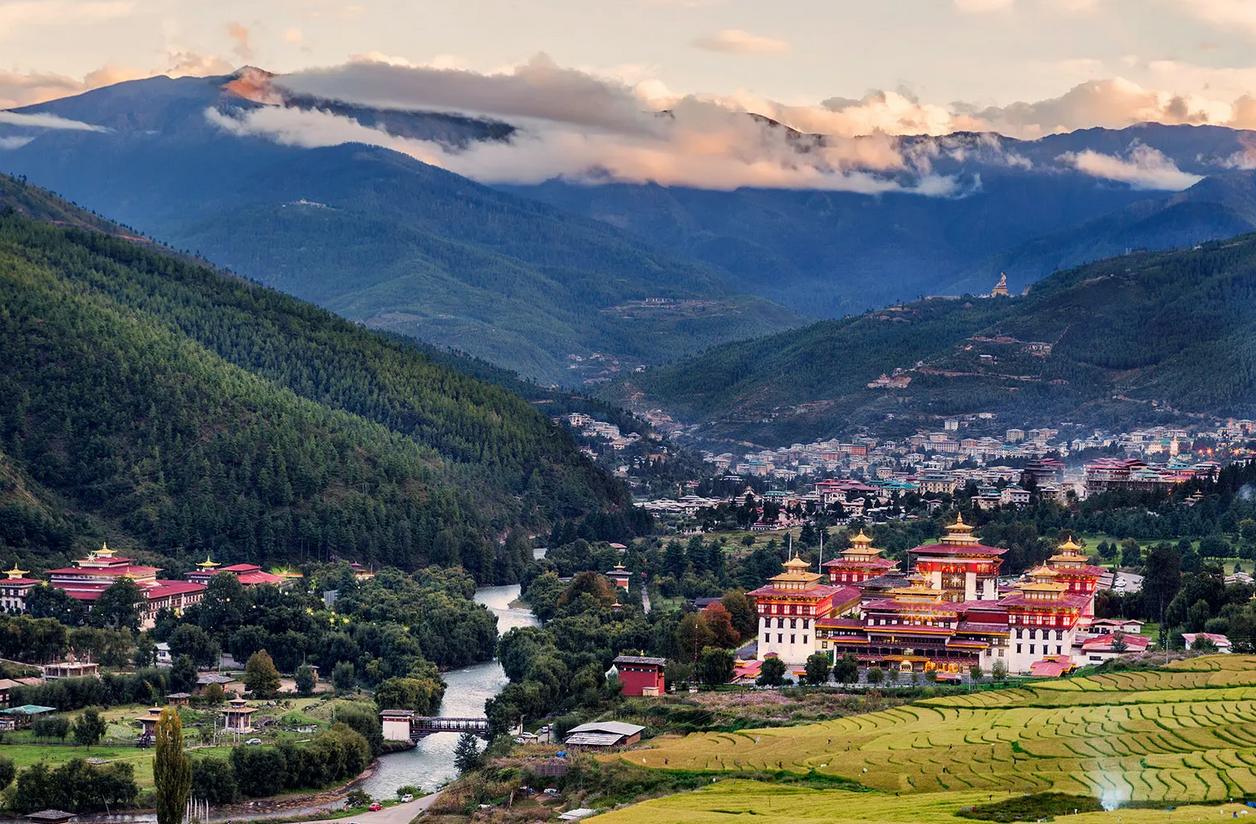
The Thimphu valley in the evening, with Tashichho Dzong and rice terraces in front of the city

Day 2

Thimphu

In the morning you drive up to Buddha Dordenma, a gilded bronze statue of the Buddha 51.5 metres tall on a hill above the city. Inside it are 125,000 smaller Buddhas, also in gilded bronze. Back in town you visit the National Memorial Chorten, where you'll see local people walking around the white chorten and turning its big red prayer wheels.

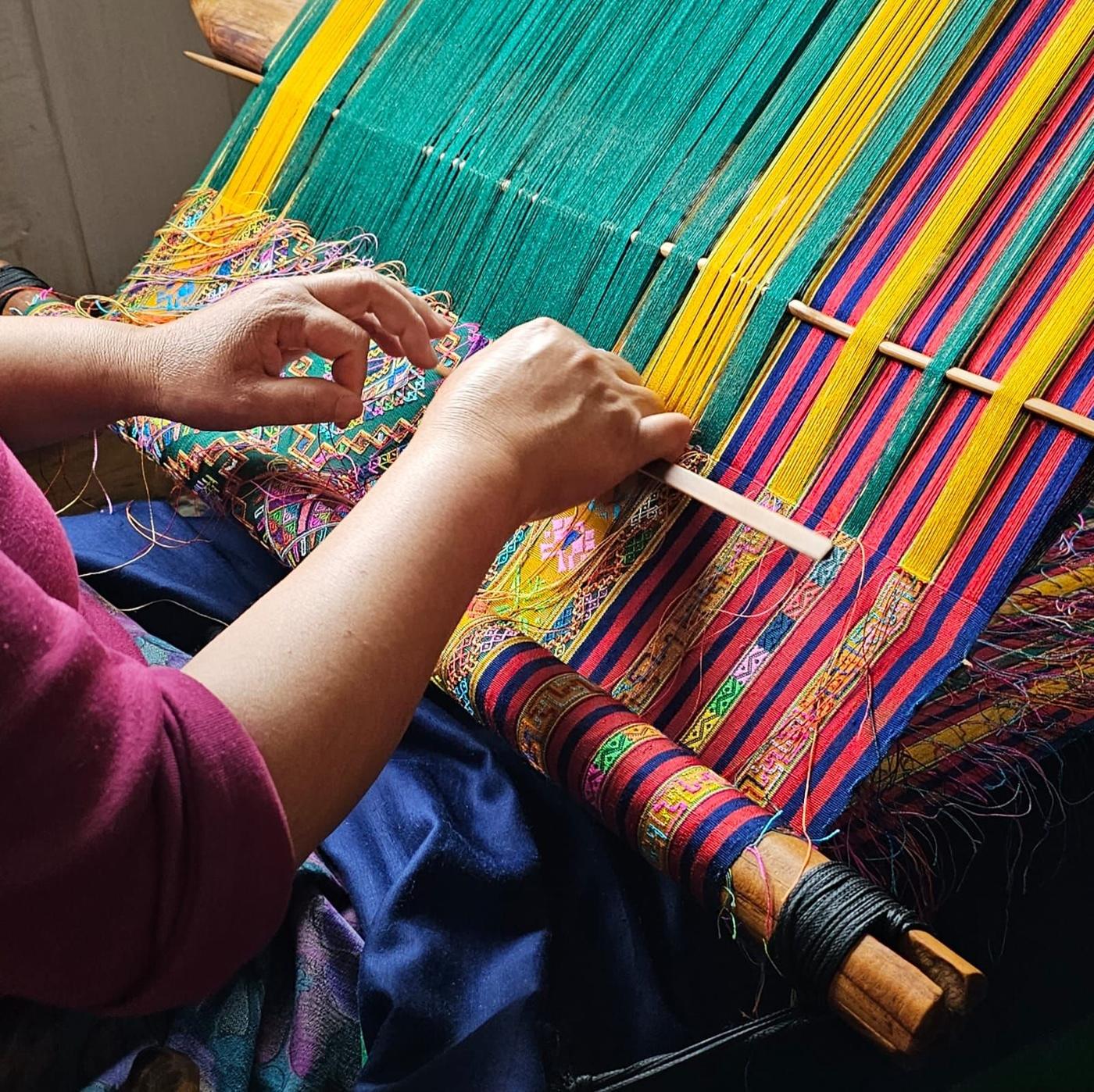
Next you meet the people behind the Loden Foundation, a Bhutanese charity that supports education, small businesses and research into the country's culture. At the National Institute for Zorig Chusum students spend four to six years learning Bhutan's 13 traditional arts and crafts. You also stop at the Gagyel Lhundrup Weaving Centre to watch the weavers at work.

The day ends at Tashichho Dzong, the seat of Bhutan's government and of the Je Khenpo, the chief abbot. It was first built in 1641 and rebuilt in the 1960s the traditional way, with no nails and no plans.

Overnight: Six Senses Thimphu

Hands working a loom strung with bright yellow, green and red threads

Day 3

Over the Dochula Pass to Gangtey

You drive east over the Dochula Pass at 3,088 metres, where 108 chortens stand in three tiers around a main one. On a clear day you can see a line of Himalayan peaks from here, including Gangkar Puensum, Bhutan's highest mountain. Before you leave you hang a string of prayer flags at the pass.

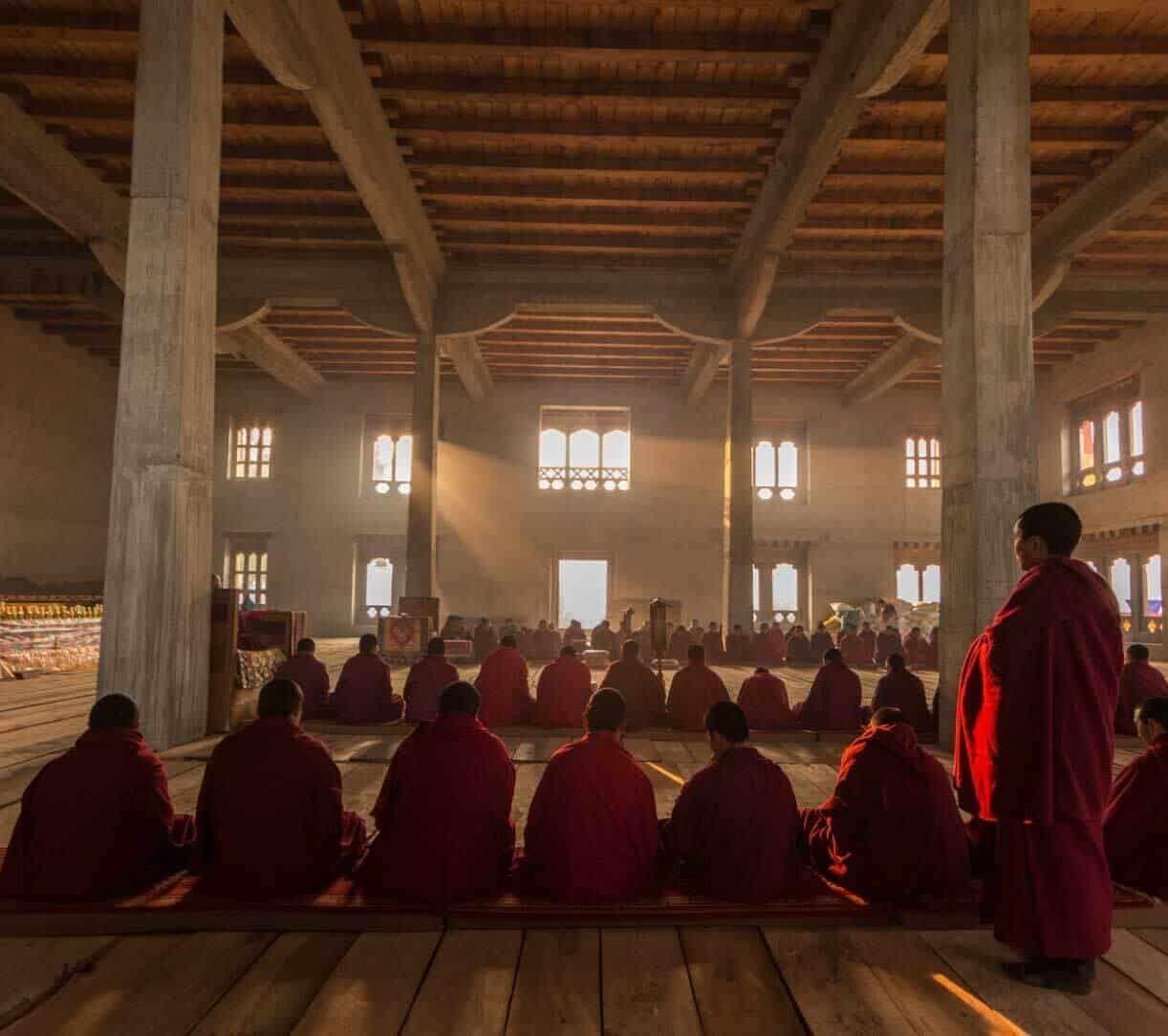
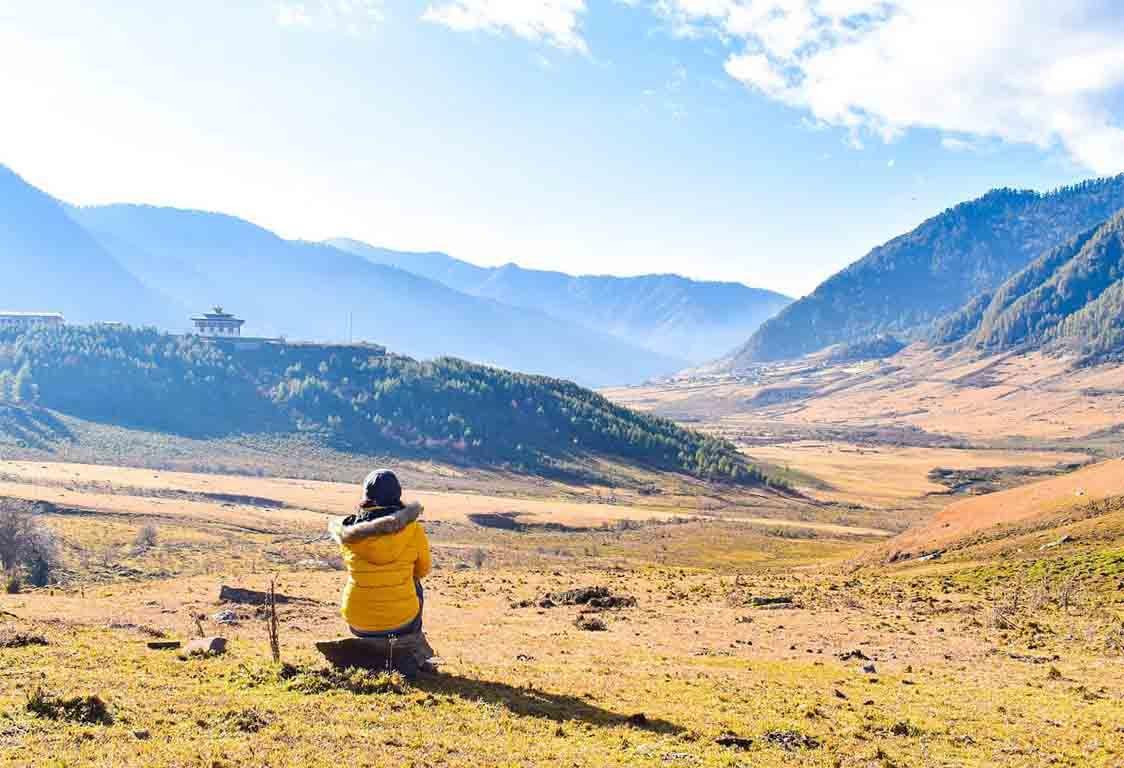
Further on you stop at Wangdue Phodrang Dzong, built in 1638 on a high ridge between two rivers. It was damaged by fire in 2012 and the restoration was finished in 2022. After lunch you carry on up to the Phobjikha Valley. It's wide and open with no trees on the valley floor, which is rare in Bhutan. In the evening you watch the monks at prayer in Gangtey Monastery.

Overnight: Gangtey Lodge

Rows of monks seated at prayer in a large hall with tall timber pillars

Day 4

The Phobjikha Valley

Gangtey Monastery stands on a small hill above the valley. It was founded in 1613 and is the largest Nyingmapa monastery in Bhutan. The village around it is home to the families of the 140 gomchens who look after it.

From there you walk the Gangtey Nature Trail down through meadows and the village of Semchubara, then through forest to the valley floor. It's about 5.5 kilometres and two hours. On the way the monks at Khewa Lhakhang give you a blessing and you light butter lamps with them.

In the afternoon you explore more of the valley and stop at the Black-necked Crane Information Centre. From about November to February the cranes spend the winter here, and the centre's telescopes give you a close look. In the evening you join a meditation class at the shedra, the school where monks study Buddhist philosophy and debate.

Overnight: Gangtey Lodge

A walker in a yellow jacket sitting on the open grassland of the Phobjikha Valley, with the monastery on a hill behind

Day 5

Down to Punakha

You drive down to Punakha, which was Bhutan's capital until 1955. At about 1,300 metres it's much warmer than Gangtey, and the valley grows rice and fruit along its two rivers. First you stop at a farmhouse built in 1970, where you can help with the milking and see butter and cheese being made. The owner is an expert in natural dyes and teaches you to dye cloth with plants and minerals. You can have a Bhutanese lunch at the farmhouse.

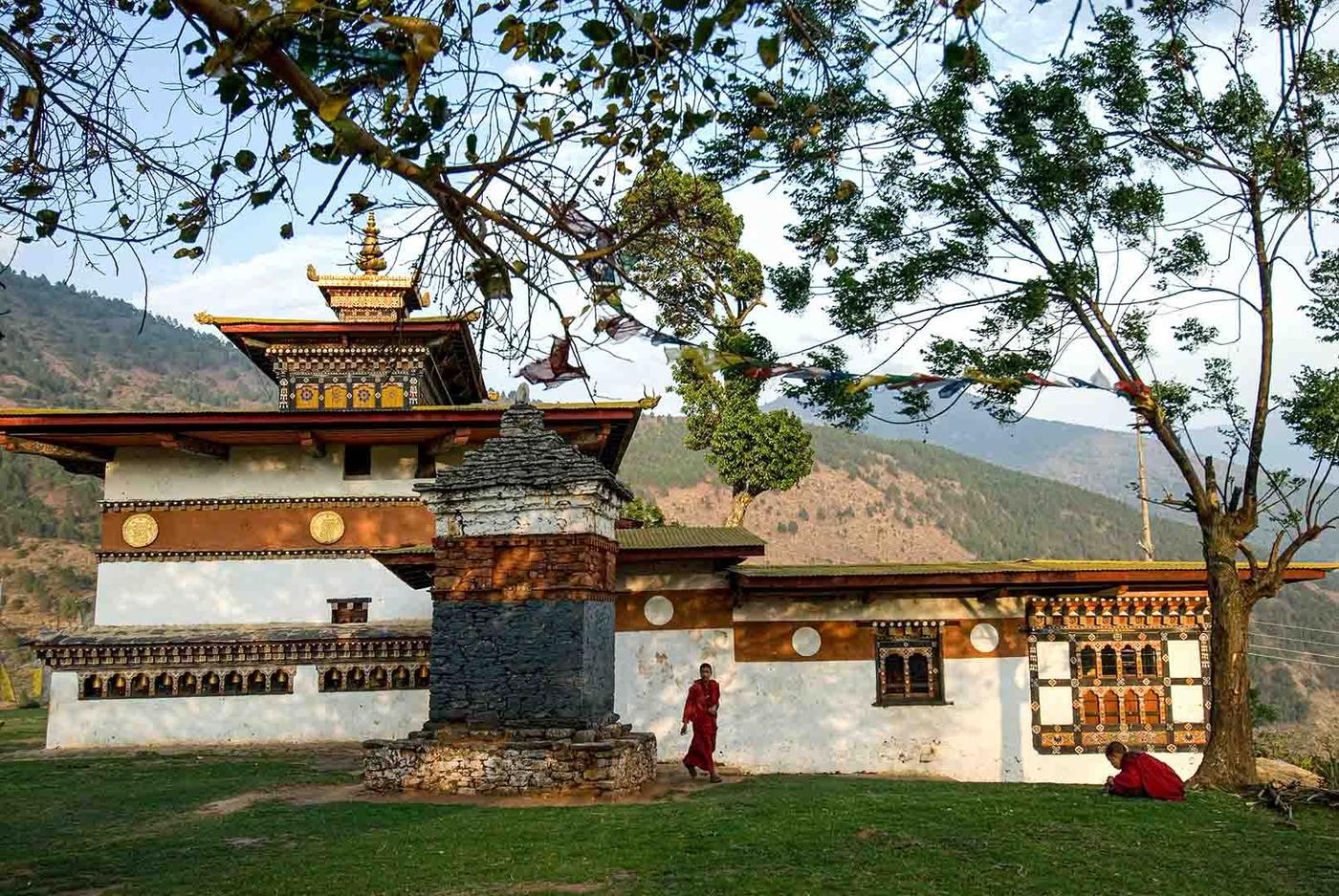
In the afternoon you visit Punakha Dzong, built in 1637 where the Pho Chhu and Mo Chhu rivers meet. It was once the centre of Bhutan's government and religion, and it has a six-storey tower with a gold dome. Then you walk across the rice fields and through the village of Pana to Chimi Lhakhang. Couples come to this small temple on a hill to pray for a child.

Overnight: &Beyond Punakha River Lodge

Chimi Lhakhang's whitewashed temple and stone chorten under a large tree, with a monk walking past

Day 6

Punakha

In the morning you walk up to Khamsum Yuelley Namgel Chorten for views over the Mo Chhu to the mountains of Gasa. It's about two hours there and back. Then you cross the Punakha suspension bridge over the river. It's about 160 metres long and one of the longest in Bhutan. Lunch is a picnic by the river.

In the afternoon you visit the villages of Talo and Nobgang and meet farming families in their homes. Talo Sangnacholing Dzong sits on a plateau above them. Later you stop at the Nalanda Buddhist Institute, a monastic school above the Punatsangchu, where you can talk with the monks about Buddhism and meditation.

Overnight: &Beyond Punakha River Lodge

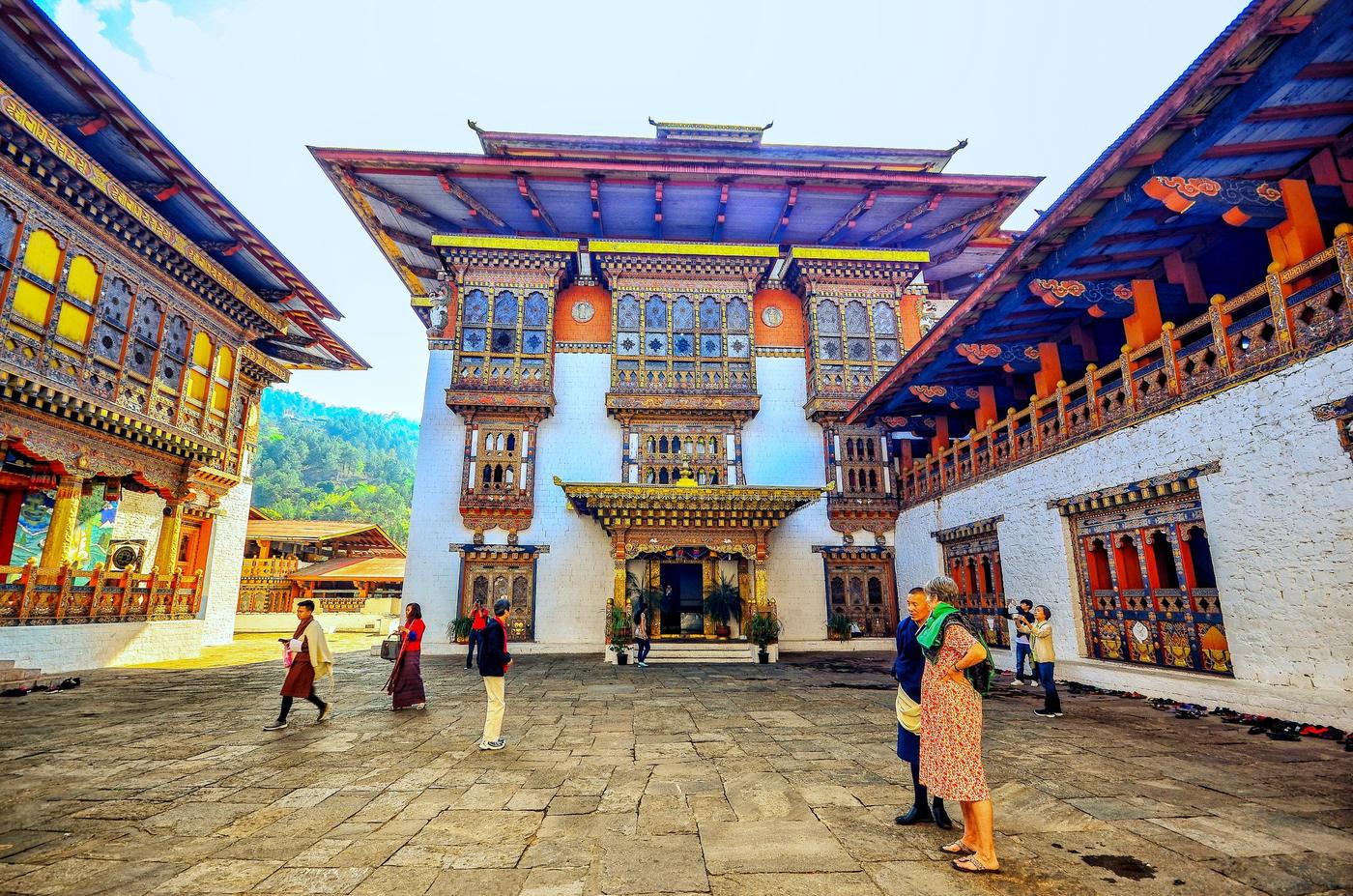
Visitors in the stone courtyard of a dzong, with painted timber windows on every side

Day 7

On to Paro

You drive west to Paro, a valley of old temples and red rice fields with Bhutan's only international airport. Jomolhari stands at the top of the valley at more than 7,300 metres.

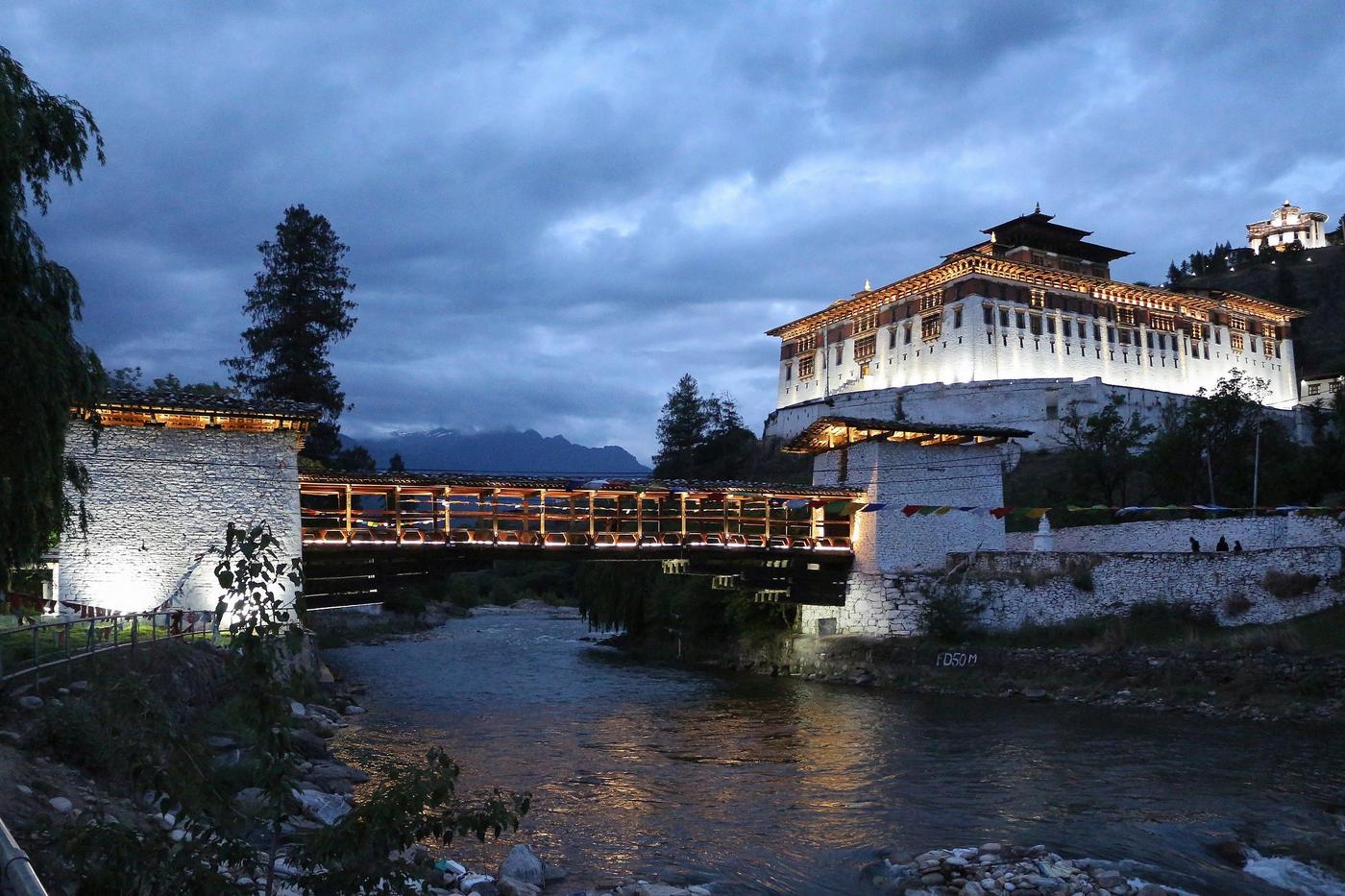
After lunch you visit the National Museum in Ta Dzong, an old watchtower, then walk down to Rinpung Dzong. Its wooden galleries are painted with scenes from Buddhist stories. In the evening you try archery, Bhutan's national sport.

Overnight: Amankora Paro Lodge

Rinpung Dzong lit up at dusk above the river and a covered wooden bridge

Day 8

The Tiger's Nest

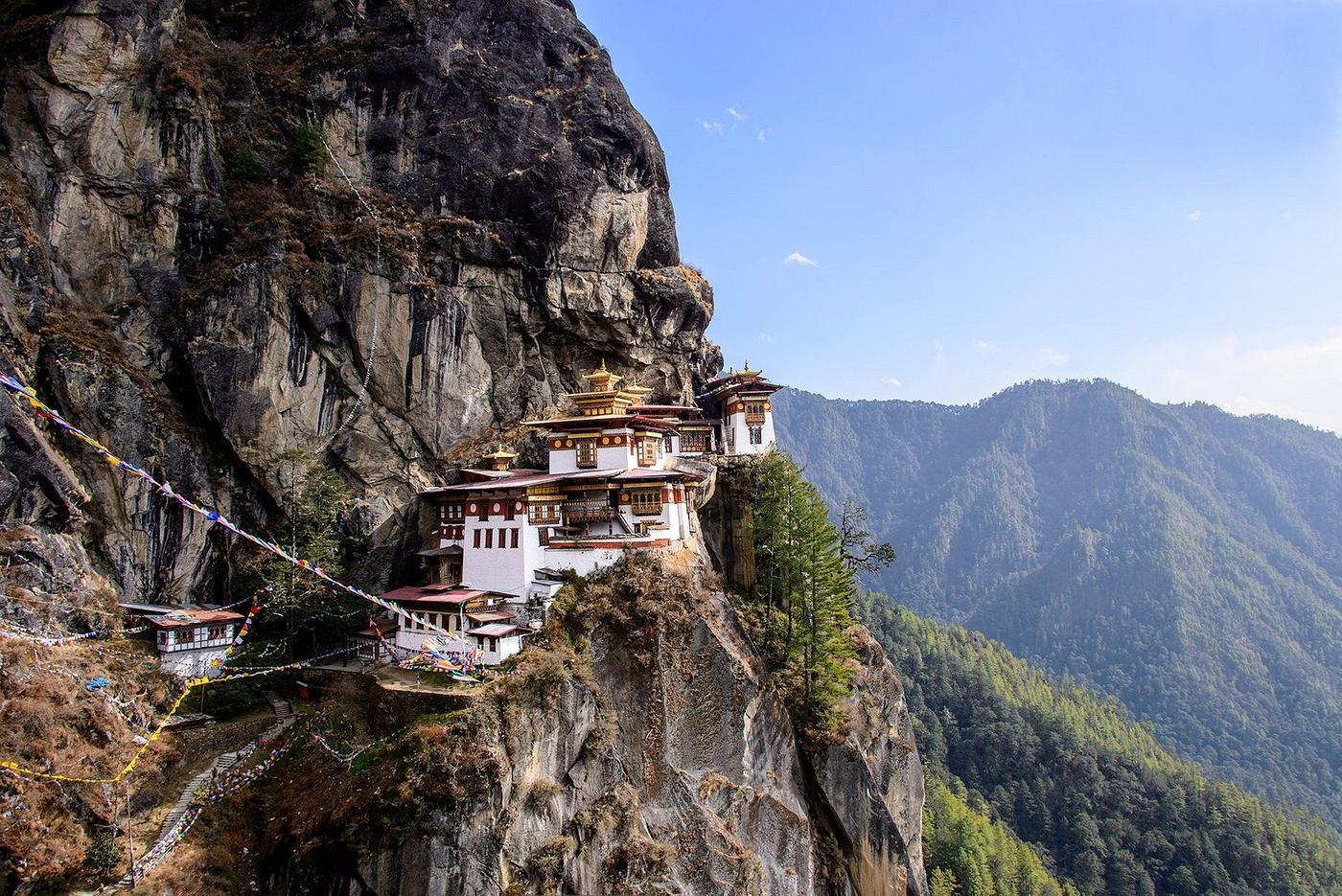
Today you walk up to Taktsang, the Tiger's Nest, a monastery on a cliff 900 metres above the Paro Valley. The story is that Guru Rinpoche arrived here on the back of a tigress and meditated on the cliff. The walk takes five to six hours there and back. Most Bhutanese make it at least once in their lives.

In the afternoon you visit Kyichu Lhakhang, a 7th-century temple. Its founding marked the arrival of Buddhism in Bhutan.

Overnight: Amankora Paro Lodge

The Tiger's Nest monastery on its cliff, with prayer flags strung across the rock

Day 9

Home from Paro

After breakfast we drive you about 25 minutes to Paro airport (PBH) for your flight home.

Questions

Questions About This Trip

Seasons, rules and schedules can change, and we rely on our partners on the ground for the latest. Ask us before you plan around any of these answers and we'll double-check them.

When is the Black-necked Crane Festival in Phobjikha?

Every year on 11 November, in the courtyard of Gangtey Monastery. It's a one-day festival with drumming, masked dances and a crane dance by local schoolchildren in costume. People in the valley say the cranes circle the monastery three times when they arrive.

Why are there no power lines in the Phobjikha Valley?

To protect the cranes. Overhead power lines were never allowed in the valley, and the electricity now comes in by underground cable. The valley sits at about 3,000 metres, and its marshes are a protected wetland of about 970 hectares, listed under the Ramsar Convention in 2014.

How long is the drive from Thimphu to Gangtey?

Five to six hours for about 135 kilometres, with stops at the Dochula Pass and Wangdue Phodrang Dzong on the way. The drive from Gangtey down to Punakha takes about three hours.

Can you take photos inside the Tiger's Nest?

No. Phones, cameras and bags go into lockers at the entrance, and visitors need long sleeves and long trousers or a skirt to go in. The best photos are from the viewpoint across the gorge, where the path looks straight at the monastery before the steps go down.

How It Works

We Arrange All of It

Each trip idea is a starting point. We adjust the length, the pace and the hotels to suit you, then book and manage every part of it.

  • Flights. Booked with your points where they're worth the most, and with cash where they aren't.
  • Every transfer. Private drivers, boats and domestic flights between each stop, timed to your arrival.
  • Guides and tours. Booked for the days that suit you, private or shared.
  • The hotels. Booked directly with the properties we work with, with rooms matched to your group.
  • Support while you're away. If a flight cancels or plans change, you contact us and we sort it out.

Plan This Trip

We can give you more time in any of the valleys, change the lodges or add a few days in Nepal before or after. If you'd like a proper trek, we can add the five-day Druk Path between Paro and Thimphu.

Every trip is priced for your dates. Send us rough dates and who's travelling, and we'll come back with the full plan.

Ask About This Trip